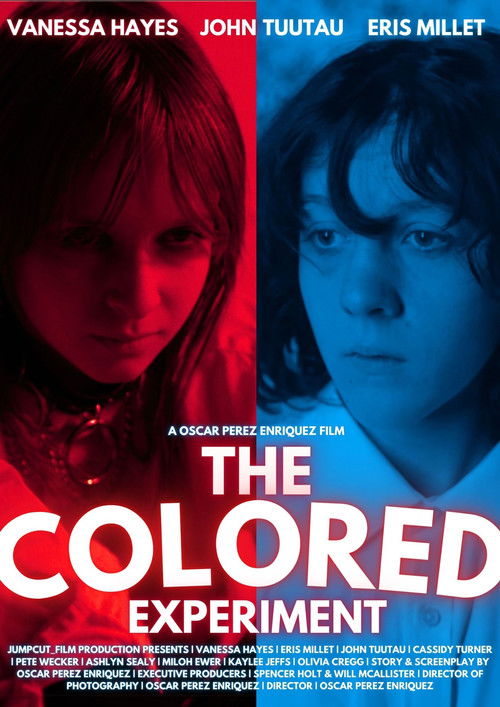
The Colored Experiment (Film Edition) (2026)
Directed by Oscar Perez Enriquez
No · Based
How we score movies →Consciousness Markers
The premise involves measuring human life's monetary value, which could suggest anti-capitalist critique, but the film appears to present this without explicit ideological commentary.
The cast appears diverse across gender and ethnicity, but diversity alone does not constitute progressive representation when characters lack meaningful development or voice.
The title references Tuskegee but appears to use it primarily as aesthetic gesture rather than genuine historical engagement or revisionism.
The title invokes historical racial trauma, Tuskegee experiments, but the plot appears to treat psychological torture as a racially neutral universal scenario.
The film's premise suggests it will present moral dilemmas, but there is no indication it lectures the audience or explicitly articulates progressive values.
The film features female characters in the main roles, but there is no indication these roles engage with feminist themes or critique patriarchal structures.
No evidence of LGBTQ+ themes, representation, or narrative significance in the available plot summary or cast information.
No evidence of climate themes or environmental consciousness in this psychological thriller focused on interpersonal moral dilemmas.
No available information suggests body positivity themes are present in this psychological torture scenario.
No evidence of neurodivergent representation or themes in the film's premise or available cast information.
Synopsis
A feature-length compilation of the first six experiments from the episodic series, re-edited into a single narrative experience. Two strangers are forced through a series of psychological experiments designed to measure the value of human life, where every choice demands a sacrifice.
Why it received this score
The Colored Experiment arrives as a modest indie horror project that traffics in the well-worn currency of torture-porn ethical dilemmas. Director Oscar Perez Enriquez has assembled what appears to be a diverse cast and set them loose in a framework that measures the monetary value of human suffering. The title itself gestures toward historical atrocities, most notably the Tuskegee experiments, lending an unearned gravity to what is at its core an exercise in forced moral calculus between two strangers in a confined space.
What distinguishes this film from genuine social consciousness is its apparent indifference to systemic context. The psychological experiments at the film's center operate in a vacuum, treating ethical dilemmas as universal puzzles instead of phenomena shaped by power, privilege, and historical trauma. A diverse cast does not constitute progressive sensibility when those characters exist merely as interchangeable subjects in a thought experiment. The film's budget of ten thousand dollars and limited theatrical release suggest this is sincere genre work, not cynical pandering, which is perhaps the only mercy we can grant it.
The examination of human life's monetary value could have been pointed critique of capitalist dehumanization, yet the available evidence suggests the film remains content to simply present the scenario without the ideological scaffolding required to make such commentary land. This is competent indie horror craftsmanship applied to a premise that needed either more intellectual rigor or more cultural awareness to justify its provocative title.
Analysis generated by our Consciousness Algorithm