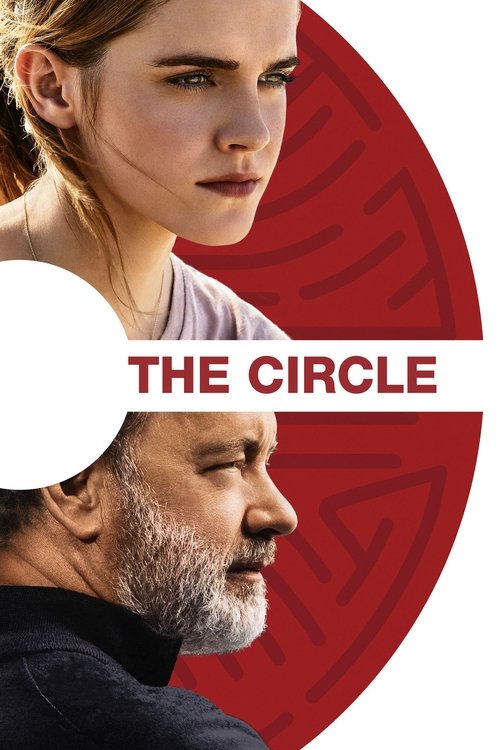
The Circle (2017)
Directed by James Ponsoldt
Partly · Woke-Adjacent
How we score movies →Consciousness Markers
The film's central narrative critiques surveillance capitalism and corporate overreach, with Tom Hanks' character embodying the dangerous billionaire executive. Corporate malfeasance and the concentration of tech power are explicitly positioned as threats.
The film adopts a preachy tone regarding surveillance and corporate wrongdoing, with characters sometimes delivering messages rather than having organic conversations. The ending carries a preachy quality about the dangers of total transparency.
Emma Watson provides a female protagonist in a tech narrative, but the film does not engage in explicit feminist critique or systemic gender analysis beyond the individual female lead.
The film features Emma Watson as the lead and includes John Boyega and Karen Gillan in supporting roles, providing some diversity in casting, though representation feels incidental rather than deliberate or centered.
While the cast includes actors of color, the film does not engage with racial themes or demonstrate any particular racial consciousness in its narrative.
No LGBTQ+ themes, characters, or representation are present in the film.
No climate-related themes or environmental consciousness are present in the film.
No body positivity themes, representation, or commentary are present in the film.
No neurodivergence representation, themes, or acknowledgment are present in the film.
Not applicable to this contemporary fiction film set in the present day.


Synopsis
A young tech worker takes a job at a powerful Internet corporation, quickly rises up the company's ranks, and soon finds herself in a perilous situation concerning privacy, surveillance and freedom. She comes to learn that her decisions and actions will determine the future of humanity.
Why it received this score
The Circle presents itself as a cautionary tale about surveillance capitalism and corporate overreach, themes that align with contemporary concerns about tech monopolies and data privacy. Emma Watson anchors the narrative as an idealistic newcomer who gradually discovers the dystopian implications of her employer's business model. Tom Hanks delivers a charismatic performance as the visionary CEO whose philosophy of radical transparency masks a totalitarian impulse. The film's critique of corporate power constitutes its primary engagement with progressive sensibilities, yet the execution remains fundamentally superficial.
What distinguishes this film from genuine social consciousness is its reluctance to interrogate the deeper structural systems that enable surveillance capitalism. The narrative treats corporate malfeasance as a product of individual moral failing rather than examining the economic and political conditions that incentivize such behavior. The film lectures its audience about privacy concerns without offering substantive analysis of how technology, capital, and state power intertwine. This results in a kind of well-intentioned moralizing that substitutes for actual critique.
The film's representation elements, while present, feel incidental to its central preoccupations. The diversity in casting does not translate into substantive engagement with identity or systemic inequality. The female protagonist's journey concerns her individual awakening rather than feminist analysis of power structures. Ultimately, The Circle functions as a tech-thriller that gestures toward progressive themes without embodying the specific markers of contemporary social consciousness, resulting in a work that addresses important topics without the cultural literacy that would make it genuinely resonate within the current moment.
Analysis generated by our Consciousness Algorithm
Critic Reviews
“Quiet, rageful indictment of a two-tiered Islamic society.”
“Suspenseful and ingeniously directed.”
“Circles the heart of noisy, modern Tehran with an informal, documentary-like freedom that is thrilling in its naturalism.”
“This film is fighting the good fight, albeit in a rather heavy-handed way.”