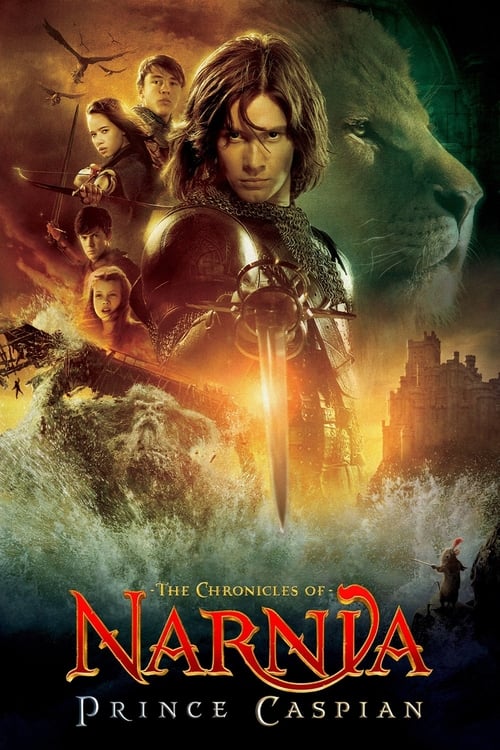
The Chronicles of Narnia: Prince Caspian (2008)
Directed by Andrew Adamson
No · Ultra Based
How we score movies →Consciousness Markers
The cast is predominantly white, with limited racial diversity among principal characters. Peter Dinklage's casting as Trumpkin provides disability representation, though this is not explicitly thematized.
Susan functions as a warrior archer and demonstrates agency, but the narrative remains male-centered and the film makes no explicit feminist argument.
The film is a straightforward adventure narrative that avoids preachy exposition about social themes, though it does contain moments of moral instruction typical of the source material.
The film includes various body types among fantasy creatures (dwarves, badgers, fauns), though this reflects source material rather than deliberate contemporary sensibility.
The film exhibits no meaningful racial consciousness or examination of race-based power dynamics. Antagonists are not racialized in any particular way.
Peter Dinklage's casting suggests disability representation, but the film makes no explicit treatment of neurodivergence or disability as a thematic concern.
Eddie Izzard provides voice work as Reepicheep, but the film contains no explicit LGBTQ themes, representation, or narrative elements.
The narrative celebrates the restoration of monarchy and hereditary succession. There is no critique of economic systems or class structures.
The film contains no environmental themes, climate consciousness, or ecological messaging whatsoever.
The film adapts a 1951 fantasy novel without revisionist historical intent. No real-world historical narratives are interrogated or reframed.


Synopsis
One year after their incredible adventures in the Lion, the Witch and the Wardrobe, Peter, Edmund, Lucy and Susan Pevensie return to Narnia to aid a young prince whose life has been threatened by the evil King Miraz. Now, with the help of a colorful cast of new characters, including Trufflehunter the badger and Nikabrik the dwarf, the Pevensie clan embarks on an incredible quest to ensure that Narnia is returned to its rightful heir.
Why it received this score
The Chronicles of Narnia: Prince Caspian presents itself as a straightforward medieval fantasy romp, and it carries that assignment out with the grim determination of a soldier marching toward an uncertain outcome. The film's relationship to progressive sensibilities is complicated by its source material, a 1951 novel written in a decidedly pre-modern register, and by its own narrative commitments to monarchy, martial valor, and the restoration of a hereditary order. These are not the preoccupations of contemporary cultural consciousness.
Where the film does accumulate modest points is in its casting of Peter Dinklage as Trumpkin the dwarf, a decision that introduces disability representation into a fantasy adventure narrative without making it the subject of special comment or sentiment. The inclusion of women warriors and female characters of agency, particularly Susan as a warrior archer, reflects a modest updating of the source material's gender dynamics, though the film's action remains overwhelmingly male-centered. The voice cast includes Eddie Izzard as Reepicheep, a choice that carries some cultural weight in retrospect, though the film itself makes no explicit statement regarding LGBTQ themes or sensibility.
What prevents a higher score is the film's fundamental conservatism. It is a story about rightful succession, about restoring order through martial victory, about the triumph of a hereditary prince over a usurper. The antagonist is coded as an outsider and invader, and the narrative celebrates the restoration of the old ways. The overwhelmingly white principal cast, the absence of racial consciousness in the storytelling, the lack of any interrogation of the monarchical system being restored, the absence of environmental concern or anti-capitalist sentiment, and the film's general commitment to traditional heroic fantasy all conspire to create a work that operates well outside the gravitational field of modern progressive cultural sensibility. This is a film content to tell its story without apology or self-examination.
Analysis generated by our Consciousness Algorithm
Critic Reviews
“A glorious medieval war movie. It's about war as the ultimate pitch of conflict that tries men's souls, and women's, too.”
“Several shades darker in tone than the previous edition -- which, to be fair, didn't carry the burden of expectation that a sequel must bear -- the return to Narnia still casts a transporting spell.”
“Closer to a straight-ahead medieval battle picture than the fantastical, other-worldly journey depicted in "The Lion, the Witch and the Wardrobe," this new entry is a bit darker, more conventional and more crisply made than its 2005 predecessor.”
“Exactly one minute longer than its predecessor, but it's a dragged-out exercise, with no epic scale and no spirit worth talking about.”