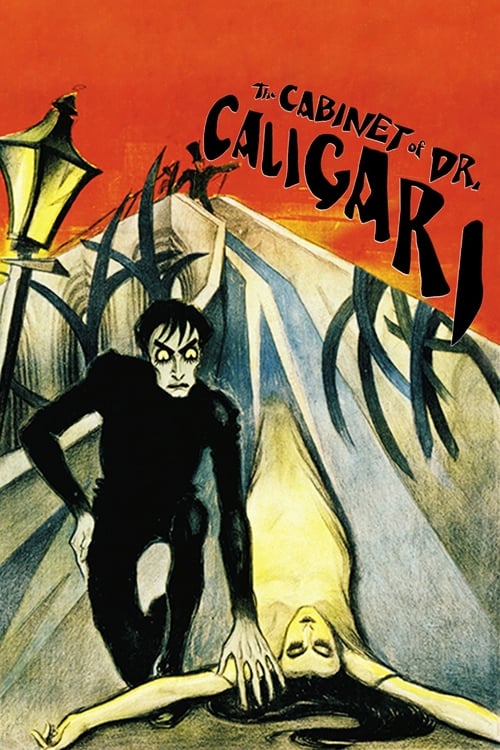
The Cabinet of Dr. Caligari (1920)
Directed by Robert Wiene
No — The Cabinet of Dr. Caligari is not woke, scoring 0 out of 100 on our wokeness meter.
The Cabinet of Dr. Caligari arrives from 1920, a silent expressionist landmark about a hypnotist, a somnambulist, a string of murders, and an asylum whose director may be the true madman.
Consciousness Markers
The cast is entirely white German actors of the Weimar era, with no diversity casting or representation-conscious choices of any kind.
No LGBTQ+ characters, themes, or subtext are present in the narrative.
Jane exists as a romantic object and victim; the film advances no feminist critique or gender-conscious agenda.
The film engages no racial themes or commentary whatsoever.
No environmental or climate concerns appear in the film.
The film's critique targets irrational state authority and militarism, not capitalism or wealth; there is no eat-the-rich sentiment.
No body-positivity themes are present.
Madness and the asylum appear as gothic horror tropes of insanity and sinister control, not as a modern, affirming neurodivergence framework.
The film is a fictional expressionist tale with no historical revisionism.
The film is a visual, atmospheric horror piece that shows rather than preaches; it carries no didactic messaging.
Why it received this score
The Cabinet of Dr. Caligari arrives from 1920, a silent expressionist landmark about a hypnotist, a somnambulist, a string of murders, and an asylum whose director may be the true madman. Its concerns are brutal irrational authority, militarism, and the unstable border between sanity and delusion. Those are serious humanist themes, and they are political in an old-fashioned sense. They are not the modern cultural markers under review. The cast is entirely white Weimar-era German actors. No representation-conscious casting exists. Jane is a fiancée, a romantic object, and a victim. The film advances no feminist critique. No LGBTQ themes or subtext appear. The narrative has no interest in them.
The film engages no racial consciousness, no climate crusade, no eat-the-rich sentiment. Its critique targets state power and deranged authority, not capital or wealth. No body-positivity themes are present. Madness and the asylum function as gothic horror tropes of sinister control, not as an affirming neurodivergence framework. No revisionist history appears, since the tale is fictional. No lecture energy drives the piece. It shows through jagged sets, painted shadows, and streets that lean like bad dreams. It does not sermonize. It simply frightens.
To assess this film through contemporary social consciousness is to measure a cathedral with a kitchen scale. The ledger is empty, not as condemnation but as chronological fact. The film remains a masterpiece of atmosphere and dread. It has no interest in explaining our present pieties. It wants only to unsettle us, and it succeeds. A sommelier of difficult vintages might note that the bottle is old, the cork is dry, and the wine is still potent. The classification is complete. We may retire to the archive.
Analysis generated by our Consciousness Algorithm


Synopsis
Francis, a young man, recalls in his memory the horrible experiences he and his fiancée Jane recently went through. Francis and his friend Alan visit The Cabinet of Dr. Caligari, an exhibit where the mysterious doctor shows the somnambulist Cesare, and awakens him for some moments from his death-like sleep.
Questions about The Cabinet of Dr. Caligari
Is The Cabinet of Dr. Caligari woke?
No — The Cabinet of Dr. Caligari is not woke, scoring 0 out of 100 on our wokeness meter. That earns it a verdict of Ultra Based.
Does The Cabinet of Dr. Caligari have any woke elements?
No. All 10 markers score zero.
How is the Woke Score calculated?
An AI-assisted process researches the film and its reception, scores it 0–100 on ten markers, then combines those into one 0–100 Woke Score. It measures a specific set of 2020s cultural themes, not film quality.