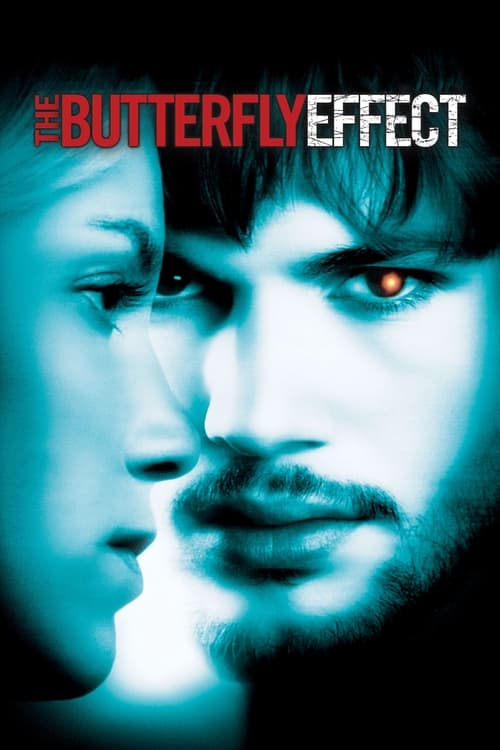
The Butterfly Effect (2004)
Directed by Eric Bress
No · Ultra Based
How we score movies →Consciousness Markers
The cast is predominantly white with no apparent strategy to diversify or foreground representation. Casting serves narrative function only.
No LGBTQ+ characters, themes, or narratives present in the film.
No feminist reimagining or gender-conscious framing. Female characters exist as supporting elements within a male-centered narrative.
No examination of racial systems, dynamics, or consciousness. Race is not a thematic element.
No climate-related themes, environmental consciousness, or ecological messaging present.
No critique of capitalism, wealth inequality, or systemic economic injustice.
No body-positive messaging or challenge to conventional beauty standards.
While the protagonist experiences memory loss and psychological trauma, these are not framed as neurodivergence or disability consciousness.
No revisionist historical narrative or challenge to mainstream historical interpretation.
The film presents its themes narratively rather than heavy-handedly. No instructional tone or moral lecturing to the audience.


Synopsis
A young man struggles to access sublimated childhood memories. He finds a technique that allows him to travel back into the past, to occupy his childhood body and change history. However, he soon finds that every change he makes has unexpected consequences.
Why it received this score
The Butterfly Effect is a time-travel thriller released in 2004, a period when contemporary progressive cultural markers had not yet crystallized into their current form. The film explores trauma, childhood abuse, and the unintended consequences of altering the past, themes that are serious and emotionally resonant but fundamentally distinct from the specific cultural consciousness movements that would emerge in the following decade. Ashton Kutcher's protagonist navigates a landscape of psychological damage and moral complexity, yet the film makes no apparent effort to interrogate or foreground issues of representation, identity politics, or systemic injustice. The cast is predominantly white, the narrative centers on individual agency rather than collective struggle, and the film's engagement with its dark subject matter remains largely apolitical in the contemporary sense.
Viewed through the lens of 2020s cultural sensibilities, the film registers as conspicuously absent of the markers that define modern progressive cinema. There is no deliberate casting strategy serving representational goals, no LGBTQ+ thematic content, no feminist reimagining of its narrative, no examination of racial systems, no environmental consciousness, no critique of capital, no body-positive messaging, no neurodivergent representation, no revisionist historical framing, and no preachy impulse to instruct the audience on correct thinking. The film simply presents itself as a straightforward psychological thriller, untouched by the cultural currents that would later reshape American filmmaking. This is not a criticism, merely an observation. The film was made in an earlier era, before the cultural vocabulary we now employ became standard in mainstream entertainment.
The film's opening weekend success of $17.1 million and its position at the top of the box office speak to audience appetite for dark, speculative narratives, but this commercial performance correlates with nothing in the progressive cultural register. We are left with a work that operates entirely outside the frameworks we have been tasked to assess, a film that treats its exploration of trauma as a philosophical and narrative problem rather than a vehicle for social consciousness. In this context, a low score is not a judgment of quality but rather an accurate registration of the film's fundamental indifference to the cultural preoccupations that now dominate cinema criticism.
Analysis generated by our Consciousness Algorithm
Critic Reviews
“The ending is weak, and may be the result of the filmmakers writing themselves into a corner and not wanting to conclude things in a burst of nihilistic excess. Yet, even though it's a cheat, it retains a degree of resonance.”
“Kutcher delivers a credibly serious performance as Evan, and he's surrounded by a skilled supporting cast. ”
“There's so much flashing forward and backward, so many spins of fate, so many chapters in the journals, that after awhile I felt that I, as well as time, was being jerked around.”
“It's a terrible life, and a terrible movie. ”