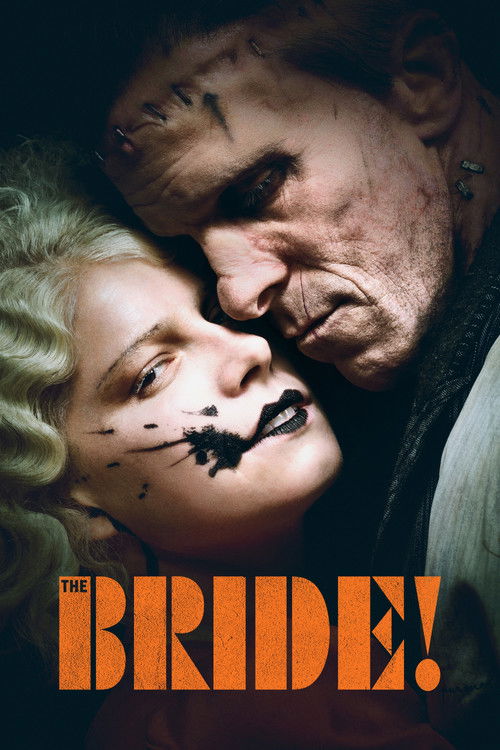
The Bride! (2026)
Directed by Maggie Gyllenhaal · $23.2M domestic
Yes · Woke
How we score movies →Consciousness Markers
Explicitly feminist retelling of source material. The Bride is repositioned as autonomous agent of social upheaval rather than tragic creation. Critics describe it as punk rock feminism with deliberate subversion of patriarchal narrative.
The film operates with considerable meta-textual self-awareness and Brechtian formal strategies that foreground its own commentary on narrative and power. This produces a preachy quality without being heavyhanded.
The film revises the 1935 source material by centering the female character and her agency. However, it does not appear to substantially interrogate or reframe the historical period itself.
The Bride catalyzes social upheaval and the film contains hints of class consciousness through the scientist character and 1930s setting, but these appear secondary to romantic and feminist concerns.
Buckley's character is described with physical distinctiveness (frizzy hair, black tongue, inky marks) that is presented as powerful rather than monstrous, suggesting some reclamation of non-normative embodiment.
The cast is predominantly white and male-skewed despite the female-centered narrative. Historical setting provides justification, but no apparent effort to diversify beyond the leads.
Set in 1930s Chicago with predominantly white cast. No apparent engagement with racial dynamics of the period or contemporary racial consciousness in the adaptation.
Buckley's character is described as having ferocious, twitching electricity, which could suggest neurodivergent coding, but this appears incidental rather than intentional representation.
No significant LGBTQ+ themes detected in available critical discussion. The film focuses on heterosexual romantic and sexual dynamics between the Bride and the Monster.
No climate-related themes present. The film is a gothic horror-romance set in a historical period without environmental consciousness.
Synopsis
A lonely Frankenstein travels to 1930s Chicago to ask groundbreaking scientist Dr. Euphronious to create a companion for him. The two revive a murdered young woman and The Bride is born. But what ensues is beyond what either of them imagined.
Why it received this score
Maggie Gyllenhaal's "The Bride!" presents itself as a feminist reclamation project, though the execution proves more textually ambitious than culturally comprehensive. The film centers on Jessie Buckley's revived female protagonist as an agent of chaos and social upheaval in 1930s Chicago, positioning her resurrection not as a tragic footnote to a man's story but as a catalyst for her own liberation and transformation. This reframing has genuine substance. Yet the broader cultural consciousness of the piece remains narrowly focused. The cast is predominantly white, the film's formal concerns are primarily aesthetic rather than ideological, and while the work exhibits considerable formal playfulness (homages to Metropolis and Young Frankenstein), these gestures toward cinematic history do not substantially advance any recognizable progressive sensibility beyond a fairly conventional feminist reading.
The film's true markers of contemporary social consciousness are concentrated in its feminist agenda and lecture energy, both of which operate at a fairly explicit level. Buckley's character functions as a deliberate disruption of patriarchal order, and critics describe the film as "punk rock feminism" wrapped in Brechtian layers of meta-commentary. This is earnest work, not ironic. However, the film appears largely indifferent to contemporary concerns around racial representation, climate consciousness, economic justice, or neurodivergent representation. The historical setting of 1930s Chicago provides some cover for these absences, yet the film makes no apparent effort to complicate or interrogate that historical context through a modern lens. The result is a project that has done the feminist homework quite thoroughly while leaving nearly everything else unexamined.
What emerges is a film that will satisfy those seeking female-centered narrative subversion within a gothic framework, but which offers little in the way of the multivalent social consciousness that contemporary progressive cinema increasingly attempts. It is a sophisticated period piece that knows exactly what it wants to say about gender and power, and says it with considerable style. For those keeping score on the broader spectrum of contemporary cultural markers, "The Bride!" represents a narrower engagement than its ambitions might suggest.
Analysis generated by our Consciousness Algorithm
Critic Reviews
“THE BRIDE must be commended for its attempt to tell two parallel stories, but unfortunately the halves do not balance, resulting in a picture in which the lead characters (Sting and Beals) become secondary to the supporting ones (Brown and Rappaport). ”
“While there is deliberate humor at times, most of it successfully produced by a lilting dwarf character who steals the movie (David Rappaport), the intention of the filmmakers is not camp. That’s both the pic’s virtue and, at the conclusion, its downfall.”
“Unfortunately, for all the admirable respect director Franc Roddam and writer Lloyd Fonvielle (who co-wrote Roddam's "The Lords of Discipline") bring to their extensive reworking of the legend of Frankenstein and his bride, they're over their heads -- waaaaayyy over. The result is a film that commands affection for its ambition and civilized sensibility, but nonetheless provokes unintended laughter. [16 Aug 1985, p.C18]”
“What a bomb this highly touted union turns out to be...There is less drama than a Dr Pepper commercial, and its feeble attempt at camp makes "The Return of the Living Dead" look like a production of Stratford-on-Avon. [20 Aug 1985, p.C3]”