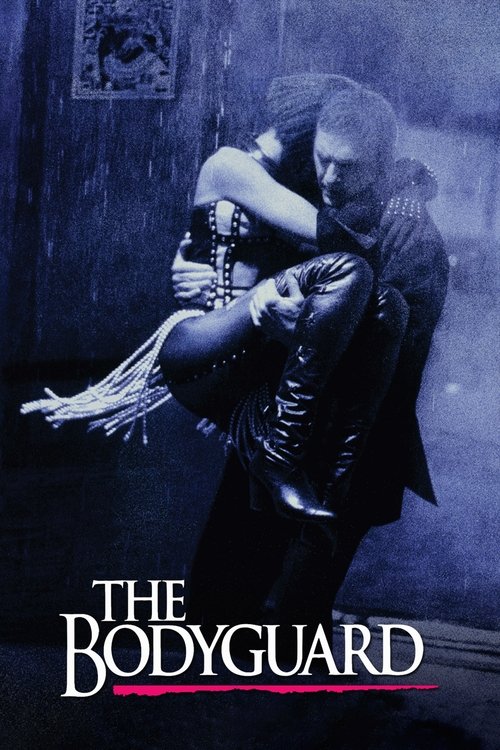
The Bodyguard (1992)
Directed by Mick Jackson
No · Ultra Based
How we score movies →Consciousness Markers
Features Whitney Houston, a Black woman, in a major romantic lead role opposite a white male star. This was unusual for 1992 Hollywood, though the character is still positioned within traditional romantic dynamics requiring her to soften and defer.
While the film features significant Black representation in casting, it demonstrates no meaningful engagement with racial themes, identity, or systemic realities. Race is present but not examined.
The female lead is depicted as capable and independent, but the narrative arc requires her to learn trust and vulnerability, centering the male protagonist's emotional journey. Feminist consciousness is absent.
The film contains minimal preachy messaging about social issues. It is primarily a plot-driven entertainment film without preaching or explicit social instruction.
The protagonist is wealthy and the narrative celebrates security, protection, and consumption without critique. There is no examination of economic systems or class consciousness.
No LGBTQ+ themes, characters, or representation present. The film is a heterosexual romantic action drama with no engagement with queer perspectives.
No climate or environmental themes present. The film is a contemporary urban thriller with no engagement with ecological consciousness.
No body positivity themes. The film features conventionally attractive actors and contains no commentary on bodies or physical representation.
No neurodivergence representation or themes. The antagonist's obsession could be read as mental illness, but it is treated as villainy rather than explored with any nuance.
The film makes no attempt to revise or reframe historical narratives. It is a contemporary thriller set in present-day America.


Synopsis
A former Secret Service agent grudgingly takes an assignment to protect a pop idol who's threatened by a crazed fan. At first, the safety-obsessed bodyguard and the self-indulgent diva totally clash. But before long, all that tension sparks fireworks of another sort, and the love-averse tough guy is torn between duty and romance.
Why it received this score
The Bodyguard occupies an unusual position in cinema history: a film that achieved progressive representation somewhat accidentally, through the simple act of casting a major Black female star in a romantic lead role opposite a white male protagonist. In 1992, this was noteworthy. Whitney Houston carries the film with considerable charisma, and the narrative does not shy away from depicting her character as intelligent, powerful, and capable. Yet the film remains a product of its era, one that treats this interracial pairing as a plot point rather than a given, and one that ultimately centers the anxieties of the white male protagonist. The romance between bodyguard and client hinges on a familiar dynamic: the woman must be protected, must learn to trust, must soften her edges. Houston's character is framed as self-indulgent and difficult before she learns to value the man protecting her. This is not progressive storytelling so much as conventional romance with better casting.
The film's engagement with contemporary social consciousness remains surface-level. There is no meaningful exploration of what it means for a Black woman to navigate fame, security, or desire in the context of 1992 America. The threat to Houston's character comes from a faceless obsessed fan, not from any systemic or social reality. The supporting cast includes several Black actors in substantive roles, which is to the film's credit, but they exist primarily as plot machinery. The narrative does not interrogate power dynamics, race, or gender in any deliberate way. A film can feature diverse casting and still decline to engage with what that diversity signifies.
What emerges from The Bodyguard is a document of a particular cultural moment: mainstream Hollywood willing to cast a Black woman in a major role, but not yet ready to tell stories that centered her experiences or perspective. The film succeeds as a romantic thriller and as a vehicle for Houston's charisma. From the standpoint of contemporary social consciousness, it represents a modest step forward without the accompanying intellectual or artistic commitment to justify calling it progressive cinema. It is a film that looks more progressive than it actually is, which may be the most honest assessment one can make of 1992 Hollywood.
Analysis generated by our Consciousness Algorithm
Critic Reviews
“There's no pretending this is a perfect movie. Yet I doubt I could have enjoyed it more if it were. [25 Nov 1992, p.E1]”
“I thought the basic situation in The Bodyguard was intriguing enough to sustain a film all by itself: on the one hand, a star who grows rich through the adulation that fans feel for her, and on the other hand, a working man who, for a salary, agrees to substitute his body as a target instead of hers. Makes you think.”
“Some of the more tender moments - Farmer and Marron dancing at a country bar and gently probing each other's secrets - are particularly affecting. Less successful is a sequence purportedly set at the Academy Awards that wreaks of artificiality. The utter fecklessness of the segment is so jarring that it isn't until the climax that The Bodyguard pulls itself together. ”
“Perhaps one of the most unbearable viewing experiences of the year, complete with a formulaic script, lousy acting, and muddled direction. ”