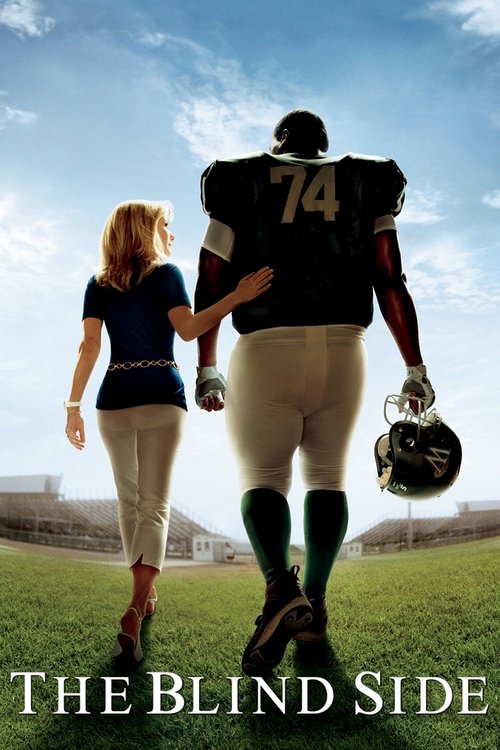
The Blind Side (2009)
Directed by John Lee Hancock
No · Ultra Based
How we score movies →Consciousness Markers
The film features African American characters, including Michael Oher and his biological family, but they are largely defined by their relationship to the white protagonist. Casting is diverse but the narrative structure privileges white characters.
The film acknowledges racial difference and includes some moments of racial tension, but primarily operates within a white savior framework. Systemic racism is not examined; individual prejudice is the focus.
Leigh Anne Tuohy is an active, forceful character, but the film does not engage with feminist themes or critique gender structures. She is presented as exceptional rather than exemplary of systemic change.
The film occasionally delivers dialogue that gestures toward social messaging, particularly around racial prejudice, but generally avoids overt preaching in favor of narrative momentum.
No LGBTQ+ themes or representation present in the film.
No climate-related themes or messaging present in the film.
The film presents wealth and social mobility through sports as an unambiguous good. No critique of capitalism or economic systems appears in the narrative.
No body positivity messaging or representation of diverse body types with positive framing present in the film.
No representation of or engagement with neurodivergence in the film.
While based on true events, the film does not attempt historical revisionism or reframing of established narratives.


Synopsis
The story of Michael Oher, a homeless and traumatized boy who became an All American football player and first round NFL draft pick with the help of a caring woman and her family.
Why it received this score
The Blind Side presents itself as a story of social uplift, yet operates within the framework of a white savior narrative that dominated mainstream cinema in the late 2000s. Sandra Bullock's Leigh Anne Tuohy is positioned as the primary agent of change in Michael Oher's life, a framing that centers white benevolence rather than the protagonist's own agency or the systemic conditions that created his circumstances. The film treats poverty and trauma as problems to be solved by individual compassion, not structural inequality. While the movie features African American characters, their roles largely exist to demonstrate the charity of the white family at the story's center. The football sequences and family drama overshadow any genuine examination of race, class, or the obstacles Oher actually faced.
The film's approach to racial consciousness is surface-level at best. Oher is presented as a tabula rasa awaiting rescue, his background serving primarily as motivation for the Tuohy family's intervention. There is minimal exploration of systemic racism, educational inequality, or economic barriers. The few moments that acknowledge racial dynamics feel obligatory rather than substantive, functioning mainly to establish the Tuohys as exceptional in their acceptance of Oher. This is not a film interested in interrogating its own perspective or the historical context of racial segregation in the American South. It prefers the comfort of personal triumph over the discomfort of institutional analysis.
The remaining markers register minimal to absent. There is no meaningful engagement with gender, sexuality, disability, climate, capitalism, or historical revisionism. This is a straightforward sports drama concerned primarily with narrative momentum and emotional beats. The film's progressive credentials rest almost entirely on its premise of cross-racial adoption, which the film treats as self-evidently redemptive without deeper examination. What we have is a 2009 mainstream drama that feels progressive for its era but reveals itself, upon scrutiny, as fundamentally conservative in its worldview.
Analysis generated by our Consciousness Algorithm
Critic Reviews
“Grounded in the direct, disarming truth of their experience, the movie has a straightforward lack of cheap sentiment that saves it from being either too maudlin or saccharine-sweet.”
“In a head-to-head comparison, one would be hard-pressed not to declare that "Precious" is the better film - it makes fewer compromises and doesn't shy from showing the true ugliness only hinted at in this movie, but The Blind Side is more accessible. It's easier to digest. In the end, both films tell stories of triumph over adversity - a category of drama that uplifts while offering a dollop of social commentary.”
“Blind Side the movie peddles the most insidious kind of racism, one in which whiteys are virtuous saviors, coming to the rescue of African-Americans who become superfluous in narratives that are supposed to be about them.”