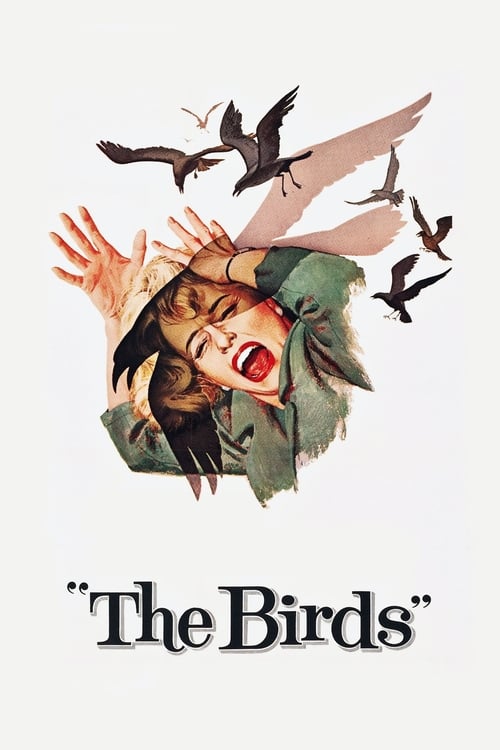
The Birds (1963)
Directed by Alfred Hitchcock
No · Ultra Based
How we score movies →Consciousness Markers
Tippi Hedren carries the film as the central character, which is progressive for 1963, but her agency is consistently undermined by male authority and the camera's objectifying gaze. The entire cast is white and drawn from homogeneous backgrounds.
The female protagonist is intelligent and involved in the plot, but she is defined through romantic entanglement and ultimately dependent on male protection. The film does not interrogate gender dynamics or offer feminist critique.
No LGBTQ+ representation, themes, or characters present in the film.
The film contains no racial representation, diversity, or consciousness. The cast is entirely white, reflecting the era's industry standards without any apparent intentionality.
The environmental catastrophe presented by the bird attacks contains no ecological consciousness or commentary on human impact on nature.
Despite the wealthy setting and the protagonist's privileged background, there is no critique of capitalism, class systems, or economic structures.
No body positivity messaging or representation of diverse body types and physical presentations.
No representation of neurodivergent characters or exploration of neurodivergent experiences.
The film contains no historical narrative or revisionist historical framing.
While Hitchcock's directorial vision imposes a particular worldview, the film does not engage in preachy pronouncement or explicit messaging about social issues.


Synopsis
Thousands of birds flock into a seaside town and terrorize the residents in a series of deadly attacks.
Why it received this score
The Birds stands as a masterwork of suspense cinema, which is precisely the problem when one attempts to locate within it the markers of contemporary progressive sensibility. Tippi Hedren carries the film as Melanie Daniels, a wealthy socialite whose agency and intelligence are consistently undermined by the film's framing within Hitchcock's relentlessly male gaze. She is intelligent, yes, but she exists primarily as an object of desire and, ultimately, as a victim requiring rescue. The film's gender dynamics reflect the early 1960s without critique, and the supporting cast of women (Jessica Tandy, Suzanne Pleshette) are similarly confined to roles defined by their relationships to men and their vulnerability to the central threat. There is nothing here that suggests Hitchcock was interested in interrogating these power structures. The racial composition of the film is entirely homogeneous, not through any deliberate commentary on exclusion but through the casual erasure that defined mainstream American cinema of the era.
The bird attacks themselves present no environmental consciousness whatsoever, no suggestion that nature is responding to human transgression or exploitation. The attacks are presented as inexplicable supernatural horror, a force of nature without meaning or message. There is no climate crusade, no anti-capitalist sentiment despite the wealth-based setting, no representation of any marginalized identity beyond the white, heterosexual, economically privileged characters on screen. The film contains no neurodivergent representation, no body positivity messaging, and no revisionist history. Even the lecture energy, that particular modern tendency toward preachy pronouncement, is absent, though Hitchcock's directorial vision does impose a worldview about masculine authority and feminine vulnerability.
To score this film as if it were made in 2024 would be to commit a category error. The Birds is a product of 1963, made by a director who had no interest in the cultural frameworks we now use to analyze cinema. It is a supreme achievement in its genre, but it is also, by contemporary standards, almost entirely devoid of progressive cultural markers. The score reflects not quality but rather the absence of the specific sensibilities that define modern cultural discourse.
Analysis generated by our Consciousness Algorithm
Critic Reviews
“Genuinely disturbing thriller classic from the master of suspense.”
“The essential Hitchcock movie, the purest and most confident, a brilliant distillation of the themes that had fueled him ever since he sent the lodger creeping to his upstairs room.”
“The true genius of the film, based on a 1952 short story by Daphne du Maurier, is the way Hitchcock makes the malevolent birds seem like manifestations of his characters' mental unease.”
“Director Alfred Hitchcock goes nattering on with an hour of some silly plot-boiling about a flirtatious society girl (Tippi Hedren), a lovelorn schoolmarm (Suzanne Pleshette), an Oedipus wreck (Rod Taylor) and a pair of lovebirds. Hitchcock addicts will just be getting jittery for their first fix of gore when it suddenly becomes clear that the birds is coming: man's feathered friends set themselves to wipe out an entire village on the California coast. Why did the birds go to war? Hitchcock does not tell, and the movie flaps to a plotless end.”