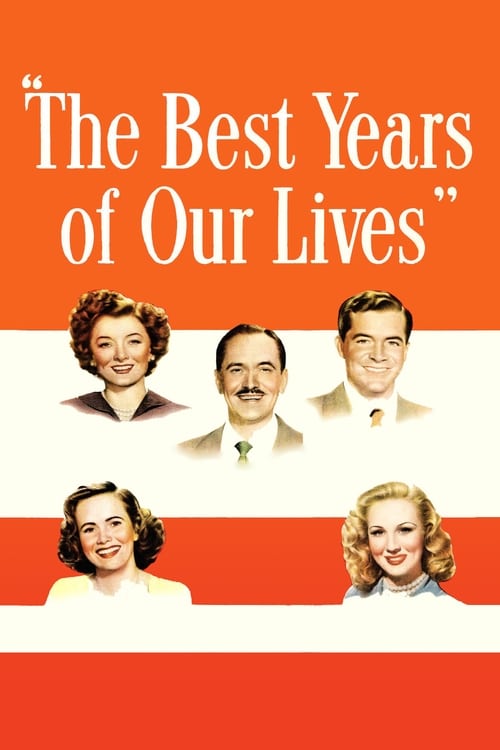
The Best Years of Our Lives (1946)
Directed by William Wyler
No · Ultra Based
How we score movies →Consciousness Markers
Harold Russell's casting as a disabled veteran represents authentic disability representation for 1946, though the film otherwise features an all-white, able-bodied supporting cast reflecting Hollywood's standard practice of the era.
The portrayal of Harold Russell's disability is respectful and humanizing, showing prosthetics and physical limitations without shame, though the film ultimately frames disability as individual tragedy requiring romantic redemption.
Female characters exist primarily as romantic fixtures supporting male narratives. Women's wartime contributions are ignored, and their agency is limited to romantic choice and domestic space.
While the film depicts PTSD and psychological trauma in returning veterans, it treats these conditions as emotional problems requiring romantic and domestic solutions rather than medical or social accommodation.
While the film depicts class differences and includes a wealthy banker character, it offers no critique of capitalism or economic systems. Conflicts resolve through individual accommodation rather than structural change.
The film is dramatically sophisticated and avoids preachy moralizing. Its social commentary emerges from character and situation rather than explicit speeches about social issues.
No LGBTQ+ themes, characters, or subtext are present in the film. The narrative centers entirely on heterosexual romantic pairings.
The film contains no acknowledgment of racial segregation in the military, racial inequality, or any non-white perspectives. All significant characters are white.
Climate themes are entirely absent from this post-war domestic drama about veteran readjustment.
The film presents a conventional, uncritical view of the war and American military service. No alternative historical perspectives or reinterpretations are offered.


Synopsis
It's the hope that sustains the spirit of every GI: the dream of the day when he will finally return home. For three WWII veterans, the day has arrived. But for each man, the dream is about to become a nightmare.
Why it received this score
William Wyler's "The Best Years of Our Lives" remains a monument to post-war American cinema, yet its progressive credentials must be understood in their proper historical context. The film's most genuine claim to early cultural consciousness lies in its unflinching portrayal of Harold Russell, a double-amputee veteran, in a substantial dramatic role. Russell was not an actor but a real disabled person cast to play a disabled character, a choice that was then and remains now a meaningful gesture toward authentic representation. His character's struggle with prosthetics and romantic acceptance carries weight precisely because it was considered daring material for 1946 audiences.
Beyond this notable achievement, however, the film's social consciousness operates within firmly conventional boundaries. The three veteran protagonists occupy the narrative center while their female counterparts serve primarily as romantic prizes or domestic fixtures. Myrna Loy and Teresa Wright inhabit roles designed to support male emotional arcs rather than pursue their own trajectories. The film's examination of post-war readjustment focuses almost exclusively on male anxiety and male homecoming, leaving questions of what women had accomplished during wartime largely unexamined. The wealthy banker character played by Fredric March represents old money and class privilege without any serious interrogation of economic systems or inequality. Class resentment exists in the film but resolves sentimentally rather than structurally.
The picture offers no commentary on racial segregation in the military, no acknowledgment of the war's role in global imperialism, no concern for the atomic age anxieties it inadvertently captures. It is a film about adjustment, not transformation, and about individual redemption through heterosexual coupling and employment within existing structures. For 1946, this was respectable serious cinema. By contemporary standards of progressive representation, it barely registers.
Analysis generated by our Consciousness Algorithm
Critic Reviews
“It feels surprisingly modern: lean, direct, honest about issues that Hollywood then studiously avoided. After the war years of patriotism and heroism in the movies, this was a sobering look at the problems veterans faced when they returned home.”
“It is seldom that there comes a motion picture which can be wholly and enthusiastically endorsed not only as superlative entertainment but as food for quiet and humanizing thought.”
“It's not a great picture; it's too schematic and it drags on after you get the points. However, the episodes and details stand out and help to compensate for the soggy plot strands, and there's something absorbing about the banality of its large-scale good intentions; it's compulsively watchable.”