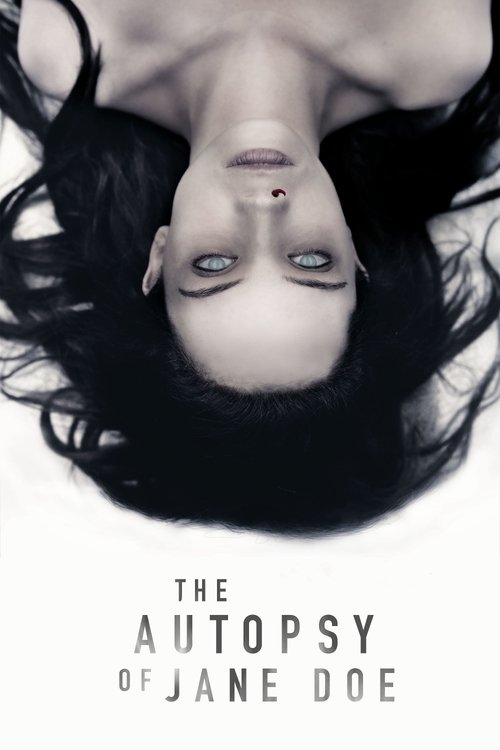
The Autopsy of Jane Doe (2016)
Directed by André Øvredal
No · Ultra Based
How we score movies →Consciousness Markers
The film's central image is a female body being dissected and violated by male authority figures in a confined space. While this could be read as critiquing male violence, the film presents this as horror spectacle rather than as conscious examination of gendered violence.
The cast is predominantly white and male. The female protagonist is literally a corpse with no dialogue or agency, existing only to be examined by male professionals.
No LGBTQ+ themes, characters, or representation present in the film.
No racial themes, racial consciousness, or meaningful diversity in casting. The film does not engage with race as a social construct.
No climate-related themes or environmental consciousness present in this supernatural horror film.
The film contains no critique of capitalism, wealth inequality, or economic systems.
The film's entire premise revolves around the grotesque violation and mutilation of a female body. This is antithetical to body positivity messaging.
No representation of or engagement with neurodivergence, mental health, or neurodivergent characters.
This is a contemporary supernatural horror film with no historical setting or revisionist historical claims.
The film does not attempt to educate, lecture, or deliver moral instruction to the audience about social issues.


Synopsis
Father and son coroners receive a mysterious unidentified corpse with no apparent cause of death. As they attempt to examine the "Jane Doe," they discover increasingly bizarre clues that hold the key to her terrifying secrets.
Why it received this score
The Autopsy of Jane Doe is a tightly constructed horror film that, in its relentless focus on the violation of a female corpse by male professionals, offers a genuinely disquieting meditation on the objectification of women's bodies. The film's entire running time consists of two men examining, measuring, and dissecting the remains of a woman who cannot speak, consent, or resist. She is, literally and figuratively, a blank slate onto which their interpretations are projected. This setup could be read as a critique of male-dominated institutional violence, yet the film presents it primarily as visceral horror spectacle rather than as social commentary. The supernatural elements that emerge complicate the narrative, but they do not fundamentally reframe the underlying dynamic of bodily violation.
From the perspective of contemporary cultural markers, the film remains remarkably indifferent to progressive sensibilities. The cast is predominantly white, the female character exists only as an object of investigation, and no attempt is made to interrogate the gendered power dynamics at play. The film's horror derives not from an examination of institutional misogyny but from the grotesque and the inexplicable. It is, in other words, a straightforward horror exercise that happens to center on a dead woman, rather than a film that uses its premise to examine gendered violence as a social phenomenon.
The film's modest woke score reflects its fundamental disinterest in social consciousness. It is neither progressive nor regressive, but rather apolitical in its approach to its subject matter. This is not a criticism of the film's artistic merit, which is considerable, but rather an observation about its relationship to the contemporary cultural moment.
Analysis generated by our Consciousness Algorithm
Critic Reviews
“Gruesome without being gory, The Autopsy of Jane Doe achieves real scares with a minimum of special effects.”
“Featuring excellent work from grandstanding Cox and just-lying-there Kelly, The Autopsy Of Jane Doe creates a successful feeling of mounting dread punctuated by crashing thunder and surgical viscera.”
“André Øvredal (Troll Hunter) ruthlessly ratchets the tension – with no little assistance from Olwen Kelly, conveying menace without moving a muscle.”
“‘Jane Doe’ never aspires beyond the ordinary, and more crucially even fails to meet that modest standard. Lifeless and lackluster, ‘Jane Doe’ never draws blood.”