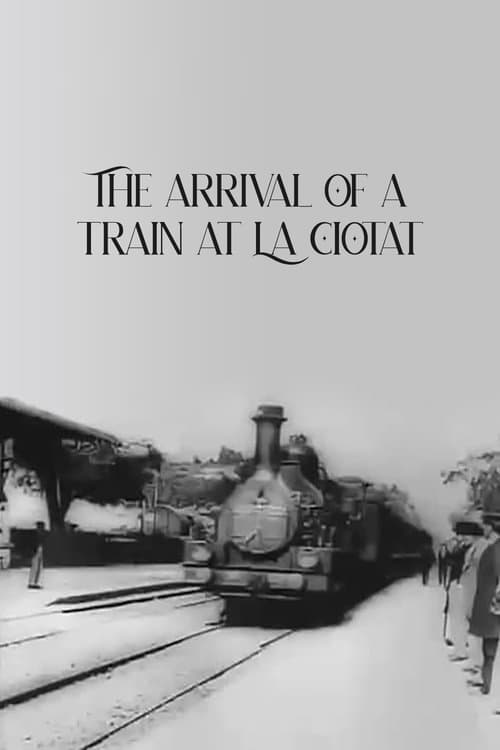
The Arrival of a Train at La Ciotat (1896)
Directed by Louis Lumière
No — The Arrival of a Train at La Ciotat is not woke, scoring 0 out of 100 on our wokeness meter.
A steam locomotive pulls into a station in the south of France.
Consciousness Markers
A 50-second 1896 actuality film of anonymous French townsfolk on a platform; the crowd's composition is incidental, not a casting statement.
No LGBTQ+ content of any kind; the film predates the concept by decades.
Women and children appear in the 1897 reshoot simply as passengers boarding a train; no gender politics are articulated.
No engagement with race or racial dynamics whatsoever.
A steam locomotive is filmed as a marvel of modernity, not as an ecological cautionary tale.
No economic critique; the Lumières were industrialists showcasing their own invention.
No body-image themes present.
No neurodivergence themes present.
The film is itself a primary historical document; it revises nothing.
A single unedited view with no narration, title cards, or message; it simply shows a train arriving.
Why it received this score
A steam locomotive pulls into a station in the south of France. Fifty seconds later it stops, and the doors open. This is the entirety of the Lumière brothers' actuality film, and it remains, a hundred and thirty years on, the most efficient argument for the cinema ever committed to celluloid. There is no narration, no title card, no message. There is a train.
The film has acquired a reputation it does not deserve. Legend holds that the first audience fled in terror, mistaking the projected image for an oncoming locomotive. Historians have since established that no contemporary account supports the panic, and that the story was embellished, if not invented, for promotional purposes. A parody industry sprang up within five years, in which yokels ran from the screen, and the joke calcified into fact. What the film actually offers is a platform of anonymous townsfolk, several of them members of the Lumière family, instructed not to acknowledge the camera. They comply. It is a staging of the ordinary, and it is exquisite.
Assessing the film against the cultural sensibilities of the present day is a brief exercise. The crowd's composition is incidental. Women and children appear in the 1897 reshoot because women and children boarded trains in 1897. The locomotive is presented as a marvel of industrial modernity, not an ecological cautionary tale. The Lumières were manufacturers promoting their own apparatus, so no economic critique is on offer. There is no interiority, no argument, no sermon. The film is a primary document of the world before any of these conversations existed, and it revises nothing. It simply shows a train arriving. The train arrives. We are left to draw our own conclusions, which is, in the end, the whole point.
Analysis generated by our Consciousness Algorithm
Synopsis
A group of people are standing along the platform of a railway station in La Ciotat, waiting for a train. One is seen coming, at some distance, and eventually stops at the platform. Doors of the railway-cars open and attendants help passengers off and on. Popular legend has it that, when this film was shown, the first-night audience fled the café in terror, fearing being run over by the "approaching" train. This legend has since been identified as promotional embellishment, though there is evidence to suggest that people were astounded at the capabilities of the Lumières' cinématographe.
Questions about The Arrival of a Train at La Ciotat
Is The Arrival of a Train at La Ciotat woke?
No — The Arrival of a Train at La Ciotat is not woke, scoring 0 out of 100 on our wokeness meter. That earns it a verdict of Ultra Based.
Does The Arrival of a Train at La Ciotat have any woke elements?
No. All 10 markers score zero.
How is the Woke Score calculated?
An AI-assisted process researches the film and its reception, scores it 0–100 on ten markers, then combines those into one 0–100 Woke Score. It measures a specific set of 2020s cultural themes, not film quality.