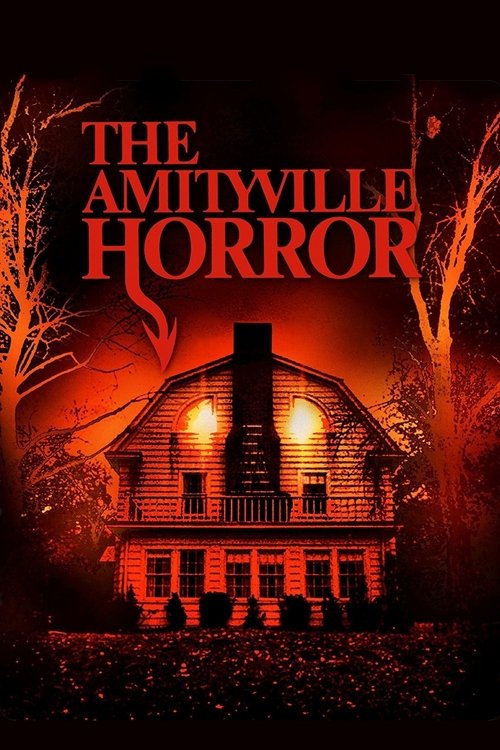
The Amityville Horror (1979)
Directed by Stuart Rosenberg
No · Ultra Based
How we score movies →Consciousness Markers
The cast is uniformly white with minimal diversity. Rod Steiger's portrayal of Father Delaney in brownface represents a deeply regressive casting practice rather than progressive representation.
Priests deliver some spiritual exposition and warnings, but this functions as plot mechanics rather than preachy lecturing about social issues.
Father Delaney, the only Black character, is portrayed by a white actor in brownface, indicating a complete absence of racial consciousness or sensitivity.
Margot Kidder's character is relegated to reactive suffering and family concern. No interrogation of gender roles or female agency occurs.
No LGBTQ+ themes, characters, or representation appear in the film. Sexual orientation is never addressed.
No environmental themes, climate messaging, or ecological consciousness appears in the narrative.
The film shows no critique of capitalism or economic systems. The family's financial desperation is merely plot device.
No body positivity themes or representation of diverse body types appear. The narrative contains no commentary on physical appearance or bodily acceptance.
No neurodivergent characters or conditions are represented or discussed in the film.
The film contains no historical revisionism or reexamination of historical narratives.


Synopsis
George Lutz, his wife Kathy, and their three children have just moved into a beautiful, and improbably cheap, Victorian mansion nestled in the sleepy coastal town of Amityville, Long Island. However, their dream home is concealing a horrific past and soon each member of the Lutz family is plagued with increasingly strange and violent visions and impulses.
Why it received this score
The Amityville Horror is a 1979 artifact of pure, unself-conscious horror cinema, which is to say it is almost entirely devoid of the progressive social consciousness that would later become a cultural fixture. The film concerns itself with the supernatural menace residing within a Victorian home, not with interrogating the systems that enable financial desperation or the gendered vulnerabilities that the narrative casually exploits. Margot Kidder's Kathy functions as the emotional center of the family's deterioration, but her character exists to suffer and react rather than to embody any particular ideological position about women's agency or bodily autonomy.
The film's sole modest concession to what we might generously call cultural awareness is the presence of a Black priest character, Father Delaney, portrayed by Rod Steiger in brownface, a casting choice so thoroughly of its era that it serves as a museum piece of Hollywood's casual disregard for basic dignity. The family itself is presented without any particular diversity beyond whiteness, and their three children are there primarily to scream and be imperiled. There is no examination of disability, neurodiversity, or bodily difference of any kind. The narrative has no truck with climate consciousness, economic critique, or historical revisionism. It is simply a haunted house film, made with competent direction and a commitment to mechanical scares.
What emerges is a film that predates the cultural markers we are tasked with identifying by a full generation. It is neither progressive nor regressive in the modern sense; it simply does not concern itself with such matters. The Amityville Horror occupies a pre-ideological space, which is its own form of statement. In the calculus of 2020s cultural sensibility, it barely registers.
Analysis generated by our Consciousness Algorithm
Critic Reviews
“The film is a terrific scare show, fast and furious, made with a lot of style and energy, packing plenty of jolts yet never lingering morbidly over horrific images. It is anchored in strong characterizations, and its plot develops with chilling psychological suspense. It's such a skillfully made entertainment that its plunge into the supernatural is persuasive even for the skeptical.”
“This remake stays close to the eponymous 1979 horror movie it's based on, except for being precisely 10,000 times scarier.”
“I got exactly what I expected: Scared and tickled, within an inch of my life.”
“I'd like to tell you about the remake of The Amityville Horror (MGM), but I ankled after less than five minutes. It was something about the little girl holding the stuffed animal getting blown away with a shotgun at point-blank range.”