The Age of Adaline (2015)
Directed by Lee Toland Krieger
No · Ultra Based
How we score movies →Consciousness Markers
While Adaline is the protagonist who makes autonomous choices, the narrative orbits around her romantic relationships with men. Her agency is personal rather than driven by feminist consciousness or commentary on gender structures.
Narration and philosophical asides about time and life provide minimal preachy content, falling short of the modern lecture-energy sensibility in progressive cinema.
The cast is predominantly white with no evident commitment to diverse representation. Lead roles and supporting cast reflect conventional Hollywood casting patterns without intentional diversity initiatives.
The film is a heterosexual romance narrative with no LGBTQ+ characters, representation, or thematic content.
No racial themes, commentary on racial issues, or consciousness of racial dynamics are present in the narrative.
The film contains no environmental or climate-related themes or messaging.
There is no critique of capitalism, wealth systems, or class structures. The narrative focuses exclusively on personal romantic drama.
The film's premise celebrates eternal youth and beauty, treating aging as an affliction to be avoided. This directly contradicts body positivity messaging.
No representation of neurodivergent characters or exploration of neurodivergence themes.
Historical periods serve as backdrop only. The film does not reframe or revisit historical narratives through contemporary social consciousness.


Synopsis
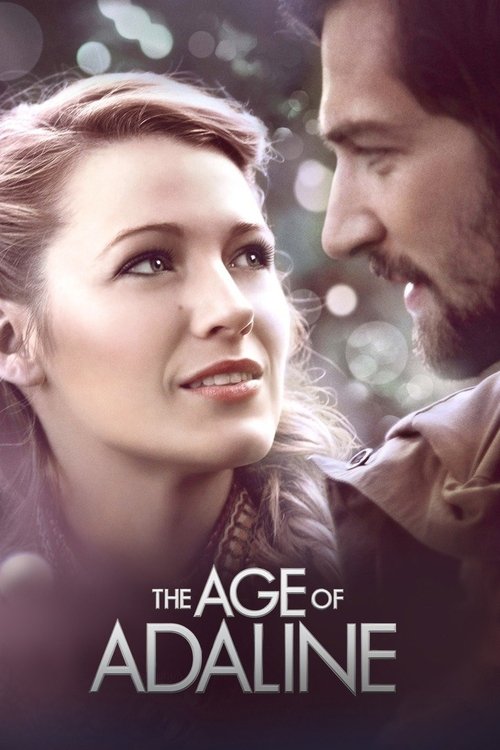
After 29-year-old Adaline recovers from a nearly lethal accident, she inexplicably stops growing older. As the years stretch on and on, Adaline keeps her secret to herself until she meets a man who changes her life.
Why it received this score
The Age of Adaline arrives as a period-appropriate romance for 2015, untouched by the progressive social consciousness that would come to define contemporary cinema. Blake Lively plays Adaline Bowman, a woman frozen at age twenty-nine by a mysterious accident, and the film treats this condition as a romantic metaphor rather than a vehicle for social commentary. The narrative concerns itself solely with matters of the heart: whether Adaline can maintain her secret, whether she can love without revealing her true nature, whether sacrifice and vulnerability might be worth the risk. These are legitimate emotional concerns, but they exist in a vacuum of social awareness.
The film's casting reflects the Hollywood of its era, which is to say it reflects the Hollywood that existed before studios began calculating representation percentages and diversity metrics. The supporting cast includes Ellen Burstyn as Adaline's aging mother and Harrison Ford as Ellis's father, both lending gravitas to what is essentially a three-hanky romantic drama. The cinematography is lovely. The performances are competent. Director Lee Toland Krieger orchestrates the material with the professionalism of a craftsman who understands the contours of the romance genre. Yet there is nothing here that speaks to the social preoccupations of our moment. The film does not interrogate beauty standards, does not grapple with representation, does not deploy its immortal female protagonist as a lens through which to examine power or gender. She is simply a woman who loves and suffers and must choose between revealing herself or remaining alone.
This is not a failing of the film so much as a temporal accident. The Age of Adaline is a work that arrived at the tail end of the old Hollywood order, before cultural criticism became the default mode of entertainment discourse. It asks us to care about Adaline's dilemma without first insisting that we interrogate the systems and structures that produce such dilemmas. In an era when every piece of popular media must now justify itself through some framework of social consciousness, this film's innocent indifference to such concerns reads as almost quaint. It simply wants us to believe in love, and it asks nothing more of us than that belief.
Analysis generated by our Consciousness Algorithm
Critic Reviews
“Ford, in a performance as affecting as any he’s ever given, lifts this romance in ways we never see coming.”
“Lively’s performance grows more engaging as her facade finally begins to crack, and Huisman serves as a sufficiently handsome foil throughout, but if anyone rises to the occasion, it’s Harrison Ford as a former flame reunited with Adaline through a perverse twist of fate.”
“Lively looks fantastic in every era’s fashion as it passes, and she does a nice job of conveying Adaline’s old-world diction and reserve; there’s no Gossip in this girl.”
“Someone should steal this concept and make a decent movie out of it. ”