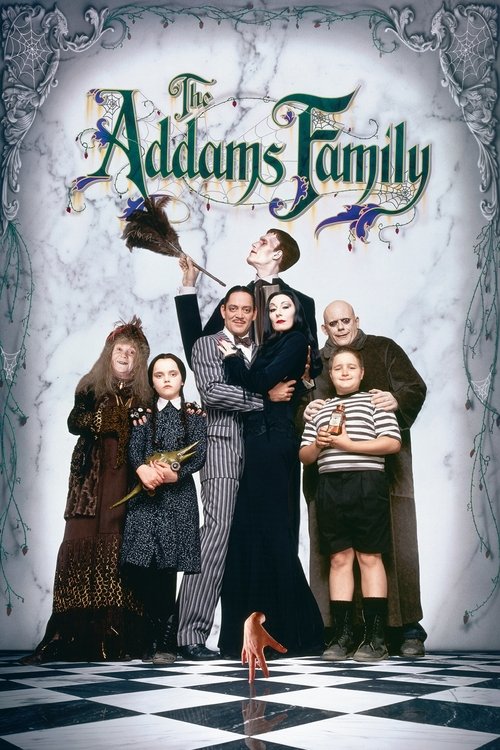
The Addams Family (1991)
Directed by Barry Sonnenfeld
No · Ultra Based
How we score movies →Consciousness Markers
The cast includes actors of color in prominent roles, but this reflects Hollywood hiring practices rather than intentional representation strategy. Diversity exists without commentary.
Morticia Addams displays confidence and agency, but this stems from 1960s camp aesthetics, not contemporary feminist consciousness. No explicit feminist messaging or critique of gender roles.
No examination of race, ethnicity, or systemic inequality. The film treats its diverse cast as simply part of the ensemble without thematic engagement.
The family's eccentricity and strangeness could be read as neurodivergent coding, but the film makes no explicit connection or commentary on neurodivergence as a theme.
No LGBTQ+ themes, characters, or representation present in the film.
No environmental themes or climate consciousness whatsoever.
The film celebrates the family's vast inherited wealth as part of their charm. No critique of capitalism or economic systems.
No body positivity messaging or critique of beauty standards. Characters are presented in conventional comedic terms.
No reframing of historical narratives or revisionist history present in this contemporary supernatural comedy.
The film maintains a light comedic tone throughout with no preachy messaging, moral lessons, or lecture-like elements.


Synopsis
When a man claiming to be long-lost Uncle Fester reappears after 25 years lost, the family plans a celebration to wake the dead. But the kids barely have time to warm up the electric chair before Morticia begins to suspect Fester is fraud when he can't recall any of the details of Fester's life.
Why it received this score
The Addams Family arrives as a period artifact of early 1990s popular entertainment, a film so thoroughly committed to its own macabre aesthetic that it remains almost willfully indifferent to contemporary cultural concerns. The ensemble cast is diverse by the standards of mainstream Hollywood comedies of the era, yet this diversity functions as mere casting choice rather than thematic statement. Raúl Juliá's Gomez Addams and Anjelica Huston's Morticia exist in a world of inherited wealth and aristocratic eccentricity, where the central conflict involves resisting a con scheme, not interrogating systemic power structures. The film is not interested in social commentary of any kind.
What progressive elements the film possesses are accidental rather than deliberate. Morticia presents as sexually confident and dominant within her marriage, though this characterization predates contemporary feminist discourse and springs instead from Charles Addams' original comic sensibility. The family's otherness, their rejection of suburban normalcy, reads more as countercultural pastiche than ideological critique. The children are weird and creepy rather than neurodivergent. The wealth is celebrated as part of their gothic charm, not critiqued. There is no discussion of climate, capitalism, identity politics, or social justice. The film simply tells its story and moves on.
Barry Sonnenfeld's directorial debut succeeds as a crafted entertainment precisely because it knows what it is: a family comedy with supernatural trappings, designed to function as self-contained comedy bits strung together with the loosest of plots. We approach this film seeking laughs, not enlightenment, and it makes no pretense otherwise. To score it highly on contemporary cultural markers would be to impose a framework entirely foreign to its conception and purpose. It belongs to a different era of filmmaking, one where identity and representation were not yet the central organizing principles of cultural production.
Analysis generated by our Consciousness Algorithm
Critic Reviews
“A laugh-in-the-dark funhouse ride that provides nearly two hours of slightly sinister sight gags and Gothic giggles, is creepy, kooky, even altogether ooky enough to satisfy any Addams addict.”
“Truthfully, it's hard to imagine a better screen adaptation of this queer household. Addams would have been proud.”
“One reason that this movie works as well as it does is that everyone takes everything completely seriously. The world of the Addams family may be amusing to us, but to them it's just life. [22 Nov 1991, p.16]”
“Ultimately, the film's self-censoring will to sweetness and innocence is even more fatal than the flimsiness of the plot. [22 Nov 1991, p.33]”