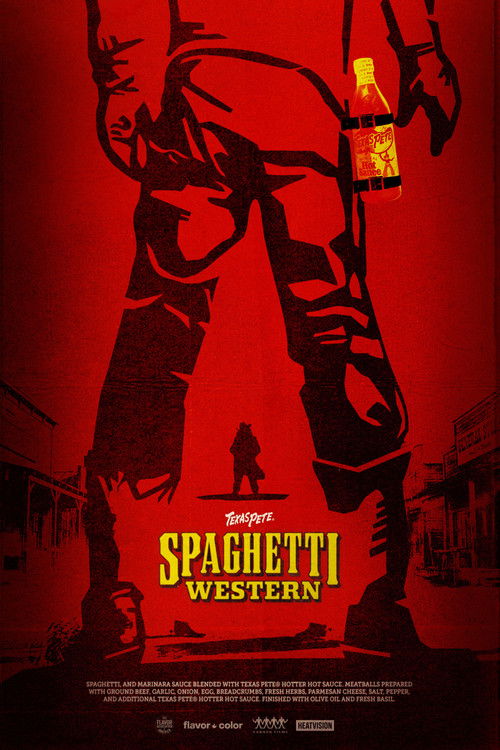
Texas Pete Spaghetti Western (2026)
Directed by Ryan Polly
No · Ultra Based
How we score movies →Consciousness Markers
The film offers no discernible agenda around representation casting. Characters are named after pasta dishes, which is a demographic category not yet recognized by the Academy.
No LGBTQ+ themes are present. The central romantic tension, if any exists, appears to be between a cowboy and his spaghetti.
No feminist messaging is evident. The film's lone apparent female cast member, Sophia Aranda, exists in a world where the primary political struggle concerns pasta sovereignty.
Racial consciousness is entirely absent. The film is conscious only of carbohydrates.
No climate themes are present. The ecological footprint of Flavorado's spaghetti consumption goes unexamined, which is frankly the most realistic thing about this film.
Despite the villain Clyde Carbonara threatening the town's culinary freedoms, this film is itself a 53-minute advertisement for a hot sauce brand. Anti-capitalism does not appear to be the operative register.
Body positivity is not addressed. The film is, at its core, a commercial encouraging the consumption of spicy condiments, which is a different kind of body relationship entirely.
No neurodivergence themes are present or implied. The characters' decision-making, while food-pun-driven, does not appear to be framed in clinical terms.
The film does not revise history. It is set in a fictional town called Flavorado, which has no history to revise, only a pasta-based constitution to defend.
Lecture energy is nonexistent. The film's moral universe is uncomplicated: spaghetti is good, Clyde Carbonara is bad, Texas Pete hot sauce presumably makes both more interesting.
Synopsis
When the evil Clyde Carbonara threatens the town of Flavorado's right to eat spaghetti a dozen different ways, Johnny Alfredo and his companions risk everything to save Flavorado and it's very way of life.
Why it received this score
There are films that grapple with the human condition. There are films that challenge systemic injustice, interrogate power, and demand that audiences reckon with uncomfortable truths. "Texas Pete Spaghetti Western" is a 53-minute branded content experience in which a man named Johnny Alfredo defends the town of Flavorado from a villain named Clyde Carbonara, and we must engage with it on those terms.
The film registers a score of zero across all ten markers of contemporary social consciousness, which is, in its own way, a kind of achievement. It is not that the film is reactionary. It is not that the film pushes back against progressive sensibilities. It is simply that the film exists in a dimension where the only pressing ideological question is whether hot sauce belongs on pasta. The conflict is entirely pasta-based. The stakes are pasta-based. The character names are, without exception, pasta-based. In a cultural moment defined by films straining under the weight of their own messaging, "Texas Pete Spaghetti Western" has the audacity to be about nothing except spaghetti and a condiment brand. This critic has sat with that fact for some time now.
Directed by Ryan Polly and distributed through TikTok amplification as part of Texas Pete's "Let Flavor Run Wild" marketing platform, the film is perhaps the purest artifact of our current era: not a film that lectures, not a film that provokes, but a film that exists to sell hot sauce to people who already own hot sauce. It scores a zero. It earns its zero. The zero is, in the context of everything else released in 2026, almost refreshing.
Analysis generated by our Consciousness Algorithm