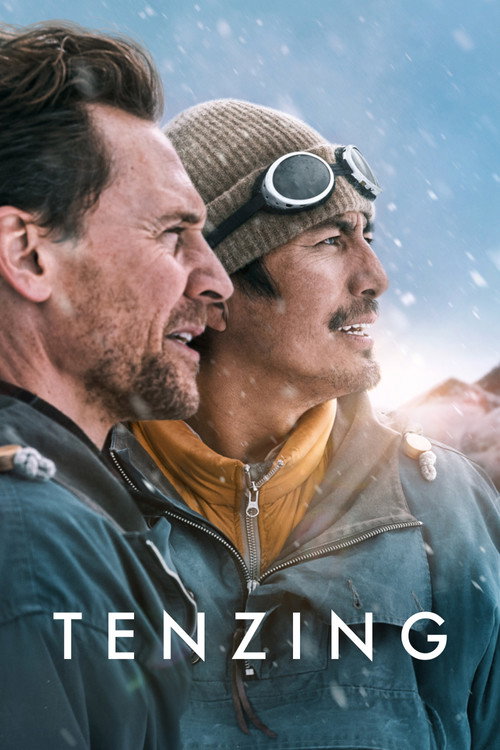
Is Tenzing (2026) Woke?
Tenzing · 2026 · Directed by Jennifer Peedom
Woke Score
CriticCritic Score
Audience
Woke
Critics rated this 5 points above its woke score. Among Woke films, this critic score ranks #68 of 99.
Answer: Yes
Woke Score 62/100 · Verdict: Woke
Strongest markers: Representation Casting (85) · Revisionist History (80) · Racial Consciousness (72)
Representation Casting
Score: 85/100
The film's entire architecture is built around casting a Tibetan actor in the lead role of a story historically told through Western faces. Genden Phuntsok underwent extensive cultural immersion, Norgay's family served as consultants, and the production's stated mission was to correct who gets to stand at the center of the frame.
LGBTQ+ Themes
Score: 0/100
No LGBTQ+ themes, characters, or content identified in the film or its surrounding discourse.
Feminist Agenda
Score: 0/100
The film's subject, cast, and thematic concerns are oriented around male mountaineers and colonial credit dynamics. The director is a woman, but the narrative itself contains no feminist framing.
Racial Consciousness
Score: 72/100
The colonial disparity between Hillary's knighthood and Norgay's lesser George Medal is treated as a structural grievance, and the film explicitly frames Sherpas as having been reduced to servants in the historical record. The contrast between Western 'conquest' language and the Sherpa reverence for Chomolungma as a sacred mother goddess is a conscious act of cultural counter-positioning.
Climate Crusade
Score: 0/100
No climate themes identified. The mountain is a spiritual and physical setting, not an environmental statement.
Eat the Rich
Score: 0/100
No anti-capitalist themes identified. The British expedition is critiqued for imperial credit-taking, not for economic exploitation.
Body Positivity
Score: 0/100
No body positivity themes identified. The physical demands of high-altitude mountaineering are treated as an athletic and spiritual challenge, not a cultural statement.
Neurodivergence
Score: 0/100
No neurodivergence themes identified in the film or its surrounding discourse.
Revisionist History
Score: 80/100
The film's purpose is explicitly revisionist: it takes a canonical imperial triumph and recenters it on the figure history demoted to supporting role. The simultaneous-summit staging of the final ascent is a deliberate directorial intervention in a decades-old historiographical dispute, and the Chomolungma framing repositions the entire event within indigenous rather than colonial meaning-making.
Lecture Energy
Score: 28/100
Critics broadly agree the film avoids sermonizing, and the British climbers are not demonized. The corrective messaging is embedded in narrative structure instead of delivered as dialogue. A residual score reflects the film's unmistakable awareness of its own moral project, which occasionally surfaces in the framing.

Synopsis
A determined man embarks on a high-stakes quest and defies seemingly impossible odds to fulfill his dream of being the first to reach the summit of Mount Everest.
Why it received this score
*Tenzing* arrives with the quiet confidence of a film that knows exactly what it is doing and would like you to know it too. Director Jennifer Peedom has taken the 1953 Everest summit, one of the twentieth century's most photographed imperial victories, and rotated it 180 degrees so that the Sherpa guide is now at the front and the British knight is somewhere behind him, adjusting his crampons. This is not a subtle maneuver. It is, however, an effective one.
The film's central revisionist gesture is structural rather than polemical. By casting Genden Phuntsok, an actor of Tibetan descent who spent months in Norgay's former village before filming, and by enlisting Norgay's own family as consultants, the production has done something the original 1953 press coverage conspicuously failed to do: it has treated the Sherpa as the subject of his own story. The colonial credit arithmetic, Hillary knighted, Norgay handed a George Medal of the second tier, is not belabored in dialogue so much as allowed to accumulate as atmospheric pressure. Tom Hiddleston's Hillary is portrayed as a genuine partner not a villain, which is the film's most disciplined choice. Villains would have been easier.
Where the film's cultural self-awareness becomes most visible is in its treatment of the mountain itself. The Western expedition speaks of conquering Everest; the Sherpa tradition regards Chomolungma as a sacred mother goddess whose permission must be sought. Peedom holds these two cosmologies in frame simultaneously without forcing a verdict, though the camera's sympathies are not exactly opaque. The climactic decision to show both men reaching the summit at the same moment, sidestepping the "who stepped first" question that has occupied historians for seventy years, is presented as an act of solidarity. It is also, of course, an act of curation. A film this conscious of what history got wrong is, by definition, conscious of what it is choosing to correct. That awareness is the film's great strength and, in small doses, its most visible seam.
Analysis generated by our Consciousness Algorithm
Critic Reviews
“Through drone technology, “Tenzing” transports us to a bird’s-eye view few people will ever see. Every shot of the snowy, stark mountain landscape feels like 8K. Paired with a crisp sound design, the film becomes quite immersive. The crunch of the snow and every emphasized exhale in the thin air feel familiar, yet create a deep unease, knowing every step is on uncertain ground. ”
“At its best, Tenzing is a personal story and a fascinating exploration of the varied local culture’s relationship to the as-of-yet untamed deity.”
“While the film could be touted as a portrait of faith and hard work, it’s also about the people who carry that dream with you. And when Tenzing reaches the top, it earns every emotion waiting there.”
“The film is less interested in its biographical mission than in making the journey up Everest feel as immersive and tactile as possible. ”
Related rankings
Consciousness Markers
The film's entire architecture is built around casting a Tibetan actor in the lead role of a story historically told through Western faces. Genden Phuntsok underwent extensive cultural immersion, Norgay's family served as consultants, and the production's stated mission was to correct who gets to stand at the center of the frame.
No LGBTQ+ themes, characters, or content identified in the film or its surrounding discourse.
The film's subject, cast, and thematic concerns are oriented around male mountaineers and colonial credit dynamics. The director is a woman, but the narrative itself contains no feminist framing.
The colonial disparity between Hillary's knighthood and Norgay's lesser George Medal is treated as a structural grievance, and the film explicitly frames Sherpas as having been reduced to servants in the historical record. The contrast between Western 'conquest' language and the Sherpa reverence for Chomolungma as a sacred mother goddess is a conscious act of cultural counter-positioning.
No climate themes identified. The mountain is a spiritual and physical setting, not an environmental statement.
No anti-capitalist themes identified. The British expedition is critiqued for imperial credit-taking, not for economic exploitation.
No body positivity themes identified. The physical demands of high-altitude mountaineering are treated as an athletic and spiritual challenge, not a cultural statement.
No neurodivergence themes identified in the film or its surrounding discourse.
The film's purpose is explicitly revisionist: it takes a canonical imperial triumph and recenters it on the figure history demoted to supporting role. The simultaneous-summit staging of the final ascent is a deliberate directorial intervention in a decades-old historiographical dispute, and the Chomolungma framing repositions the entire event within indigenous rather than colonial meaning-making.
Critics broadly agree the film avoids sermonizing, and the British climbers are not demonized. The corrective messaging is embedded in narrative structure instead of delivered as dialogue. A residual score reflects the film's unmistakable awareness of its own moral project, which occasionally surfaces in the framing.