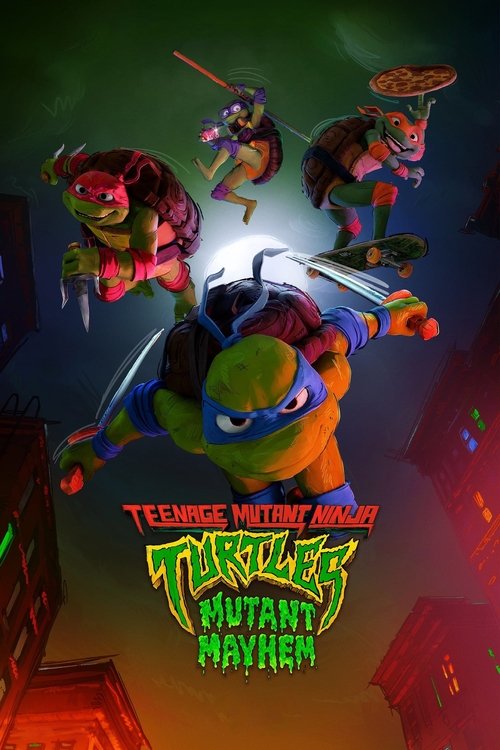
Teenage Mutant Ninja Turtles: Mutant Mayhem (2023)
Directed by Jeff Rowe
No · Based
How we score movies →Consciousness Markers
The voice cast is notably diverse, with Ayo Edebiri voicing April O'Neil, Ice Cube as the villain Superfly, and Jackie Chan as Splinter. The redesign of April generated predictable internet discourse, suggesting the choices were culturally legible as intentional representation moves, even if they were not belabored within the film itself.
The outsider-seeking-acceptance allegory carries a faint racial undertone, and the diverse casting is present throughout. However, the film never explicitly frames its themes in terms of race, and the mutants-as-marginalized-group metaphor is kept at the level of general otherness rather than specific racial consciousness.
The film's core message about fear, prejudice, and the importance of accepting outsiders is delivered with some earnestness, particularly through Splinter's arc. It remains largely embedded in the story rather than delivered from a podium, which keeps the sermonizing to a minimum.
April O'Neil is a capable, resourceful female protagonist, which is consistent with her characterization across most TMNT iterations and does not constitute a new feminist agenda. She functions as a peer to the Turtles rather than a damsel, but the film makes no particular argument about gender.
Superfly's hatred of humanity carries a vague anti-establishment resentment, and the crime syndicate antagonists are broadly corporate in flavor. Neither thread is developed into a coherent anti-capitalist argument.
No LGBTQ+ themes, characters, or subtext are present in the film. The Turtles' desire for social acceptance is not coded in any queer direction.
No climate themes, environmental messaging, or ecological anxiety are present. The film's New York setting is cheerfully polluted in the classic TMNT tradition.
No body positivity themes are present. The Turtles are giant mutant reptiles, which is a different category of body issue entirely.
No neurodivergence themes or characters are present. The Turtles' social awkwardness is attributed to their literal non-humanity, not to any coded neurodivergent identity.
No revisionist history is present. The film does not engage with historical events or attempt to reframe any established narrative.


Synopsis
After years of being sheltered from the human world, the Turtle brothers set out to win the hearts of New Yorkers and be accepted as normal teenagers through heroic acts. Their new friend April O'Neil helps them take on a mysterious crime syndicate, but they soon get in over their heads when an army of mutants is unleashed upon them.
Why it received this score
Teenage Mutant Ninja Turtles: Mutant Mayhem arrives in 2023 carrying the full weight of a franchise that has survived multiple decades, multiple live-action disasters, and at least one Vanilla Ice cameo. Director Jeff Rowe, fresh from The Mitchells vs. the Machines, applies a similar strategy here: take a known IP, inject it with genuine adolescent feeling, and hope the audience mistakes emotional sincerity for artistic courage. The gambit largely works. The film is, by any reasonable measure, a good animated movie about teenagers who happen to be turtles, and its central thesis, that being feared for what you are is painful and that acceptance requires vulnerability from both sides, is delivered through story rather than through a character turning to the camera and explaining it.
The casting choices are where the film's cultural positioning becomes most legible. Ayo Edebiri voices April O'Neil, Ice Cube voices the villain, and the four Turtle actors are a genuinely diverse ensemble of young unknowns. None of this is commented upon within the film, which is the correct approach, and yet the redesign of April generated the predictable internet discourse that now accompanies any such decision as reliably as a second-act plot twist. The film's social consciousness, to the extent it exists, operates at the level of allegory: mutants want to be seen as people, humans fear what they do not understand, and the resolution involves everyone agreeing to try harder. This is not a new message. It is, in fact, the message of nearly every superhero origin story ever committed to film, and its presence here does not feel like an agenda so much as a default setting.
What keeps Mutant Mayhem from scoring higher on the cultural awareness spectrum is its fundamental commitment to being, above all else, a film about four teenage boys who want to go to high school and eat pizza. The progressive sensibilities are present in the casting and in the acceptance allegory, but they are not the engine of the movie. Superfly's resentment of humanity gestures toward something more pointed, then retreats into a giant monster finale. Splinter's arc about parental fear is the most emotionally developed thread, and it lands not because it makes an argument but because it earns its feeling. The film is, in the end, more interested in being fun than in being correct. In the current landscape, that restraint is its own kind of distinction.
Analysis generated by our Consciousness Algorithm