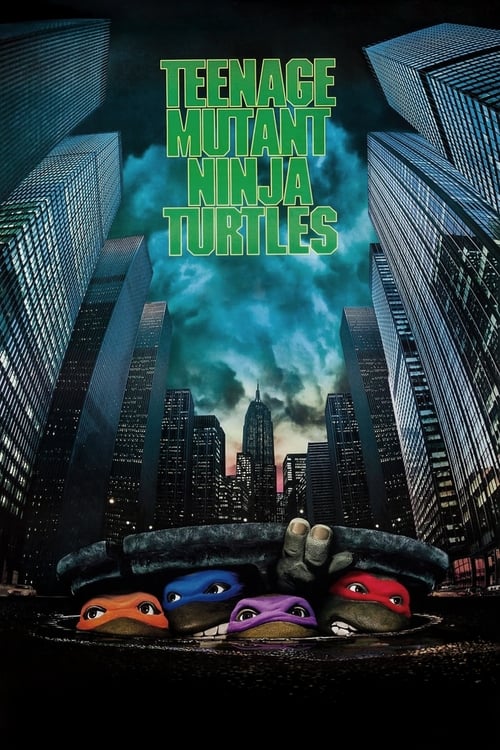
Teenage Mutant Ninja Turtles (1990)
Directed by Steve Barron
No · Ultra Based
How we score movies →Consciousness Markers
April O'Neill is a competent reporter and active participant in the story, though she remains secondary to the male heroes. The film does not critique patriarchal structures.
The film features a white female journalist (April O'Neill) as the primary human character alongside white male heroes. Voice casting includes some diversity, but the on-screen human cast is predominantly white.
The film features an Asian-inspired villain (Shredder) and Asian martial arts traditions without interrogating these representations. No meaningful commentary on race or cultural appropriation.
Master Splinter delivers occasional wisdom and philosophy, but the film prioritizes entertainment and action over preachy messaging.
While Shredder runs a criminal organization, the film presents no critique of capitalism or systemic economic exploitation. Villainy is treated as individual moral failing.
No LGBTQ+ themes, representation, or subtext are present in this 1990 action film.
Climate change and environmental consciousness are entirely absent from this 1990 action adventure film.
Body positivity discourse did not factor into this film's conception. The turtles are presented as idealized action heroes without commentary on body diversity.
No representation of or engagement with neurodivergence is present in the film.
The film contains no historical revisionism or alternative historical framing.


Synopsis
A quartet of humanoid turtles, trained by their mentor in ninjitsu, must learn to work together to face the menace of Shredder and the Foot Clan.
Why it received this score
The 1990 "Teenage Mutant Ninja Turtles" represents a pre-woke artifact of early nineties pop culture, when films could exist in a state of blissful disinterest toward contemporary social consciousness. This is a straightforward action adventure featuring anthropomorphic reptiles dispatching criminals in New York City. The narrative machinery grinds forward without pause for interrogation of its own assumptions. We are presented with competence and heroism as sufficient justification for action, and villainy as a personal choice rather than a structural condition. Shredder is evil because he chooses to be, not because any system has failed him.
The film's female character, April O'Neill, performs her function as reporter and occasional damsel with professional competence. She is neither objectified beyond the standards of 1990 cinema nor elevated as a figure of particular social consciousness. She exists, works, and participates in the plot. This is presented without irony or commentary, which is perhaps the most honest thing the film does. The cast reflects the demographics of mainstream American action cinema of that era, which is to say predominantly white, with voice acting distributed among recognizable names of the period.
The film's treatment of Asian martial arts traditions and the Japanese-inspired villain occurs without the contemporary anxiety about cultural appropriation or the need to contextualize such borrowing. It simply takes what it needs from the source material and proceeds. For a film made in 1990, this represents no failure of consciousness because consciousness of these particular issues had not yet crystallized into cultural watchwords. The result is an entertainment object largely innocent of the progressive sensibilities that would come to dominate film criticism in subsequent decades. It succeeds as a children's adventure and asks nothing more of itself.
Analysis generated by our Consciousness Algorithm
Critic Reviews
“[A] basically brainless but intermittently adrenalizing, mostly-just-for-kids reboot.”
“Teenage Mutant Ninja Turtles is about as predictable as movies get these days.”
“What the new Teenage Mutant Ninja Turtles lacks is not fidelity, but a spirit of genuine boyish fun.”
“Teenagers, even non-ninjas and non-turtles, have been eating up this cinematic waste product for weeks now. In one way, Teenage Mutant Ninja Turtles is a triumph for producer Michael Bay in that it is equally as godawful as his "Transformers: Age of Extinction" and a hit nonetheless. ”