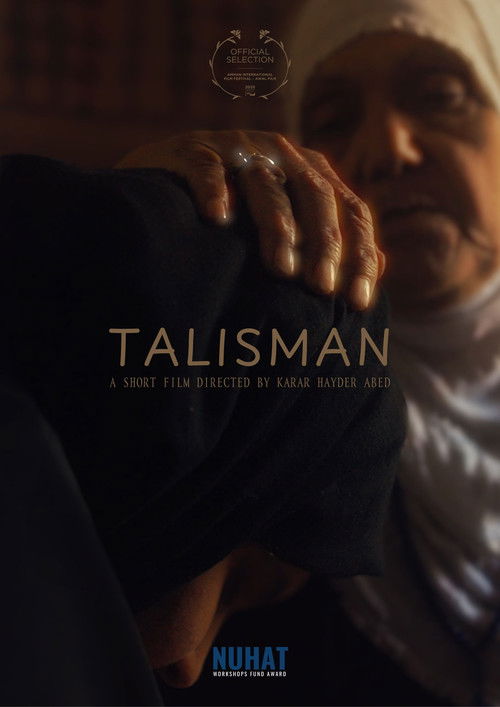
Talisman (2025)
Directed by Karar Hayder Abed
Partly · Woke-Adjacent
How we score movies →Consciousness Markers
The film's entire architecture is a feminist one: a woman crushed by patriarchal marriage expectations, denied agency over her own body and future, seeking a 'moment of freedom to reclaim what remains of herself.' The framing of Sabreen's desire for autonomy as the central moral concern is the film's thesis.
The film centers entirely on an Iraqi woman in a rural setting, with an all-Iraqi cast and an Iraqi director. The story is built around a female protagonist whose inner life is the sole subject of inquiry, which in the festival circuit context reads as deliberate representation of an underrepresented voice.
As a seven-minute short selected specifically for its thematic weight at MENA-focused festivals, the film carries an inherent message-delivery function. The synopsis reads less like a story and more like a thesis statement. Whether the film itself sermonizes or simply observes is difficult to determine from available evidence, which keeps the score modest.
Sabreen's story involves her body as a site of reproductive pressure and social judgment, which touches on bodily autonomy in a limited sense. This is incidental to the narrative rather than an explicit body-positive framework.
The film is rooted in Iraqi cultural specificity, and its festival positioning within MENA cinema implies a degree of racial and ethnic consciousness. However, the film does not appear to engage in explicit racial discourse or critique.
No LGBTQ+ themes, characters, or subtext are present or reported in the film.
No climate or environmental themes are present or reported.
No anti-capitalist themes are present or reported. The constraints depicted are social and patriarchal, not economic in a systemic critique sense.
No neurodivergence themes, characters, or framing are present or reported.
The film is a contemporary drama set in the present day and makes no engagement with historical revisionism.
Synopsis
In a place that offers no hope, Sabreen, burdened by blame and trapped by expectations, yearns for a fleeting moment of freedom to reclaim what remains of herself.
Why it received this score
Talisman is a seven-minute Iraqi short film about a woman trapped by reproductive expectations in a traditional marriage, which means it is precisely as long as it needs to be to make its point and not a single frame longer. Director Karar Hayder Abed has constructed what the festival circuit would call a "vital" work, and the festival circuit, in this case, is not entirely wrong. Sabreen yearns for freedom. The talisman she clutches represents the gap between systemic oppression and available solutions. We have been informed.
The feminist credentials here are genuine and rooted in something real: the specific texture of rural Iraqi womanhood, the particular cruelty of being blamed for a body's failure to perform on schedule, the quiet desperation of a person who has run out of non-magical options. This is not the feminism of a corporate HR seminar or a superhero film with a female lead who quips about the patriarchy before punching a robot. It is older and more honest than that, which is to say it scores modestly on our instruments rather than spectacularly. The film's social consciousness emerges from a specific cultural wound, not from an awareness of what plays well at Sundance.
What keeps Talisman from achieving true altitude on the progressive thermometer is its apparent commitment to observation over prescription. A film that simply watches a woman suffer and yearn, without pausing to explain to the audience why suffering and yearning are bad, displays a restraint that the more instructional corners of contemporary cinema have largely abandoned. We award this restraint a mild penalty in the lecture category, then immediately feel uncertain about that decision. Such is the burden of this work.
Analysis generated by our Consciousness Algorithm