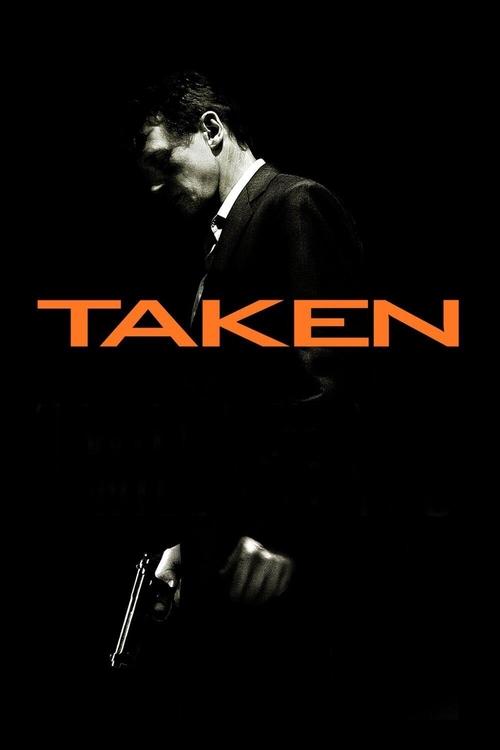
Taken (2008)
Directed by Pierre Morel
No · Ultra Based
How we score movies →Consciousness Markers
Cast is predominantly white and male-centered. Female characters serve as plot devices rather than fully realized protagonists with agency.
No LGBTQ+ characters, themes, or representation present in the film.
Female characters are passive victims or supporting roles defined by their relationship to the male protagonist. No feminist themes or female agency.
No examination of systemic racism, racial equity, or meaningful engagement with racial themes. Antagonists depicted as foreign villains reflects conventional action thriller tropes.
No environmental themes or climate-related messaging present in the narrative.
No critique of capitalism, wealth inequality, or examination of economic systems. Wealth is presented as a neutral background element.
Standard action film casting with conventional body types. No engagement with body diversity or commentary on body image.
No representation of neurodivergent characters or exploration of neurodivergence as a theme.
Film is not a historical narrative and contains no reinterpretation of historical events through a modern progressive lens.
Straightforward action thriller with no preachy messaging, moral lectures, or embedded social commentary in dialogue.


Synopsis
Bryan Mills, a former government operative, is trying to reconnect with his teenage daughter Kim. After reluctantly agreeing with his ex-wife to let Kim go to Paris on vacation with a friend, his worst nightmare comes true. While on the phone with his daughter shortly after she arrives in Paris, she and her friend are abducted by a gang of human traffickers. Working against the clock, Bryan relies on his extensive training and skills to track down the ruthless gang that abducted her and launch a one-man war to rescue his daughter.
Why it received this score
Taken is a 2008 action thriller that exists in a cultural moment before modern progressive sensibilities became dominant in mainstream cinema. The film centers entirely on a white male protagonist deploying his combat skills to rescue female victims who function primarily as plot motivation. Maggie Grace's daughter character spends most of the narrative in captivity or distress, her agency subordinated to her father's rescue mission. Famke Janssen's ex-wife exists mainly to facilitate the plot setup. There is no meaningful exploration of the systemic issues surrounding human trafficking, no examination of the victims' autonomy or recovery, and no engagement with the complex geopolitical factors that enable such crimes.
The film's antagonists are presented as faceless foreign criminals, a narrative choice that has drawn criticism for its orientalist undertones, though this reflects pre-2015 action thriller conventions rather than an attempt at modern progressive messaging. The script contains no preachy elements, no lectures on social justice, no recognition of marginalized identities. It is purely a mechanical thriller designed to showcase male competence and decisive violence as the solution to every problem.
One might observe that the film's complete absence of progressive sensibility is precisely what made it commercially successful in 2008. It asked nothing of its audience except to enjoy a skilled operative systematically eliminating obstacles. Judged by the standards of 2020s cultural awareness, it registers as a relic of a less complicated age.
Analysis generated by our Consciousness Algorithm
Critic Reviews
“The beginning is a little slow, but after Neeson starts his hunt and does his best wrath-of-God impression, it doesn’t skip a beat.”
“Taken moves so fast and with such single-minded, vindictive energy, there's no time for moral ambivalence.”
“There is no mythology, no irony, no real soul--just a Charles Bronson simplicity about the whole affair.”
“A Liam Neeson thriller so lacking in ambition they should have called it "Paycheck."”