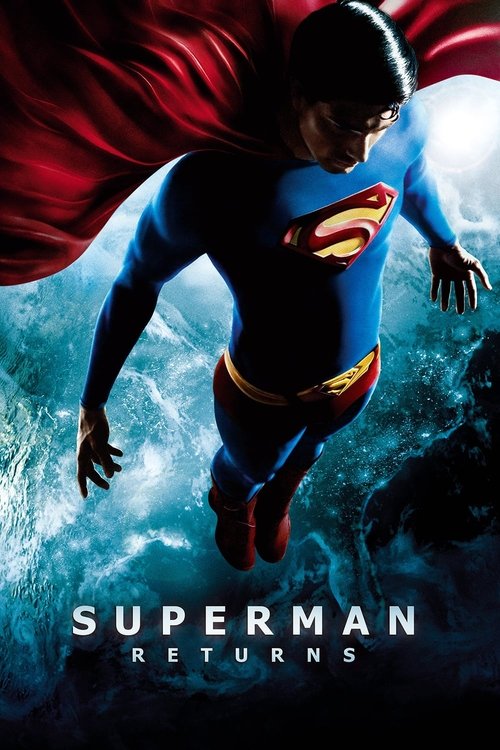
Superman Returns (2006)
Directed by Bryan Singer
No · Ultra Based
How we score movies →Consciousness Markers
Lois Lane functions as an independent working woman and journalist, but her character arc ultimately resolves through romantic reconciliation with Superman rather than through her professional achievements or personal growth.
The film's dialogue occasionally ventures into expository speeches about Superman's nature and humanity's relationship to him, but this operates more as mythic discourse than as preachy messaging about social issues.
The cast is predominantly white with limited racial diversity. Kal Penn appears in a minor supporting role, but the film makes no particular effort toward meaningful representation in its principal characters.
The film contains no engagement with racial themes or consciousness. Race is not addressed, examined, or woven into the narrative in any meaningful way.
No LGBTQ+ themes, characters, or subtext are present in the film. The narrative is entirely heteronormative in its romantic and relational dynamics.
While Lex Luthor is a wealthy villain, his villainy stems from personal ambition and revenge rather than any critique of capitalism or wealth accumulation as systemic problems.
The film treats Superman mythology with reverence rather than revisionism. It positions itself as a continuation of the Reeve films without interrogating or reinterpreting the source material's ideological assumptions.
Climate concerns are entirely absent from the film. Luthor's scheme involves land acquisition and geological manipulation but lacks any environmental consciousness or green messaging.
The film adheres to conventional Hollywood standards of physical attractiveness. Superman is presented as an idealized masculine form; body diversity is not present or celebrated.
No characters with neurodivergence or disability representation appear in significant roles. The film does not engage with this dimension of human diversity.


Synopsis
Superman returns to discover his 5-year absence has allowed Lex Luthor to walk free, and that those he was closest to felt abandoned and have moved on. Luthor plots his ultimate revenge that could see millions killed and change the face of the planet forever, as well as ridding himself of the Man of Steel.
Why it received this score
Superman Returns stands as a curious artifact of pre-woke cinema sensibilities, a film so thoroughly committed to earnest mythmaking that it barely registers on the cultural consciousness meter. Bryan Singer's film is primarily concerned with theological metaphor and classical narrative structure, treating its superhero premise with the solemnity of a Renaissance painting. The cast is predominantly white, the gender dynamics hew closely to traditional Hollywood molds, and the film's central conflict revolves around property disputes and revenge rather than any examination of systemic power structures.
What progressive sensibilities do exist in the film are incidental rather than intentional. Lois Lane remains a working journalist with agency, though her arc ultimately centers on romantic reconciliation. The film gestures vaguely toward Superman as a Christ figure bearing the weight of human suffering, but this operates at a mythic level rather than engaging with specific social consciousness. Lex Luthor's scheme, while grandiose, lacks the specific anti-capitalist framing that would mark it as ideologically purposeful; he is simply a megalomaniac seeking power and revenge, a character type as old as cinema itself.
The film's relationship to its source material is reverential rather than interrogative. It offers no revisionist reading of Superman mythology, no examination of power dynamics, no consideration of representation beyond casting recognizable actors. Superman Returns is a monument to late-period blockbuster sincerity, asking audiences to believe in the goodness of a powerful alien rather than questioning what such power might mean. In our current moment, this earnest traditionalism registers almost as a form of innocence.
Analysis generated by our Consciousness Algorithm
Critic Reviews
“The best Hollywood movies always knew how to sneak a beguiling subtext into a crowd-pleasing story. Superman Returns is in that grand tradition. That's why it's beyond Super. It's superb.”
“America's favorite superhero reappears in Bryan Singer's Superman Returns, and all we can say is, "Man, oh Man of Steel, it's good to have you back."”
“Superman Returns is a lush and enthralling piece of adventure storytelling that's both revisionist AND reverential, putting a timely spin on a timeless character without violating his primal appeal.”
“The bigger problem is that Singer’s weighty rhythms are disastrous for Superman, and the movie actually gets heavier in its last half-hour.”