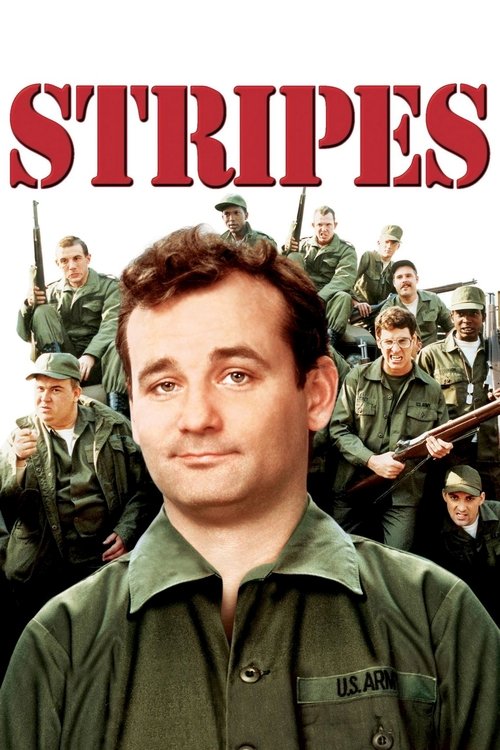
Stripes (1981)
Directed by Ivan Reitman
No · Ultra Based
How we score movies →Consciousness Markers
The cast is predominantly white and male. Female characters exist but are marginalized and defined by their relationships to male characters rather than as full agents in their own right.
The ensemble includes some racial diversity in background roles, but no meaningful engagement with racial themes or consciousness. Characters of color exist without commentary or depth.
The film demonstrates no feminist consciousness. Female characters are relegated to passive roles as romantic interests or comedic obstacles, with no agency or depth granted to them.
While the ensemble includes men of varying body types, the film offers no particular body positive messaging. Bodies are primarily objects of humor.
The film contains virtually no preachy or preachy moments about social issues. It is primarily interested in entertainment rather than instruction.
No LGBTQ+ themes, representation, or subtext present in the film. The narrative is entirely heteronormative and centered on male bonding.
Climate themes are entirely absent from this military comedy. The film shows no environmental consciousness whatsoever.
The film contains no anti-capitalist sentiment or critique. It celebrates military institutions and American power without irony or examination.
No representation or meaningful exploration of neurodivergence. Characters who might be coded as unusual are treated as simple comic relief.
The film makes no attempt to revise or reexamine military or American history. It accepts institutional narratives uncritically.


Synopsis
Hard-luck cabbie John Winger, directionless after being fired from his job and dumped by his girlfriend, enlists in the U.S. Army with his close pal, Russell Ziskey. After his barely satisfactory performance in basic training, the irreverent Winger emerges as the figurehead for a ragtag band of misfits. However, his hijinks threaten to cause an international scandal when he inadvertently commandeers a military assault vehicle behind enemy lines.
Why it received this score
Stripes is a film that exists comfortably within the dominant cultural assumptions of 1981, making no particular effort to challenge or interrogate them. Ivan Reitman's military comedy operates as a straightforward celebration of masculine camaraderie and American military prowess, with women present primarily as either romantic objectives or obstacles to male bonding. The film's ragtag ensemble of misfits includes not a single character whose identity beyond "guy" receives meaningful exploration. The humor derives almost entirely from the antics of men learning to be soldiers, a narrative that requires no particular consciousness about whose stories are being told or whose are absent.
The notable exception, however limited, is the inclusion of female recruits in the training sequence, which at least acknowledges that women might exist in military contexts. Yet even this modest acknowledgment is immediately undercut by the famous shower scene, which frames female bodies primarily through the comedic bewilderment of the male characters. Female characters like Winger's love interest are rendered as plot mechanics, their motivations and agency compressed into the service of the male protagonist's arc. By the standards of 2020s progressive sensibilities, this is a film utterly unconcerned with such considerations.
What we have here is a competent comedy from a period when such concerns had barely entered mainstream consciousness. Stripes asks nothing of itself regarding representation, social consciousness, or cultural awareness beyond the baseline entertainment expectations of its moment. The film is, in this sense, a perfect artifact of pre-woke cinema, which is to say it is not woke at all.
Analysis generated by our Consciousness Algorithm
Critic Reviews
“Bill Murray is as funny here as anyone has ever been funny and I can’t see anyone else getting away with half the things he says here much less have them sound so cool and inspired.”
“Stripes is an anarchic slob movie, a celebration of all that is irreverent, reckless, foolhardy, undisciplined, and occasionally scatological. It's a lot of fun.”
“Murray's initial transition from the small screen is a classic.”
“Private Benjamin, meet Meatballs. Bill Murray of Saturday Night Live, meet Harold Ramis, John Candy, Joe Flaherty and Dave Thomas of SCTV. Psycho from Taxi Driver, meet martial music from 1941. Tired moviegoer, meet tired moviemakers. ”