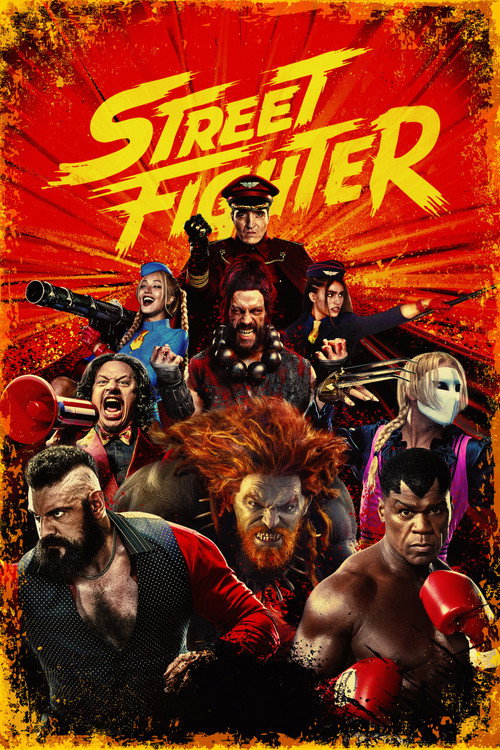
Is Street Fighter (2026) Woke?
Street Fighter · 2026 · Directed by Kitao Sakurai · $30.8M domestic
Woke Score
CriticCritic Score
Audience
Ultra Based
Critics rated this 16 points above its woke score. Among Ultra Based films, this critic score ranks #1434 of 1501.
Answer: No
Woke Score 18/100 · Verdict: Ultra Based
Strongest markers: Representation Casting (35) · LGBTQ+ Themes (20) · Eat the Rich (10)
Representation Casting
Score: 35/100
The cast is internationally diverse by deliberate design, matching the game's global roster, and the production leaned into this in press materials. The conscious correction of Ryu's pronunciation as an act of cultural fidelity signals representational self-awareness, though the diversity itself is largely organic to a 35-year-old Japanese franchise.
LGBTQ+ Themes
Score: 20/100
Openly queer country artist Orville Peck was cast as Vega and discussed the role's significance in LGBTQ+ media outlets. The film's internal treatment of this casting appears minimal, but the deliberate framing in press coverage earns a modest score.
Feminist Agenda
Score: 5/100
Chun-Li serves as a narrative driver and recruiter, a prominent role consistent with her decades-long canonical status in the franchise. There is no evidence of the film constructing a feminist argument around her presence.
Racial Consciousness
Score: 10/100
The film's casting is racially diverse and this was acknowledged in press coverage, but no evidence suggests the film itself foregrounds racial identity as a conscious theme or talking point.
Climate Crusade
Score: 0/100
No evidence of climate or environmental themes in the film's content, press coverage, or public discourse.
Eat the Rich
Score: 10/100
Ken Masters' arc involves a critique of celebrity culture and fame as a corrupting force, framed as a contrast to Ryu's monastic discipline. This constitutes a faint anti-commercial undercurrent, though it reads more as character drama than ideological statement.
Body Positivity
Score: 0/100
No evidence of body positivity themes in the film or its surrounding discourse.
Neurodivergence
Score: 0/100
No evidence of neurodivergence themes or representation in the film or its surrounding discourse.
Revisionist History
Score: 0/100
No evidence of revisionist historical framing. The film is set in a fictional tournament universe with no apparent engagement with real historical narratives.
Lecture Energy
Score: 5/100
Critics noted the film prioritizes arcade-style camp and nostalgia over narrative depth or messaging. Themes of grief and male friendship are present but handled with a light enough touch that no sermonizing was reported.
Synopsis
In 1993, estranged Street Fighters Ryu and Ken Masters are thrown back into combat when the mysterious Chun-Li recruits them for the next World Warrior Tournament: a brutal clash of fists, fate, and fury. But behind this battle royale lies a deadly conspiracy that forces them to face off against each other and the demons of their past. And if they don't, it's GAME OVER!
Why it received this score
The 2026 *Street Fighter* arrives carrying the accumulated weight of two previous live-action failures, a 35-year-old video game franchise, and the creative DNA of a man best known for putting Eric André in situations that cannot be described to a general audience. Director Kitao Sakurai has assembled a cast spanning Japanese-British actors, Indian action stars, professional wrestlers, a rapper, and an openly queer country singer in a Venetian mask, and has done so with the calm confidence of a man who considers this a normal Tuesday. In terms of progressive social indicators, the film is about as charged as the game's own character select screen, which has always looked like a United Nations press conference that got into a fistfight.
The film's most legible cultural gesture is its correction of the pronunciation of "Ryu," a move that generated more press commentary than any of its actual themes. Ken Masters' descent into MTV-era celebrity excess serves as a mild rebuke of commercial fame, though it is delivered with enough camp that the critique dissolves before it can harden into a position. Chun-Li recruits people and punches them, which she has been doing since 1991, and the film treats this as unremarkable. It is, in fact, unremarkable. Orville Peck's casting as Vega received coverage in LGBTQ+ outlets, and the significance of a queer artist in a mainstream blockbuster is noted here with the appropriate solemnity, even as the film itself appears to spend most of its time on hadoukens.
The critical consensus settled around 41 percent on Rotten Tomatoes, a score that suggests the film satisfied neither the audience hoping for emotional depth nor the audience hoping for a coherent plot, while thoroughly satisfying the audience hoping for a man in a Blanka costume. From a social consciousness standpoint, *Street Fighter* is a film that hired a diverse international cast because the source material is a diverse international property, included a queer performer because he was right for the role, and then got on with the business of people hitting each other very hard. As cultural documents go, it is less a manifesto and more a quarter dropped into a machine in 1993 that has only just reached the coin return.
Analysis generated by our Consciousness Algorithm
Critic Reviews
“As the mercenary in charge of liberating hostages from the megalomaniacal General Bison (Julia), Jean-Claude Van Damme finds a showcase for his comic skills in Street Fighter.”
“It is beautifully shot and the production design is first-rate. Another strong point is the presence of some excellent actors in small roles. Unfortunately, they all have to work opposite Van Damme, who keeps trying to be witty and smart, but still comes across as a bit of a lunk.”
“For a product of its time — a decade full of video game-inspired stinkers — it’s worth looking back on, especially because it’s obvious how much fun the cast is having.”
“You should feel sorry for the memory of Julia - whose swansong this is - but actually it's Van Damme who commands sympathy.”
Related rankings
Consciousness Markers
The cast is internationally diverse by deliberate design, matching the game's global roster, and the production leaned into this in press materials. The conscious correction of Ryu's pronunciation as an act of cultural fidelity signals representational self-awareness, though the diversity itself is largely organic to a 35-year-old Japanese franchise.
Openly queer country artist Orville Peck was cast as Vega and discussed the role's significance in LGBTQ+ media outlets. The film's internal treatment of this casting appears minimal, but the deliberate framing in press coverage earns a modest score.
Chun-Li serves as a narrative driver and recruiter, a prominent role consistent with her decades-long canonical status in the franchise. There is no evidence of the film constructing a feminist argument around her presence.
The film's casting is racially diverse and this was acknowledged in press coverage, but no evidence suggests the film itself foregrounds racial identity as a conscious theme or talking point.
No evidence of climate or environmental themes in the film's content, press coverage, or public discourse.
Ken Masters' arc involves a critique of celebrity culture and fame as a corrupting force, framed as a contrast to Ryu's monastic discipline. This constitutes a faint anti-commercial undercurrent, though it reads more as character drama than ideological statement.
No evidence of body positivity themes in the film or its surrounding discourse.
No evidence of neurodivergence themes or representation in the film or its surrounding discourse.
No evidence of revisionist historical framing. The film is set in a fictional tournament universe with no apparent engagement with real historical narratives.
Critics noted the film prioritizes arcade-style camp and nostalgia over narrative depth or messaging. Themes of grief and male friendship are present but handled with a light enough touch that no sermonizing was reported.