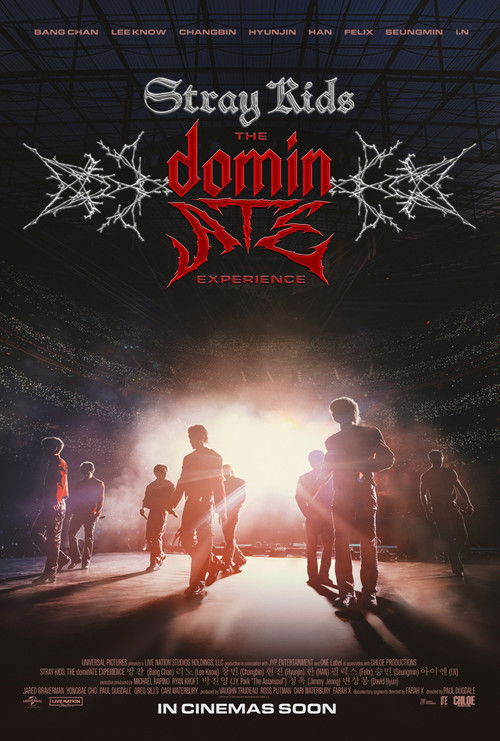
Stray Kids: The dominATE Experience (2026)
Directed by Paul Dugdale
No · Ultra Based
How we score movies →Consciousness Markers
The band includes members of diverse international and racial backgrounds, but this reflects the group's actual composition rather than deliberate casting choices. The film does not foreground or comment on this diversity.
While the band's international membership could suggest multicultural awareness, the film makes no effort to engage with racial or cultural identity. It treats them as universal pop stars.
While some brief interviews include personal reflections, the film largely avoids preachy messaging. It is designed for entertainment rather than education or moral instruction.
The film contains no apparent feminist messaging or gender-conscious content. It treats the band members as generic performers without gendered commentary.
The performers are conventionally attractive and fit within K-pop's strict aesthetic standards. No body diversity or body positivity messaging is present.
The film contains brief behind-the-scenes content that lightly sketches the band's rise, but makes no attempt to reframe historical narratives or challenge existing power structures.
No LGBTQ+ themes are present or referenced in the film. The band members' personal lives are largely unexplored.
No environmental themes or climate consciousness appears in this concert film.
The film is fundamentally a commercial product designed to monetize fandom. It contains no anti-capitalist messaging whatsoever.
No representation of or commentary on neurodivergence appears in the film.
Synopsis
Featuring the global K-Pop sensation Stray Kids and a live performance from their record-breaking world tour, alongside exclusive behind-the-scenes footage and intimate interviews with the band, Stray Kids: The dominATE Experience is an epic concert film that gives fans both a spectacular front-row seat and unique access to their favourite band.
Why it received this score
Stray Kids: The dominATE Experience is a concert film of almost pure functionality. It documents an eight-member K-pop group performing at SoFi Stadium with the clinical precision of a security camera mounted above the pit. The film presents itself as documentary but functions as extended merchandise, complete with intimate interviews that reveal nothing of consequence and behind-the-scenes footage that reveals only the backstage equivalent of a corporate retreat.
The group's composition does feature international representation, with members from South Korea, Australia, and mixed-race backgrounds, but this reflects the band's actual makeup rather than any conscious creative decision by the filmmaker. The film exists in a state of near-total cultural neutrality, concerned primarily with delivering exactly what fans paid to see: their favorite band, uninterrupted by narrative complication or thematic ambition. There are no lectures here, no visible ideology, no sense that the filmmakers wish to say anything beyond "here is what you already enjoy, now in a theater."
What emerges is the paradox of contemporary concert filmmaking: a project so commercially focused that it becomes inadvertently apolitical. The band is presented as a product, the fans as consumers, and the medium as a delivery mechanism. One could watch this film and learn nothing whatsoever about Stray Kids' actual lives, struggles, or beliefs. This is, in its own way, a kind of artistic restraint.
Analysis generated by our Consciousness Algorithm