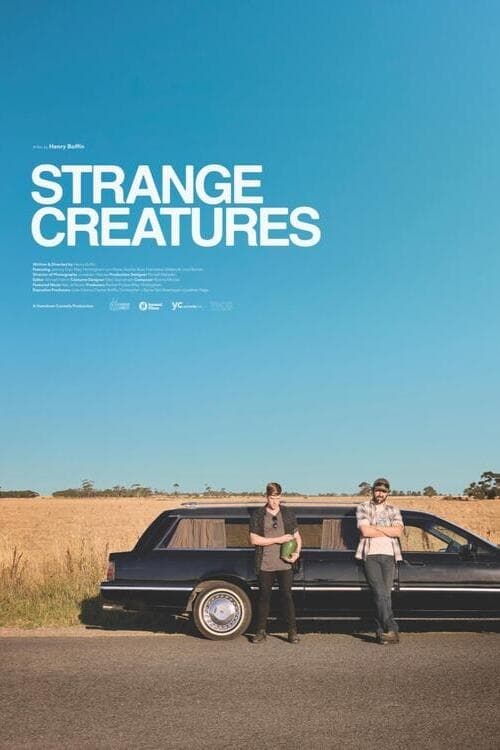
Strange Creatures (2026)
Directed by Henry Boffin
Partly · Woke-Adjacent
How we score movies →Consciousness Markers
Pansexuality is not merely incidental here; it is the engine of the plot, the source of the fraternal rupture, and the lens through which family acceptance is examined. The film screened at Queer Screen Film Fest 2024, confirming its positioning within LGBTQ+ cinema. Nate's boyfriend is a funeral director, which is either thematically resonant or a scheduling convenience.
The film features a pansexual lead character as its narrative anchor, which constitutes deliberate identity-conscious casting in an Australian indie context. The ensemble is otherwise unremarkable from a representation standpoint.
The film's exploration of how heterosexual masculine discomfort damages family bonds carries a mild corrective undertone. Reviews suggest it is handled with humor rather than hectoring, which keeps the score low but not zero.
The film engages with masculinity as a subject, specifically its emotional constipation and its cost to familial relationships. This is a gentle interrogation, not a manifesto, but it registers.
No evidence of racial consciousness themes or commentary in available research or plot materials.
No climate or environmental themes identified. The Australian landscape is a backdrop, not a sermon.
No anti-capitalist themes identified. The film's concerns are domestic and fraternal, not economic.
No body positivity themes identified in any available materials.
No neurodivergence themes or characters identified.
The film is a contemporary road trip dramedy with no historical dimension to revise.
Synopsis
Pansexual Nate hasn't spoken a word to his heterosexual brother Ged in over four years after an argument involving sexual drama. But when their mother dies, the brothers must put aside their differences to fulfill their mother's last wish: to have her ashes scattered across the country. As they traverse half of Australia, the men soon realize that the journey will be anything but smooth. Their intense dislike for each other and a series of unfortunate events threaten to keep them from reaching their goal.
Why it received this score
Strange Creatures arrives wearing the respectable clothes of a road trip dramedy in the tradition of Nebraska and Little Miss Sunshine, and it largely succeeds on those terms. Director Henry Boffin, making his feature debut, deposits two estranged brothers into a car with their mother's ashes and points them at the Australian horizon. The conflict that separated them involves the pansexuality of one brother and the apparent inability of the other to process it with any grace. This is, by the standards of contemporary indie cinema, a fairly standard ignition mechanism.
The film's most notable progressive credential is its foregrounding of pansexuality as a specific identity rather than a generic stand-in for queerness, which is either a meaningful distinction or the sort of precision that film festival programmers find deeply satisfying. Both are probably true. The film screened at Queer Screen Film Fest, which tells you where it lives culturally. Nate's boyfriend being a funeral director while the brothers are transporting a corpse is either a layered joke or a coincidence, and the film seems content to let you decide. The masculine emotional dysfunction of brother Ged is treated as a condition to be examined and, eventually, partially remedied, which gives the film a faint corrective posture without tipping into full sermonizing.
What keeps Strange Creatures from a higher score is its apparent commitment to being a film about people rather than a film about positions. The humor is described as dry and Australian, which is to say it does not stop to explain itself or ask for credit. The reconciliation arc is earned through accumulating absurdity rather than through speeches. It is, in the end, a modestly progressive film that wears its values the way most Australians wear sunscreen: applied without fanfare, because the alternative is a burn.
Analysis generated by our Consciousness Algorithm