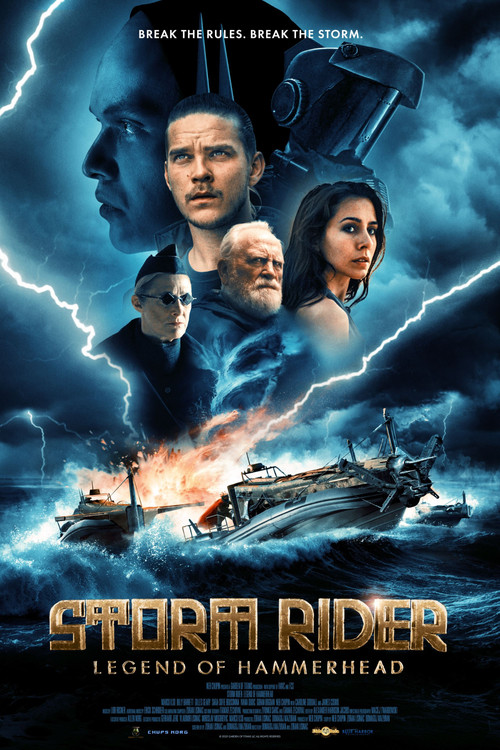
Storm Rider: Legend of Hammerhead (2026)
Directed by Zoran Lisinac
No · Ultra Based
How we score movies →Consciousness Markers
The film is set in a post-flood world, suggesting environmental catastrophe as backdrop. However, available materials suggest this functions as worldbuilding rather than as climate commentary or ecological critique.
The cast includes international and diverse actors, reflecting contemporary industry standards, but there is no evidence of deliberate representation-focused casting choices or thematic engagement with identity.
The narrative involves resistance to a fortified city-state and competition for resources, gesturing toward power structures. No evidence suggests substantive anti-capitalist or systemic critique.
One of the two protagonists is female, meeting the bare minimum expectation of female character inclusion. No evidence suggests feminist thematic engagement or interrogation of gender dynamics.
The film involves uncovering hidden truths about the world's origins, but this appears to function as mystery plot rather than as revisionist historical commentary.
While the cast is ethnically diverse, the synopsis and available materials contain no indication that racial dynamics, identity, or consciousness factor into the narrative or thematic concerns.
As an action-adventure film, there is no indication of preachy exposition or moral instruction embedded in dialogue or narrative structure.
No LGBTQ+ themes or representation are evident in the available synopsis or promotional materials. The film appears to follow conventional heteronormative adventure narrative structures.
An action adventure film featuring athletic performers. No indication of body positivity themes or deliberate representation of diverse body types.
No evidence of neurodivergent representation or themes in available synopsis or promotional materials.
Synopsis
Centuries after the Great Flood, riders compete in death races on the water to secure shelter for their people behind the walls of Argos. Rebellious storm riders Neb and Ana look to uncover hidden truths by breaking through the storm.
Why it received this score
Storm Rider: Legend of Hammerhead presents itself as an ambitious post-apocalyptic adventure, complete with world-building that gestures toward environmental catastrophe without ever quite committing to any meaningful commentary about it. The narrative follows two rebellious protagonists who challenge the established order of Argos, which superficially resembles resistance fiction, though the available materials suggest this functions primarily as a vehicle for action sequences rather than as substantive social critique. The film traffics in the familiar lexicon of dystopian cinema: oppressive governance structures, hidden truths, and individual heroes defying the system, but these elements are deployed as plot mechanics rather than as vehicles for examining power, complicity, or systemic change.
The cast composition reflects contemporary Hollywood diversity norms without apparent thematic engagement with representation as a subject. We observe a mixed-ethnic ensemble performing an action narrative in which their backgrounds appear incidental to their function within the story. The two central characters happen to be coded as male and female, and they happen to be positioned as rebels, but the available synopsis offers no indication that gender, identity, or social position figures into the film's thematic architecture. This is neither remarkable nor particularly progressive; it is simply the baseline expectation of contemporary genre filmmaking.
What emerges most clearly from the available materials is a film oriented toward spectacle and adventure rather than toward interrogation of contemporary social anxieties. The environmental catastrophe that frames the entire narrative serves as set dressing for a story about competitive racing and personal heroism. There is nothing here to suggest engagement with modern progressive sensibilities, identity politics, or social consciousness as organizing principles. This is genre entertainment working in a mode that predates and remains largely indifferent to the cultural debates of the 2020s.
Analysis generated by our Consciousness Algorithm
Critic Reviews
“"Storm Rider: Legend of Hammerhead" is a notably fresh and imaginative slice of dystopian sci-fi manages to transport us to a fascinating new world without breaking the proverbial bank.”
“Three centuries after the Great Flood, the world has fractured into scattered islands, forever threatened by a colossal, unending Storm. The Islanders' only hope for safety lies in the fortified city-state of Argos - a sanctuary reachable only through perilous trials known as Storm Riding.”
“Storm Rider: Legend of Hammerhead feels like an entire franchise's worth of mythology, as well as two or three entries' worth of boat races, crammed into a single movie.”
“For those who enjoy worldbuilding and sci-fi sagas, Storm Rider: Legend of Hammerhead will scratch the itch of Dune, Star Wars, and Lord of the Rings fans.”