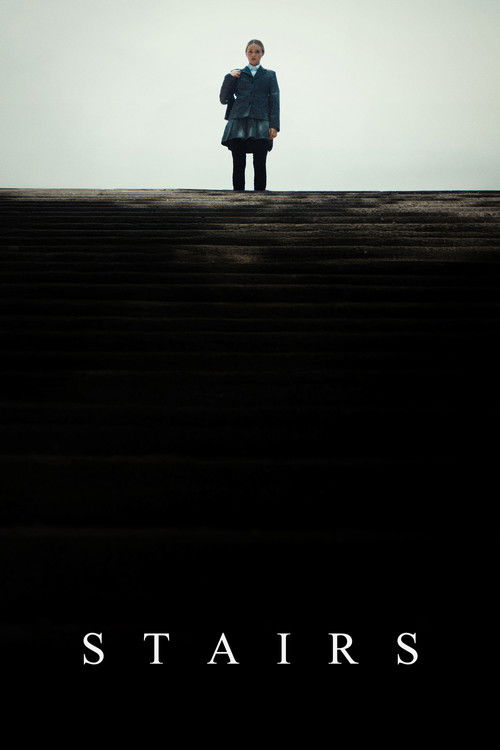
Stairs (2026)
Directed by Riley Donigan
No · Ultra Based
How we score movies →Consciousness Markers
The cast includes a female lead and diverse supporting actors, but this appears incidental to the absurdist premise rather than intentional representation. No meaningful diversity work is evident.
While the protagonist's compulsive self-harm behavior could be read as representing mental health struggle, the film treats this as absurdist comedy rather than neurodivergent representation or advocacy.
No LGBTQ+ themes or characters are present in the film. The work contains no queer content or subtext.
The film does not engage with feminist critique or commentary. The female protagonist's self-destruction is treated as absurdist material, not as social commentary on gender.
The film contains no racial consciousness, commentary on systemic racism, or engagement with racial themes. Race is entirely absent from the work's concerns.
Climate themes are entirely absent from this absurdist short. Environmental consciousness plays no role in the narrative or visual approach.
No anti-capitalist messaging or critique of economic systems appears in the film. The work contains no social class commentary or critique of wealth.
Body positivity is not a concern of the film. The protagonist's repeated physical self-injury is treated as comedic premise rather than commentary on body acceptance.
This contemporary absurdist short contains no historical content or revisionist historical claims. History is not engaged with at all.
The film maintains a deadpan, non-preachy approach. There is no moral instruction, no lectures, and no attempt to teach the audience about social issues.
Synopsis
A woman's life unravels after she becomes addicted to throwing herself down flights of stairs.
Why it received this score
Riley Donigan's "Stairs" is a 13-minute absurdist exercise in the surreal, a film that treats self-harm as the basis for dark comedy rather than social commentary. The protagonist's escalating addiction to throwing herself down staircases operates purely as premise, a vehicle for exploring the grotesque and the mundane without bothering to interrogate the systems or structures that might have produced such pathology. We are simply meant to watch a woman's deterioration with the detached amusement one might reserve for watching paint dry, except the paint is falling down stairs.
The film's studied indifference to context or meaning is perhaps its most defining feature. There is no attempt to situate the protagonist within any social framework, to explore her background, her marginalization, or the systemic failures that might have contributed to her condition. She exists in a void of her own making, and the film is content to let her remain there. This is not a film concerned with representation, dignity, or the lived experience of those struggling with self-destructive behavior. It is instead pure aesthetic experiment, which is to say it is precisely not the kind of cultural product that tends to accumulate progressive credentials.
Donigan's work exists in the tradition of indie absurdist cinema, where the point is often the refusal of point. The cast performs with the necessary commitment to the ridiculous premise, and the film's brief runtime ensures that its central joke, however you interpret it, does not overstay its welcome. For those seeking contemporary social consciousness in their short films, "Stairs" offers only the cold comfort of artistic nihilism.
Analysis generated by our Consciousness Algorithm
Critic Reviews
“Fun, but a concept more befitting of a YouTube skit rather than a full-fledged shortfilm. A plus is the cinematography, but the entertainment value and core gag here doesn't persist throughout.”