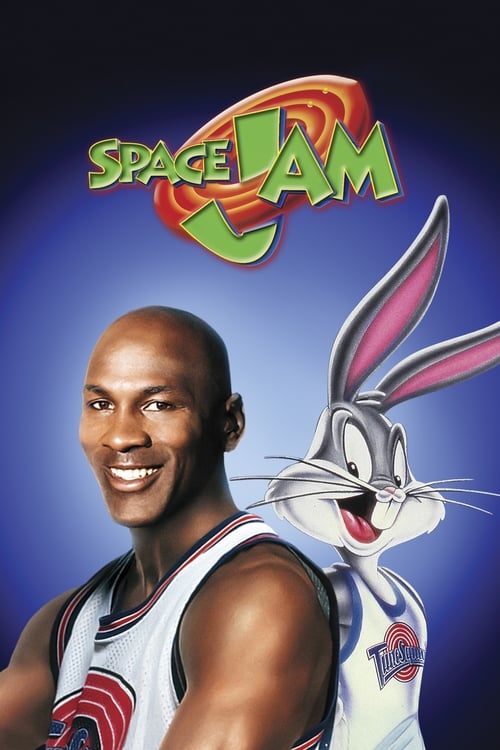
Space Jam (1996)
Directed by Joe Pytka
No · Ultra Based
How we score movies →Consciousness Markers
Michael Jordan and a racially diverse supporting cast appear in the film, but this reflects 1990s NBA demographics and Jordan's commercial dominance rather than deliberate progressive casting strategy. No conscious effort to center or examine representation is evident.
While the film features Black characters in prominent roles, it never engages with race as a topic of cultural significance. The presence of racial diversity is unremarked and unexamined, reflecting the era's colorblind approach.
Theresa Randle appears as a female character with agency, but the film makes no deliberate feminist statement. Gender dynamics are incidental to the sports narrative and contain no commentary on gender roles or equality.
Basic sports movie motivational speeches about teamwork and belief occur, but these are conventional genre elements. No preachy lectures on social issues or progressive values are delivered.
No LGBTQ+ themes, characters, or subtext of any kind. The film is entirely heteronormative and contains no engagement with sexual orientation or gender identity.
No climate messaging, environmental consciousness, or ecological themes of any kind. The film contains no reference to environmental issues or sustainability.
The film is itself a capitalist product designed to sell Nike shoes and promote Michael Jordan's brand. It contains no critique of capitalism, wealth, or corporate power. Commercialism is celebrated rather than questioned.
The film celebrates athletic excellence and physical prowess without interrogating body standards or promoting body diversity. No body positivity messaging is present.
No representation of neurodivergence or disability. The film contains no characters with autism, ADHD, or other neurological differences, nor does it engage with disability as a theme.
No attempt to reframe historical events or narratives. The film is a fictional fantasy with no historical claims to revise.


Synopsis
With their freedom on the line, the Looney Tunes seek the help of NBA superstar Michael Jordan to win a basketball game against a team of moronic aliens.
Why it received this score
Space Jam occupies a peculiar position in the cultural archive as a film that appears progressive by 2024 standards simply through the accident of its release date and the celebrity status of its lead. Michael Jordan's prominence in 1996 reflected his genuine dominance of both basketball and popular culture, not a deliberate effort to center Black representation in mainstream entertainment. The supporting cast includes women and people of color, but they exist as functional characters within a narrative framework that never pauses to interrogate the social meaning of their presence.
The film is, at its core, a feature-length advertisement masquerading as entertainment. This capitalist transparency paradoxically shields it from charges of hypocrisy. We do not expect a Nike marketing vehicle to critique capitalism, to examine labor practices, or to wrestle with the commodification of athletic bodies. Space Jam makes no pretense of social consciousness. It is a commercial product about a commercial product, honest in its vulgarity.
What distinguishes it from a genuinely progressive film is the complete absence of deliberate engagement with any contemporary social issue. The aliens are cartoonishly evil with no subtext. The gender dynamics are incidental. Race is not acknowledged as a category. The film treats its audience as consumers, not citizens. This is not a failing by modern standards alone. By the standards of 1996, it was simply a film about basketball and cartoons, made with no particular agenda beyond profit. That it can be watched today without cringing at offensive stereotypes is less a statement about the film's enlightenment and more an observation about how thoroughly the 1990s have been absorbed into history.
Analysis generated by our Consciousness Algorithm
Critic Reviews
“Space Jam is a happy marriage of good ideas--three films for the price of one, giving us a comic treatment of the career adventures of Michael Jordan, crossed with a Looney Tunes cartoon and some showbiz warfare.”
“Compared with the most recent Disney animated features, "Space Jam" is, at times, a hoot, especially when it has fun with Michael's less-than-stellar baseball career and the way his fellow players were starstruck. [15 Nov 1996, p.A]”
“Overall, Space Jam is a seamless marvel as Jordan slams and jams in the Looney Tune world. ”
“The set plays are transparently simple, the execution sloppy and the ending signposted days in advance. Visually, it's a mess: the attempts to blend 2- and 3-D animation with live-action and computer-generated images produce scenes that are fuzzier than the storyline.”