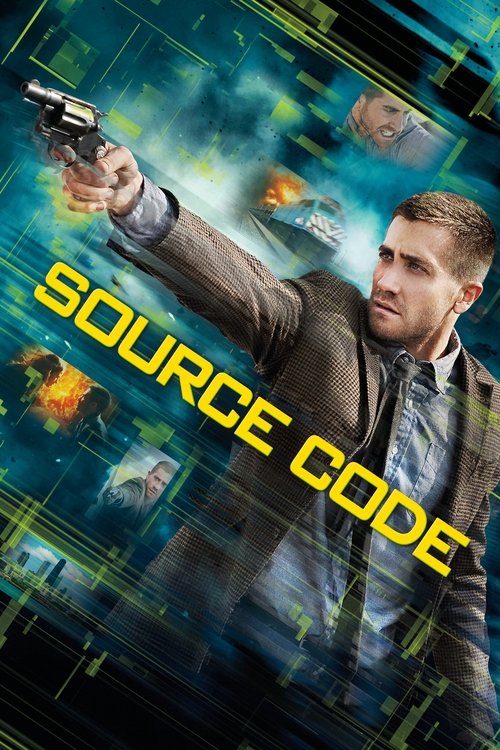
Source Code (2011)
Directed by Duncan Jones
No · Ultra Based
How we score movies →Consciousness Markers
The protagonist is described as an amputee soldier, though the film treats this as a plot element rather than an exploration of disability representation or body diversity.
The cast is assembled for narrative and commercial reasons, not to demonstrate progressive representation. Characters are not coded by their demographic identity.
No LGBTQ+ themes, characters, or subtext present in the film.
While the female characters are capable and present, there is no feminist consciousness or critique of gender structures in the narrative.
The film contains no engagement with racial themes, systemic racism, or cultural identity issues.
Climate change and environmental concerns are entirely absent from the film's narrative and thematic concerns.
The film does not engage in critique of capitalism, corporate structures, or economic systems.
No representation of neurodivergence or engagement with neurodiversity as a theme.
The film does not revise historical narratives or reexamine historical events through a progressive lens.
While the film contains exposition about its time-loop mechanics, this is generic sci-fi explanation, not progressive social messaging.


Synopsis
When decorated soldier Captain Colter Stevens wakes up in the body of an unknown man, he discovers he's part of a mission to find the bomber of a Chicago commuter train.
Why it received this score
Source Code is a cerebral science fiction thriller that occupies itself entirely with questions of consciousness, temporal mechanics, and personal identity. Director Duncan Jones constructs an intellectually engaging narrative around a soldier trapped in an eight-minute loop, forced to relive a train bombing repeatedly in pursuit of the perpetrator. The film's philosophical preoccupations are genuinely interesting, if somewhat dated in their treatment of what constitutes the self. These concerns have nothing to do with contemporary cultural awareness. The cast performs competently across a straightforward narrative that treats its ensemble as characters in a genre scenario, not as vessels for social commentary. There is no attempt to interrogate the military context through any lens of institutional critique, nor does the film's romance subplot engage with anything beyond conventional romantic tension. The story resolves itself through individual heroism and romantic sacrifice, which is precisely what we would expect from a 2011 mainstream thriller. Source Code is a film made before the cultural moment being measured here, and it remains comfortably indifferent to it.
Analysis generated by our Consciousness Algorithm
Critic Reviews
“Director Duncan Jones achieves a strange and winning amalgam, a gripping action film that also works as poetry. ”
“Showcases Jones' ability to provide ample entertainment value with sharply drawn characters in a minimalist setting.”
“This is hair-raising, clever and winning entertainment. Even if his protagonists aren't entirely what they seem to be or think they are, Mr. Jones is, it's increasingly clear, the real thing.”
“Somewhere under all that bloat is the greatest short subject of all time.”