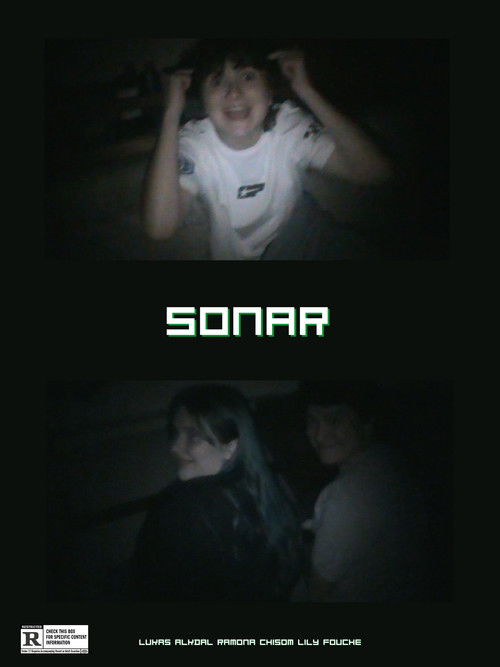
sonar (2026)
Directed by Lily Fouche
No · Based
How we score movies →Consciousness Markers
The North Sea setting and whale-hunting premise might suggest environmental consciousness, but the available materials frame this as mythological adventure rather than climate advocacy or ecological critique.
The cast appears to consist of the director and immediate collaborators, suggesting practical rather than intentional diversity considerations. No obvious pattern of conscious casting choices emerges from available information.
The director is female, which might suggest some awareness, but the narrative itself appears to be a conventional monster-hunting adventure with no obvious feminist subtext or commentary on gender dynamics.
The mythological whale premise might involve reframing of legend, but this appears to be generic genre material rather than conscious historical revisionism or decolonial practice.
The cast composition and available materials provide no indication of racial consciousness or commentary. The film appears racially unmarked in its available descriptions.
The horror genre and survival narrative structure suggest a film prioritizing entertainment over preachy messaging. No indication of expository social commentary or educational framing.
No evidence of LGBTQ+ themes or representation in the plot synopsis or production materials. The film appears to focus on survival horror elements rather than identity-based narratives.
No evidence of anti-capitalist themes or systemic critique. The narrative concerns a group search for a legendary creature, not economic systems or class struggle.
No indication of body positivity messaging or commentary on physical appearance standards. The film appears unconcerned with such contemporary discourse.
No available evidence of neurodivergent representation or themes. The film appears to operate within conventional narrative structures without addressing neurological difference.
Synopsis
A group of close friends takes a trip through the North Sea to search for the legendary Orville Whale.
Why it received this score
Sonar arrives as a modest indie horror venture with the kind of practical constraints that typically insulate small productions from the pressures of contemporary cultural signaling. Director Lily Fouche's film, which concerns itself primarily with the conventional mechanics of monster hunting, betrays little interest in the social consciousness that has come to dominate mainstream cinema. The cast is small and assembled from the production's immediate circle, a circumstance that renders questions of representation somewhat moot. What the film delivers is a work concerned with atmosphere and suspense rather than cultural positioning.
The narrative structure, a straightforward journey narrative filtered through the horror genre, offers minimal opportunity for the kind of thematic elaboration that contemporary progressive filmmaking typically demands. The North Sea setting and the legendary whale premise suggest an adventure rooted in mythology and environmental mystery, yet the film's available materials provide no indication that these elements are deployed in service of any particular ideological framework. The production reads as fundamentally unconcerned with interrogating social hierarchies or systems of oppression.
A film released in February 2026, still in its theatrical window with limited critical discourse, may yet reveal depths of social consciousness upon broader examination. For now, however, Sonar presents itself as an artifact of straightforward genre filmmaking, unencumbered by the weight of cultural commentary that has become so thoroughly woven into contemporary film production. It is, in this regard, refreshingly uncomplicated.
Analysis generated by our Consciousness Algorithm