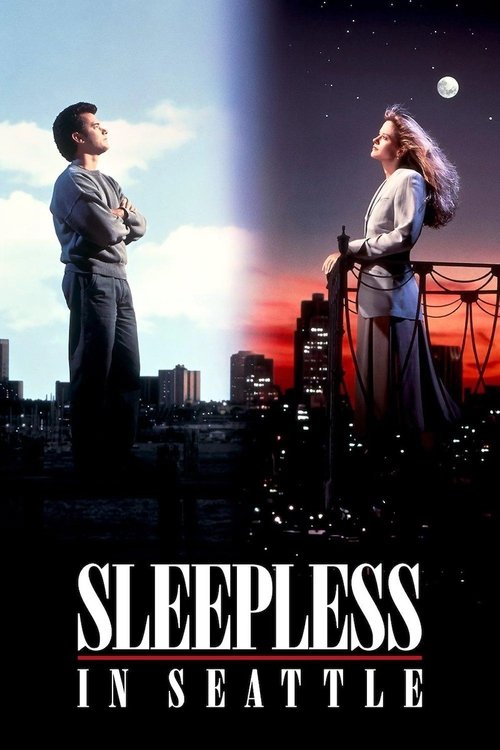
Sleepless in Seattle (1993)
Directed by Nora Ephron
No · Ultra Based
How we score movies →Consciousness Markers
Nora Ephron's direction centers a capable, intelligent female protagonist with agency and career success. However, this reflects pre-2015 feminism focused on women's participation rather than systemic critique.
The cast is predominantly white with no meaningful diversity representation. While Rosie O'Donnell appears in a supporting role, the film lacks the intentional representation prioritization of contemporary filmmaking.
The film's storytelling remains narrative-driven rather than preachy. Minimal explicit messaging about social values appears, though the director's sensibility is evident in character construction.
The film exhibits no explicit racial consciousness or commentary. The all-white primary cast reflects 1993 mainstream Hollywood norms without interrogation.
No LGBTQ+ themes, characters, or representation are present in the film. The narrative is entirely heteronormative.
No climate themes, environmental messaging, or ecological consciousness appear in the narrative.
The film contains no critique of capitalism or wealth. The characters operate comfortably within consumer culture without commentary.
No body positivity discourse or fat acceptance themes are present. The film reflects conventional 1990s beauty standards without challenge.
No neurodivergent representation or themes are depicted in the film.
The film contains no historical revisionism or reexamination of historical narratives.


Synopsis
After the death of his mother, a young boy calls a radio station in an attempt to set his father up on a date. Across the country, an engaged woman becomes convinced that they belong together, despite their never having met. Will their paths collide despite the odds?
Why it received this score
Sleepless in Seattle stands as a curious historical artifact, a film directed by a genuine feminist filmmaker yet largely innocent of the specific cultural markers that define contemporary social consciousness. Nora Ephron crafted a romantic comedy centered on a woman's agency, intelligence, and romantic autonomy, which was itself a progressive gesture in 1993. Meg Ryan's Annie is a career-focused journalist who pursues her own desires with determination and wit. Yet the film makes no explicit statement about these values. It simply tells its story, allowing female capability to exist as narrative fact rather than cultural intervention.
The film's homogeneity of representation, its complete absence of LGBTQ+ themes, its silence on capitalism and climate, its lack of neurodivergent or revisionist historical content, all mark it as a product of early-1990s mainstream Hollywood. These absences are not failures of the film itself, which operates within its own aesthetic and thematic framework with grace. Rather, they reflect the pre-2015 sensibility of its era. What one encounters here is feminism of an older style, one concerned with women's participation in existing systems rather than the interrogation of systems themselves.
The film's lecture energy remains dormant. It educates through narrative and character rather than through explicit social messaging. This restraint, while admirable from a storytelling perspective, means the film simply does not engage with the specific vocabulary of 2020s progressive cultural consciousness. It is a product of its moment, accomplished within it, but not of this one.
Analysis generated by our Consciousness Algorithm
Critic Reviews
“Not since "Love Story" has there been a movie that so shrewdly and predictably manipulated the emotions for such entertaining effect.”
“Ephron homes in on what's been missing in movies and in life: ardor, longing and smart talk about the screwed-up notions that pass for love.”
“Consequently, Ephron is forced to shape and integrate the twin halves of the picture, and she does a splendid job - the intercutting is always fluid and never mechanical. Better yet, the script keeps surprising us, setting up stock situations and then pulling away from a stock treatment.”
“While celebrating the lushly romantic, it also tweaks the tradition so that Sleepless in Seattle ends up something akin to a feature-length Taster's Choice commercial.”