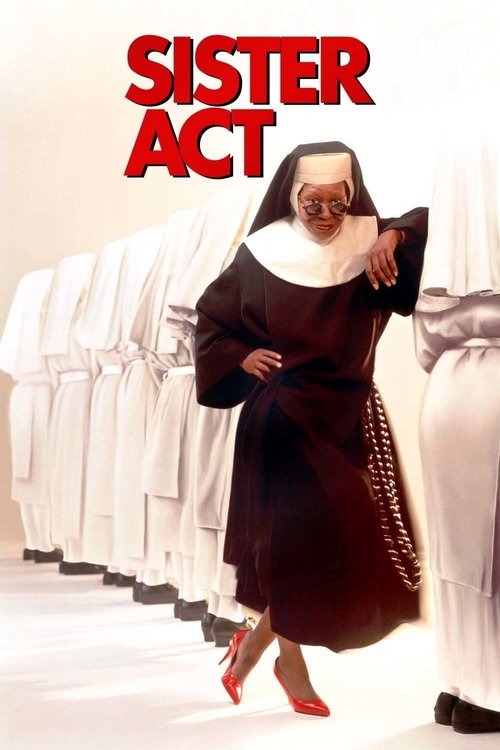
Sister Act (1992)
Directed by Emile Ardolino
No · Ultra Based
How we score movies →Consciousness Markers
Features Whoopi Goldberg as lead and diverse supporting cast, but this reflects 1990s Hollywood casting rather than intentional progressive representation frameworks.
Strong female characters and an ensemble of women, but the narrative arc is personal redemption rather than engagement with feminist frameworks or social critique.
Casting of Black lead was notable for 1992, but the film contains no explicit racial consciousness or commentary on systemic issues.
Physical comedy is present but not framed around body positivity messaging or contemporary body acceptance discourse.
Minimal preachy messaging or lecture-like delivery of social values, though some gentle messages about community and redemption are present.
No LGBTQ+ themes, representation, or storylines present in the film.
No climate or environmental themes present in this comedy about a singer in witness protection.
No critique of capitalism, wealth inequality, or systemic economic structures in the narrative.
No representation of neurodivergent characters or themes related to neurodiversity.
No historical reframing or revisionist interpretation of historical events in this contemporary comedy.


Synopsis
A Reno singer witnesses a mob murder and the cops stash her in a nunnery to protect her from the mob's hitmen. The mother superior does not trust her, and takes steps to limit her influence on the other nuns. Eventually the singer rescues the failing choir and begins helping with community projects, which gets her an interview on TV—and identification by the mob.
Why it received this score
Sister Act is a 1992 comedy that predates the contemporary cultural moment we are measuring. While the film features Whoopi Goldberg in a lead role and a diverse ensemble cast of nuns, these elements reflect the commercial casting decisions of mainstream 1990s cinema rather than the intentional progressive signaling that defines modern social consciousness. The humor operates through fish-out-of-water scenarios and romantic subplots, with the community choir functioning as a vehicle for feel-good narrative beats. The film treats its religious setting and characters with conventional respect rather than critical examination.
The ensemble of strong female characters provides ample opportunity for physical comedy and character development, but the film makes no effort to engage with contemporary feminist frameworks or social justice rhetoric. Deloris Van Cartier's arc is one of personal redemption and integration rather than systemic critique. The community projects mentioned in the narrative are presented as uplifting outcomes of individual effort and virtue, not as responses to structural inequality. The film's racial dynamics are notable for their era but reflect 1990s Hollywood logic rather than demonstrating the kind of intentional casting statements that would mark a contemporary work.
This is a product designed for broad commercial appeal and inoffensiveness. It succeeds admirably at entertaining its audience without challenging any fundamental assumptions about society, institutions, or power structures. One might describe it as ideologically neutral, though that neutrality itself reflects the values of its historical moment.
Analysis generated by our Consciousness Algorithm
Critic Reviews
“Graced with a clever script, a cast that will make you smile until you ache, and a snappy sense of pace, this summer '92 hit is the funniest by-the-numbers comedy in who knows how long. ”
“It breaks no new ground, offers no ingenious plot twist and makes no unique character insights. But who cares when the movie is so much fun. [02 June 1992, p.4D]”
“It’s a divine concept, and after a weak start director Emile Ardolino milks it for all the laughs it’s worth, while deriving requisite warmth from solid performances by Goldberg and Smith. ”
“Director Ardolino and his unnamed colleagues should be given a couple of swift raps across the palm with a ruler.”