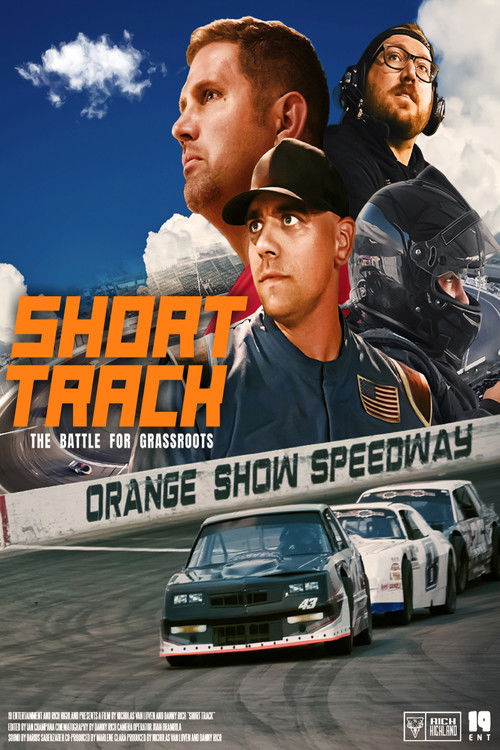
Short Track: The Battle for Grassroots
Directed by Nicholas Van Luven
No · Ultra Based
How we score movies →Consciousness Markers
There is a mild undercurrent of small community versus economic forces, as the film laments the closure of local tracks in a changing commercial landscape. This reads more as nostalgia for a disappearing working-class institution than any structured critique of capital.
The documentary captures a naturally diverse working-class community at Orange Show Speedway, including Jo Ann Adame, without any apparent agenda around casting or representation. The diversity present reflects the actual demographics of the Inland Empire rather than any programmatic effort.
The film carries a gentle elegiac quality about the loss of community spaces, which approaches sermonizing at the margins. The director's stated intent to 'honor the spirit' of grassroots racing suggests a reverent rather than hectoring tone, keeping the lecture energy low.
No LGBTQ+ themes, characters, or commentary are present in the film. The subject matter does not engage with this territory in any discernible way.
No feminist framing is present. Women appear in the documentary as family members and community participants, not as subjects of any gender-focused narrative.
Race as a social construct is not examined. The film does not frame the racing community or its struggles through any lens of racial identity or systemic analysis.
A documentary about gasoline-powered cars racing in circles has no discernible climate agenda. This is, if anything, the opposite of a climate crusade.
No body positivity themes are present. The film does not engage with this subject in any form.
No neurodivergence themes or representation are present. The film does not engage with this subject.
The film is a straightforward preservation documentary. It does not reframe or challenge historical narratives in any revisionist direction.
Synopsis
A documentary about grassroots racing and what it takes to keep it alive. The film follows Robert Snyder, a short track promoter fighting to keep his track open, along with drivers Ryan and Austin Pannone and Tyler Gallup as they race through a season at Orange Show Speedway, one of the last remaining short tracks on the West Coast. Through their experiences, the film shows the realities of short track racing, the cost, the risk, the long nights, and the community that surrounds the track. As more local tracks close, Short Track examines what these places mean to the people who race there and what could be lost if they disappear.
Why it received this score
Here is a film that arrives like a cold engine on a November morning: it takes a moment to turn over, but once it does, it runs with a steady and unpretentious hum. "Short Track: The Battle for Grassroots" documents the slow attrition of small-venue motorsport in Southern California, following the inhabitants of Orange Show Speedway in San Bernardino as they burn fuel, money, and weekends in service of a culture that the broader world has largely declined to notice. Director Nicholas Van Luven approaches his subjects with the kind of quiet respect that suggests he genuinely likes them, which in the documentary landscape of the 2020s is rarer than it should be.
The film's social consciousness, such as it is, manifests as a mild economic elegy. Tracks close. Communities scatter. The people left behind are working-class, passionate, and largely indifferent to the cultural conversations happening elsewhere. There is a faint anti-monopoly undertone in the lament for disappearing local institutions, but it is the grief of a person who loved a diner that closed, not a manifesto. The film does not invite us to feel guilty. It invites us to watch Tyler Gallup navigate a corner, and to consider what it costs him to be there. This is a sensible and humane invitation.
On our ten-point assessment framework, this documentary scores at the very low end of the spectrum, accumulating only marginal points for its passing acknowledgment that economic forces are unkind to small operators. It does not lecture. It does not cast with intent. It does not identify any systemic villain. It is, in the taxonomy of contemporary cultural production, almost aggressively neutral, a film about people who race cars because they love racing cars, presented by a filmmaker who found that sufficient. In the current environment, that restraint is its own kind of statement, though the film is wise enough not to make it one.
Analysis generated by our Consciousness Algorithm