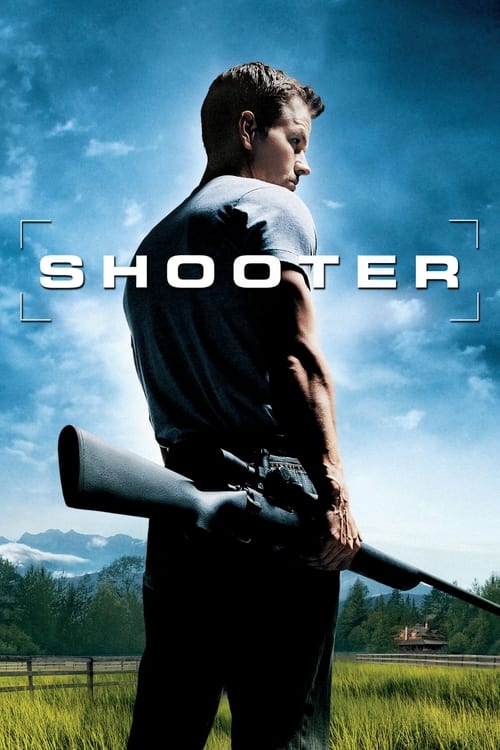
Shooter (2007)
Directed by Antoine Fuqua
No · Ultra Based
How we score movies →Consciousness Markers
The cast includes actors of color in supporting roles, but the narrative remains entirely centered on the white male protagonist with no intentional progressive casting strategy evident.
The plot involves corrupt government officials and powerful leaders, but this is a standard institutional corruption narrative rather than a critique of capitalism itself.
Kate Mara appears in a supporting role, but the film exhibits no feminist themes or engagement with gender dynamics.
The film is plot-driven with minimal thematic depth and no pauses for social commentary or lectures.
No LGBTQ+ themes, characters, or representation present in this action-thriller.
While the cast includes actors of color, there is no evidence of racial consciousness or engagement with systemic racism as a narrative element.
No environmental or climate themes are present in this film.
No body positivity messaging or themes present in this conventional action thriller.
No representation of or engagement with neurodivergence in this film.
This is an original fictional story with no historical revisionism.


Synopsis
A top Marine sniper, Bob Lee Swagger, leaves the military after a mission goes horribly awry and disappears, living in seclusion. He is coaxed back into service after a high-profile government official convinces him to help thwart a plot to kill the President of the United States. Ultimately double-crossed and framed for the attempt, Swagger becomes the target of a nationwide manhunt. He goes on the run to track the real killer and find out who exactly set him up, and why, eventually seeking revenge against some of the most powerful and corrupt leaders in the free world.
Why it received this score
Shooter arrives as a thoroughly conventional action-thriller, the kind of government conspiracy vehicle that was already well-worn by the time of its release. Mark Wahlberg's sniper-turned-fugitive narrative requires nothing from the audience except a willingness to accept escalating plot convolutions and occasional gunplay. The film concerns itself with institutional corruption and the betrayal of a soldier by those in power, but these are stock elements of the genre, not expressions of contemporary social consciousness.
The cast includes actors of color, but they occupy supporting roles within a narrative entirely centered on its white male protagonist's vindication. Kate Mara provides a female presence, though she functions primarily as exposition and emotional ballast rather than an autonomous character with her own agency. There is no attempt to interrogate gender dynamics, nor any indication that the filmmakers viewed such considerations as relevant to their project.
What emerges is a film fundamentally uninterested in the progressive cultural frameworks that would later define the 2020s moment. It is a product of its time, which is to say it is a product of a time before such frameworks became sufficiently dominant to influence mainstream commercial filmmaking. Shooter is not progressive cinema; it is simply cinema, indifferent to the social currents that had not yet reached the mainstream consciousness of American action-thriller audiences.
Analysis generated by our Consciousness Algorithm
Critic Reviews
“Shooter is a generically titled studio action picture that turns out to be a surprisingly deft satire about Americans' loss of faith in their government following the 2000 election, the 9/11 attacks, and the ensuing wars in Afghanistan and Iraq.”
“Shooter does what any good thriller should accomplish - it thrills. It's fast-paced, energetic, and doesn't follow a path that seems pre-ordained from the beginning.”
“Wahlberg acquits himself well, and the supporting cast -- which includes pioneering rocker Levon Helm in a scene-stealing cameo as an aging gun buff who knows a thing or two about cover-ups, Ned Beatty as a corrupt politician, and a Strangelovian Rade Serbedzija -- is so strong you almost wish the film were longer so they could have more screen time.”
“Less subversive and infinitely less intelligent than 1999’s Wahlberg-starrer "Three Kings," this movie does blow lots of s--- up real good and punish contemptible public figures otherwise left unaccountable for massacring African villagers.”