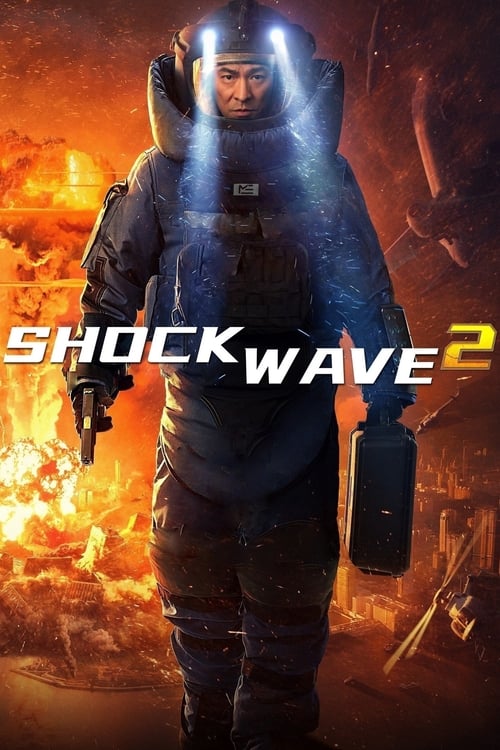
Shock Wave 2 (2020)
Directed by Herman Yau
No · Ultra Based
How we score movies →Consciousness Markers
The cast is predominantly Asian, reflecting Hong Kong cinema conventions, but representation appears incidental to plot rather than intentional. No visible effort to diversify beyond the default Hong Kong casting pool.
The protagonist's memory loss could be read as a form of cognitive difference, but the film treats this as a plot device rather than exploring neurodivergence as a meaningful identity or experience.
While the film features Asian characters and is set in Hong Kong, there is no evidence of racial consciousness or interrogation of power structures. Racial identity is simply the default context.
The film contains generic suspicion of institutional authority typical of action thrillers, but this is not motivated by anti-capitalist ideology. It is simply plot mechanics.
Female characters are minimal and functional, existing primarily to support the male protagonist's narrative. No examination of gender dynamics or female agency.
The film operates according to action genre conventions and does not pause to lecture the audience about social issues. Any thematic content emerges implicitly from plot rather than explicit messaging.
No LGBTQ+ themes, characters, or subtext detected. The film operates entirely within heteronormative action thriller conventions.
No climate-related themes, messaging, or environmental consciousness present in the narrative or subtext.
No body positivity messaging or representation. The film features conventionally fit action heroes without commentary on body diversity.
No revisionist historical narratives. The film is a contemporary action thriller with no historical claims or reframing.


Synopsis
After suffering life changing injuries in the line of duty, bomb disposal officer Fung turns his back on the police. But when a devastating series of bombings sweep Hong Kong, the police suspect their former ally may be involved after he is found unconscious at a crime scene. Now faced with memory loss and recalling only fragments of his former life, Fung sets out to uncover the truth and find out who he really is.
Why it received this score
Shock Wave 2 stands as a monument to the enduring vitality of Hong Kong action cinema, a genre that has largely resisted the gravitational pull of contemporary social consciousness altogether. Herman Yau's film is, in the most literal sense, a story about a man trying to remember who he is, which proves to be an apt metaphor for a cinema that seems equally uninterested in interrogating its own assumptions about gender, representation, or systemic power. The plot mechanics are reassuringly familiar: a damaged hero, a series of bombings, moral ambiguity, and the suggestion that institutions cannot be trusted. These are the comfortable furniture of the action thriller, arranged exactly as they have been for decades.
The film's cast is predominantly Asian, which reflects both the Hong Kong market and the genre's historical context. Yet this is representation by default rather than by design. Andy Lau carries the narrative as the traumatized protagonist, a role that requires little from the film beyond competent action sequences and moments of brooding introspection. The supporting players occupy functional positions, and there is no indication that Yau has given much thought to questions of diversity, equity, or the social conditions that might produce a bomb disposal officer or a criminal conspiracy. The female presence in the film remains marginal, relegated to roles that serve the male protagonist's arc.
What emerges is a work that occupies an entirely separate universe from the progressive sensibilities that increasingly dominate international cinema. This is neither a virtue nor a failure; it is simply the reality of a film made within the Hong Kong action tradition, where the concerns of 2020s cultural criticism have not yet made significant inroads. The film asks us to care about explosions, loyalty, and the nature of identity. It does not ask us to think about who gets to have an identity worth recovering.
Analysis generated by our Consciousness Algorithm
Critic Reviews
“Despite a few modish touches, this feels fundamentally very old-school, and not necessarily in a good way, right down to the repeated shots of people running away from fireballs in the background.”