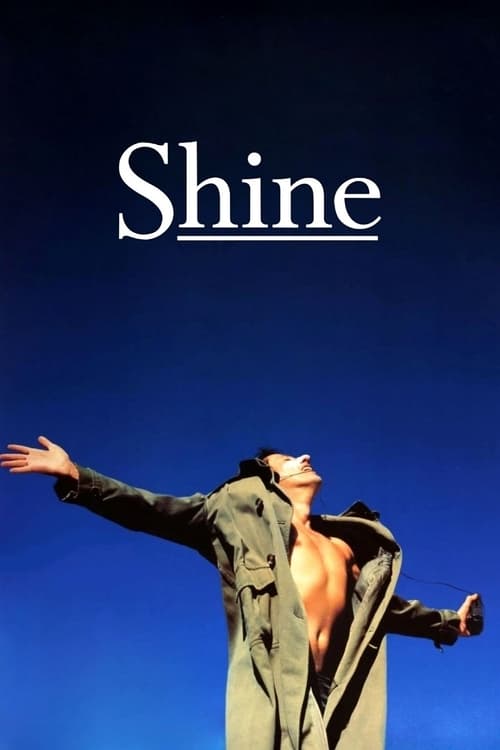
Shine (1996)
Directed by Scott Hicks
No · Ultra Based
How we score movies →Consciousness Markers
Cast is predominantly white and European-descended with no particular effort toward diverse representation. Female characters exist in traditional supporting roles.
Mental illness is depicted as a tragic affliction to be overcome rather than as an identity to be celebrated or normalized through contemporary neurodivergence consciousness.
Minimal preachy messaging or social lessons. The film prioritizes character-driven narrative over delivering broader cultural commentary.
No LGBTQ+ themes, representation, or subtext of any kind present in the film.
Female characters serve conventional supporting functions without any feminist consciousness or commentary on gender dynamics.
No exploration of racial themes or racial consciousness. The narrative is centered on a white family's personal story.
No environmental or climate-related themes present in the film.
No critique of capitalism or systemic economic structures. The narrative focuses on individual struggle rather than systemic critique.
No body positivity messaging or commentary on physical appearance and acceptance.
No rewriting or reframing of historical narratives. The film presents a straightforward biographical account.


Synopsis
Pianist David Helfgott, driven by his father and teachers, has a breakdown. Years later he returns to the piano, to popular if not critical acclaim.
Why it received this score
Shine arrives from the pre-woke era of prestige cinema, when films about mental illness could simply be films about mental illness without addressing systemic oppression or celebrating neurodiversity. Geoffrey Rush delivers a committed performance as pianist David Helfgott, and the narrative follows his journey through psychological breakdown and tentative recovery with the kind of humanistic sincerity that predates our current moment's more self-conscious social positioning. The film is earnest in its portrayal of suffering, family dysfunction, and the redemptive power of artistic expression, concerns that feel almost quaint in their lack of broader cultural commentary.
What we see here is a biographical drama that cares primarily about the individual story rather than using that story to make statements about society, mental health systems, or anything beyond the personal tragedy and triumph of one man. The cast is entirely European or European-descended, the female characters exist in conventional supporting roles, and there is no hint of progressive sensibility regarding representation, sexuality, or systemic critique. The film's engagement with mental illness is presented as something to be overcome through willpower and musical genius, not as an identity to be affirmed or reframed through contemporary consciousness.
This is a film of its time, interested in the universal human drama of recovery and redemption without the apparatus of modern social awareness that would later become standard in prestige cinema. It won Best Supporting Actor and earned multiple nominations at the Academy Awards, succeeding on the terms of traditional dramatic storytelling. The absence of progressive markers is not a failing by those standards, merely an indication that the film operates within a different cultural framework entirely.
Analysis generated by our Consciousness Algorithm
Critic Reviews
“If this weren't a true story, who would believe it? Well, a good many of us, probably. First, it's the kind of exceptional circumstance we like to dwell on as proof that pessimists are wrong; second, Shine is markedly well made, therefore persuasive. [Nov. 18, 1996]”
“Popular filmmaking at its smartest and most persuasive.”
“The fact that David Helfgott lived the outlines of these events--that he triumphed, that he fell, that he came slowly back--adds an enormous weight of meaning to the film.”
“The movie is meant to be uplifting and to the degree that you can ignore its unquestioning treatment of mental illness, I suppose it is.”