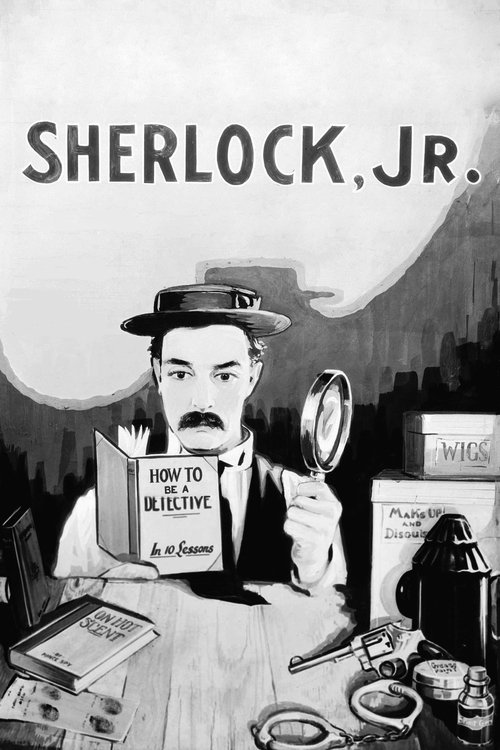
Sherlock Jr. (1924)
Directed by Buster Keaton
No · Ultra Based
How we score movies →Consciousness Markers
Kathryn McGuire appears as a named female character, which represents basic inclusion for 1924 cinema. She functions primarily as romantic motivation rather than an active agent in the narrative.
No LGBTQ themes, representation, or content. This is a silent comedy from 1924 focused entirely on heterosexual romantic plot mechanics.
The film contains no feminist agenda. The female character exists as a prize to be won by the male protagonist, a narrative convention of the era.
No racial consciousness or commentary. The cast appears uniformly white and the film contains no engagement with racial themes whatsoever.
No climate messaging or environmental consciousness. The film is a romantic comedy-mystery with no environmental themes.
No anti-capitalist messaging. The plot involves theft and class distinctions but treats these as plot mechanics rather than social critique.
While Keaton's physical comedy showcases athletic ability, there is no body positivity messaging or celebration of diverse body types.
No representation of neurodivergence. The film contains no characters coded as neurodivergent or any engagement with disability.
No revisionist history. The film is a timeless comedy without historical setting or commentary.
No lecture energy. The film communicates entirely through visual comedy and minimal intertitles, never pausing to explain or advocate for any social position.


Synopsis
A film projectionist longs to be a detective, and puts his meager skills to work when he is framed by a rival for stealing his girlfriend's father's pocketwatch.
Why it received this score
To apply our contemporary analytical framework to a 1924 silent comedy is to perform a kind of category error, yet the exercise proves instructive. Sherlock Jr. represents cinema in its infancy, before the cultural apparatus we now scrutinize had even formed. Buster Keaton's projectionist is a male protagonist navigating a plot in which a woman exists primarily as a romantic prize to be won or lost. The film concerns itself entirely with slapstick logic and the mechanics of physical comedy, not social consciousness. There is nothing here remotely resembling the progressive sensibilities of our current moment, nor was there any expectation that there should be.
The film's single concession to our scoring rubric is that Kathryn McGuire appears as a female character with a name and a speaking role, however minimal. She is not merely scenery, though she functions primarily as motivation for the male protagonist's actions. This represents the baseline of early cinema rather than any intentional commitment to representation. The picture contains no racial consciousness, no climate messaging, no body positivity beyond the physical prowess Keaton displays through athletic comedy, no neurodivergence representation, no LGBTQ themes, no feminist agenda, no revisionist history, and certainly no lecture energy beyond what the intertitles provide as plot exposition.
Sherlock Jr. is what it is: a masterpiece of physical comedy from an era before our current taxonomy of cultural values existed. To score it as we do other films is to acknowledge that historical anachronism. It earns its minimal score not through any deliberate engagement with progressive sensibilities, but through the simple fact of having a named female character at all.
Analysis generated by our Consciousness Algorithm
Critic Reviews
“Fans of The General will disagree, but this absolutely dazzling comedy is perhaps the best of all Keaton features.”
“[Sherlock, Jr.] is about the best thing this "straight face" comedian has done.”
“No other silent film turns logic on its head with such grace and comic hilarity.”
“There is an extremely good comedy which will give you plenty of amusement, so long as you permit Mr. Keaton to glide into his work with his usual deliberation.”