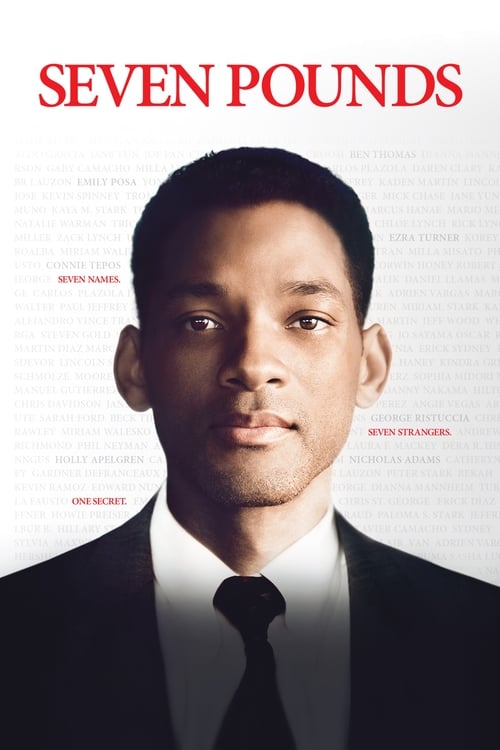
Seven Pounds (2008)
Directed by Gabriele Muccino
No · Ultra Based
How we score movies →Consciousness Markers
The film features a racially diverse ensemble cast including Rosario Dawson, Michael Ealy, and Elpidia Carrillo alongside Will Smith, but this diversity serves narrative purposes without any commentary on representation or systemic casting patterns.
The film is earnest and sentimental in its delivery of moral lessons about redemption and human connection, though it stops short of explicit preachiness or preaching.
No LGBTQ characters, themes, or representation evident in the film.
Female characters exist in the narrative but there is no feminist agenda, critique of patriarchy, or examination of gender inequality.
While the cast is racially diverse, there is no exploration of racial themes, systemic racism, or racial consciousness in the narrative.
No environmental themes, climate concerns, or ecological consciousness present in the film.
The protagonist is an IRS agent operating within existing economic systems. There is no critique of capitalism, wealth inequality, or class structures.
No representation of diverse body types, disability, or body positivity messaging in the film.
No representation of neurodivergent characters or discussion of neurodiversity.
The film is a contemporary drama with no historical narrative or revisionist historical elements.


Synopsis
An IRS agent with a fateful secret embarks on an extraordinary journey of redemption by forever changing the lives of seven strangers.
Why it received this score
Seven Pounds arrives as a sincere meditation on personal redemption dressed in the trappings of prestige drama, a film so committed to its own emotional sincerity that it barely registers the wider world. The casting of Will Smith alongside Rosario Dawson, Woody Harrelson, and Michael Ealy creates a racially diverse ensemble, yet this diversity functions purely as narrative window dressing rather than as any commentary on representation or systemic inequality. We are meant to observe these characters as individuals seeking salvation, not as members of any particular social category requiring examination.
The film's worldview is transactional and individual. Its protagonist, an IRS agent, operates within existing power structures without questioning them. His journey toward redemption involves personal acts of charity and sacrifice, the sort of noblesse oblige narrative that assumes structural problems can be solved through the generosity of individuals who have reached moral clarity. This is the opposite of progressive social consciousness, which tends toward systemic analysis. There is no interrogation of economic inequality, no examination of institutional racism or sexism, no environmental concern, no disability representation, no queer narrative. The film simply presents people of different races and backgrounds as sympathetic characters deserving of help, which is not the same as cultural awareness at all.
What we encounter instead is classical humanism, the belief that shared emotional experience and individual moral action can transcend all barriers. This is not inherently objectionable, but it bears no relationship to the specific markers of contemporary progressive cultural consciousness we are measuring. Seven Pounds remains a product of 2008 earnestness, before the cultural conversations that would come to define the 2020s began in earnest.
Analysis generated by our Consciousness Algorithm
Critic Reviews
“A movie that plays better if you know nothing about it going in.”
“Now, with Seven Pounds, the transformation of Will Smith is complete: Gone is any trace of love-me impishness, replaced by one of the sourest pusses Hollywood has seen since Joaquin Phoenix got his Screen Actors Guild card.”
“Gripping but gap-filled Seven Pounds will have half your brain asking "How could this be?" and the other half saying, "Shut up and go along for the ride!" Listen to the latter voice.”
“The most transcendently, eye-poppingly, call-your-friend-ranting-in-the-middle-of-the-night-just-to-go-over-it-one-more-time crazily awful motion pictures ever made.”