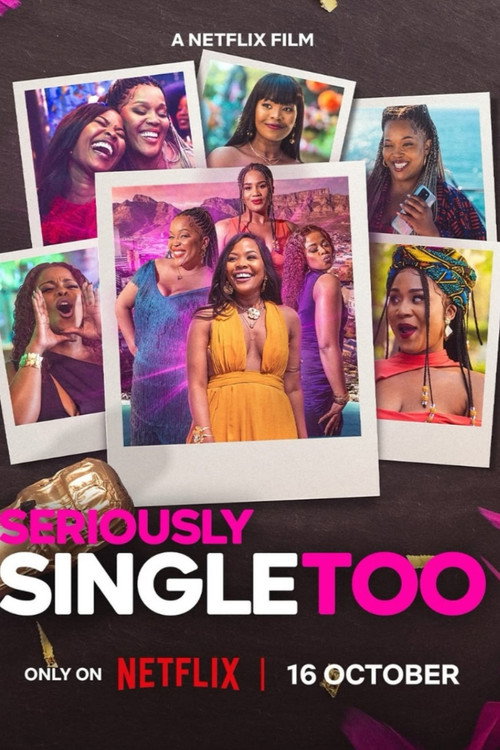
Is Seriously Single Too (2026) Woke?
Seriously Single Too · 2026 · Directed by Katleho Ramaphakela
Woke Score
CriticCritic Score
Woke-Adjacent
Critics rated this 13 points above its woke score. Among Woke-Adjacent films, this critic score ranks #103 of 170.
Answer: Partly
Woke Score 52/100 · Verdict: Woke-Adjacent
Strongest markers: Representation Casting (72) · Feminist Agenda (62) · Racial Consciousness (48)
Representation Casting
Score: 72/100
The film features an entirely Black South African cast telling a story explicitly centered on contemporary Black urban women in Joburg and Cape Town. This is not incidental diversity but the deliberate and announced creative premise of a Netflix-backed production framed as a milestone for local African representation.
LGBTQ+ Themes
Score: 5/100
No LGBTQ+ themes, characters, or storylines are identified in available research or the film's premise. The romantic dynamics are heterosexual throughout. A minimal score is retained only because the film is unreleased and information remains limited.
Feminist Agenda
Score: 62/100
Critics explicitly note that female friendship, not a male love interest, is the emotional core of the film, and the narrative examines a woman's right to prioritize singlehood and independence over traditional marriage. The tension between these two positions is the engine of the plot.
Racial Consciousness
Score: 48/100
The film is framed by its own industry context as a statement about Black South African creative ownership, and Tumi Morake's public profile includes prominent commentary on post-apartheid race relations. The film's celebration of modern Black urban identity carries racial consciousness as a background frequency, though it does not appear to foreground racial politics as explicit subject matter.
Climate Crusade
Score: 0/100
No climate, environmental, or ecological themes are present or suggested anywhere in the film's premise, research, or critical reception.
Eat the Rich
Score: 8/100
The film engages with social media culture and lifestyle optics, which some readings might frame as a mild critique of performative consumption. This is a very thin thread and not a substantive anti-capitalist argument.
Body Positivity
Score: 0/100
No body positivity themes, messaging, or related character arcs are identified in the available material.
Neurodivergence
Score: 0/100
No neurodivergence themes or characters are identified in the available material.
Revisionist History
Score: 0/100
The film is a contemporary romantic comedy with no historical setting or revisionist framing of any kind.
Lecture Energy
Score: 22/100
Critics note some mixed messaging around singlehood versus traditional commitment, suggesting the film occasionally pauses its comedy to make a point about female autonomy and evolving values. It does not appear to be a sustained sermon, but the thematic argument is present and audible.


Synopsis
Dineo and Noni — besties meant to take on the party scene together — suddenly face their biggest fear when Noni's boyfriend spontaneously propose.
Why it received this score
*Seriously Single Too* arrives as Netflix's contribution to its own tenth anniversary in South Africa, which is a perfectly circular way to celebrate: commissioning a sequel to a film you already own, about characters you already know, for an audience already subscribed. The film follows best friends Dineo and Noni as a sudden marriage proposal threatens the sacred architecture of their friendship, forcing both women to confront the uncomfortable possibility that growing up and growing apart may be the same event. It is, in the taxonomy of romantic comedies, a fairly standard specimen. The distinguishing feature is that it centers female friendship as the primary relationship at stake, with the male love interest functioning less as a destination and more as a disruption.
The film's progressive sensibilities are present but worn lightly. The celebration of Black urban South African womanhood, the valorizing of singlehood as a valid life philosophy, and the gentle scrutiny of social media performance culture all register as ideological positions without ever quite hardening into a manifesto. The casting is deliberate, the representation is the point, and the production's framing within Netflix's Africa expansion narrative makes the cultural statement on the film's behalf so the film itself does not have to make it too loudly. This is efficient. The lecture energy is detectable but not exhausting, arriving mostly in the form of characters articulating their feelings about marriage in slightly more complete sentences than the genre usually requires.
What keeps the film from scoring at the higher end of the social consciousness register is its own stated ambivalence. The narrative ultimately asks whether independence is a value or a habit, and it appears to arrive at no firm answer. For a film that might have planted a flag, it instead plants a question mark and then books a bachelorette trip to Cape Town. This is, arguably, the more honest position. It is also the less combustible one, which perhaps explains the absence of controversy in the early reception. A film that ends in ambiguity is a film that has decided not to argue with you, and some audiences will find that a relief.
Analysis generated by our Consciousness Algorithm
Critic Reviews
“A pleasant, uneven romantic comedy with a stronger emotional idea than its execution consistently supports, benefiting from solid leading performances but held back by predictable conflicts and familiar genre conventions.”
Related rankings
Consciousness Markers
The film features an entirely Black South African cast telling a story explicitly centered on contemporary Black urban women in Joburg and Cape Town. This is not incidental diversity but the deliberate and announced creative premise of a Netflix-backed production framed as a milestone for local African representation.
No LGBTQ+ themes, characters, or storylines are identified in available research or the film's premise. The romantic dynamics are heterosexual throughout. A minimal score is retained only because the film is unreleased and information remains limited.
Critics explicitly note that female friendship, not a male love interest, is the emotional core of the film, and the narrative examines a woman's right to prioritize singlehood and independence over traditional marriage. The tension between these two positions is the engine of the plot.
The film is framed by its own industry context as a statement about Black South African creative ownership, and Tumi Morake's public profile includes prominent commentary on post-apartheid race relations. The film's celebration of modern Black urban identity carries racial consciousness as a background frequency, though it does not appear to foreground racial politics as explicit subject matter.
No climate, environmental, or ecological themes are present or suggested anywhere in the film's premise, research, or critical reception.
The film engages with social media culture and lifestyle optics, which some readings might frame as a mild critique of performative consumption. This is a very thin thread and not a substantive anti-capitalist argument.
No body positivity themes, messaging, or related character arcs are identified in the available material.
No neurodivergence themes or characters are identified in the available material.
The film is a contemporary romantic comedy with no historical setting or revisionist framing of any kind.
Critics note some mixed messaging around singlehood versus traditional commitment, suggesting the film occasionally pauses its comedy to make a point about female autonomy and evolving values. It does not appear to be a sustained sermon, but the thematic argument is present and audible.