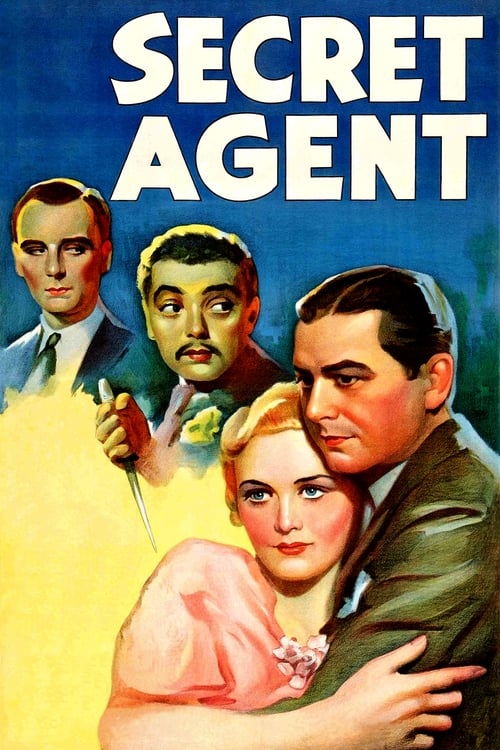
Secret Agent (1936)
Directed by Alfred Hitchcock
No · Ultra Based
How we score movies →Consciousness Markers
Madeleine Carroll appears as a capable female agent, which was progressive for 1936, but represents standard genre casting rather than conscious representation policy.
No LGBTQ+ themes, characters, or references present in the film.
While the female lead is competent, there is no deliberate feminist agenda or commentary on gender dynamics.
The film shows no awareness of or engagement with racial consciousness as a thematic concern.
Climate change or environmental consciousness plays no role in this espionage thriller.
The film contains no anti-capitalist messaging or critique of economic systems.
Body positivity and related concerns are entirely absent from this 1936 production.
No representation of or engagement with neurodivergence is present in the film.
The film presents its World War I setting straightforwardly without revisionist historical framing.
The film entertains without attempting to educate audiences about social or political issues through preachy exposition.


Synopsis
During World War I, a novelist declared dead is recruited by British intelligence and sent to Switzerland under a new identity to assassinate a German spy. Teamed with a fellow agent posing as his wife and an eccentric assassin known as "the General," the trio close in on their target — until two of them grow ambivalent when their duty to the mission clashes with their consciences.
Why it received this score
Hitchcock's 1936 espionage thriller exists in a cultural moment so distant from contemporary progressive sensibilities that measuring it against modern social consciousness markers requires the precision of a paleontologist. The film deploys Madeleine Carroll as a capable female agent who operates alongside her male counterparts, a fact that would have registered as refreshingly modern for 1936 audiences but which carries no particular charge in the context of 2020s cultural awareness. The narrative presents her as competent and central to the mission, yet this amounts to simple genre casting rather than any deliberate engagement with feminist consciousness.
The film's primary concern is the moral quandary of state-sanctioned assassination, a tension that animates its philosophical stakes but which operates entirely outside the vocabulary of contemporary social justice discourse. The international cast and Swiss setting provide geographical diversity without signaling any commitment to representation as a conscious value. No character is coded or discussed through the lens of identity politics. The assassin "the General" and the various European operatives exist as plot functions rather than as vehicles for exploring systemic power structures or marginalization.
This is not a film that suffered from ignorance of progressive values. It simply predates the entire conceptual framework by nearly a century. To score it as anything other than negligibly low would be to commit an anachronistic absurdity, projecting contemporary cultural categories onto a work that operated under entirely different assumptions about what cinema could or should communicate.
Analysis generated by our Consciousness Algorithm
Critic Reviews
“Directed by England's pudgy master of melodrama, Alfred Hitchcock, Secret Agent is a first-rate sample of his knack of achieving speed by never hurrying, horror by concentrating on the prosaic. ”
“With a plot reminiscent of James Bond, Secret Agent is an entertaining blend of espionage, adventure and love with touches of comedy thrown in.”
“It’s movies like “Secret Agent” that made the director, not the stars, the household name, the “brand” film fans would seek out then and for generations to come.”
“It is a defect of the screen narrative that all the spies seem to be continually engaged in melodramatic shadow boxing and that the authors, who couldn't have been Mr. Maugham, never really make out a case for the necessity of spying and never convince you that there is anything in Geneva worth spying on. But there are scattered high-lights.”