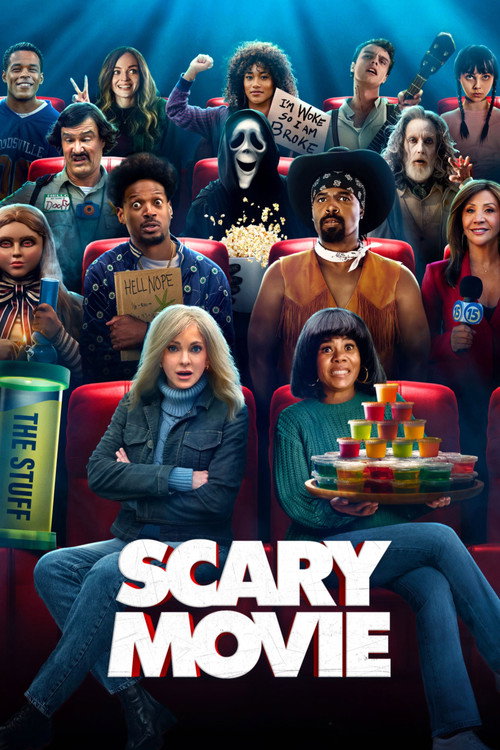
Scary Movie (2026)
Directed by Michael Tiddes · $106.3M domestic
No · Ultra Based
How we score movies →Consciousness Markers
The film reunites a predominantly Black ensemble led by the Wayans family, and the casting is conspicuously diverse by design. However, this is the franchise's foundational DNA from 2000, not a contemporary corrective gesture.
Marlon Wayans presented a CinemaCon scroll of groups who 'may or may not get their feelings hurt,' explicitly naming multiple racial and ethnic demographics as targets. This is equal-opportunity mockery, not racial consciousness, and critics have noted the film reads as conservative by contemporary standards.
Marlon Wayans has publicly discussed having a trans son, and some of that personal navigation may bleed into the material, but the franchise's historical approach to LGBTQ themes has been broad parody rather than earnest advocacy. No substantive evidence of sincere LGBTQ messaging in the 2026 film.
Anna Faris and Regina Hall anchor the film as returning female leads, but the Scary Movie franchise has never been a vehicle for feminist messaging. The comedy tradition here runs decidedly counter to the genre.
Marlon Wayans publicly framed the film as 'reclaiming Scary Movie from the Weinsteins,' which has a faint anti-corporate undertone. The film itself, however, shows no meaningful anti-capitalist content.
Critics specifically noted the film's 'stubborn insistence that nothing needs to change,' positioning it as resistant to contemporary cultural expectations. The lecture energy, to the extent it exists, runs in reverse: the film is being scolded by critics, not doing the scolding itself.
No evidence of climate themes. This is a horror-comedy parody franchise. The planet is not a character.
No evidence of body positivity messaging. The franchise has historically used body-based humor in the opposite direction.
No evidence of neurodivergence themes or representation in the available research on this film.
A parody horror sequel has no particular investment in historical revision. Nothing in the research suggests otherwise.
Synopsis
Twenty-six years after outrunning a suspiciously familiar masked killer, the Core Four are back in the killer's crosshairs and no horror movie IP is safe.
Why it received this score
The 2026 Scary Movie arrives thirteen years after its predecessor with the confidence of a man who has been asleep in a bunker and emerged blinking into sunlight, certain that nothing has changed. The Wayans brothers have reclaimed their franchise from the Weinstein estate, assembled the original cast, and proceeded to make exactly the film they would have made in 2003. Whether this constitutes artistic integrity or temporal dislocation is a question the film declines to address.
From a social consciousness standpoint, the film is a fascinating specimen precisely because of what it refuses to do. At CinemaCon, Marlon Wayans produced a scroll of groups targeted by the film's humor, a list that included, without apparent hierarchy, white people, Black people, Mexicans, Asians, and the entire state of Vermont. This is the franchise's original operating principle: nobody is spared, therefore nobody can complain, therefore the exercise is somehow neutral. Critics have noted, with some bewilderment, that this approach now reads as conservative. The film has achieved a kind of accidental retrograde status simply by remaining stationary while the culture moved around it. It is the progressive sensibility equivalent of a stopped clock, except the clock is making a fart noise.
The casting is diverse in the way that a 26-year-old franchise with a predominantly Black creative core will naturally be diverse, which is to say it reflects the people who made it rather than any contemporary mandate to reflect the people who should make things. There is no lecture energy emanating from the screen. There is no feminist architecture, no climate anxiety, no neurodivergent representation delivered with a knowing nod to the audience. What the film offers instead is broad crass comedy aimed at horror movie IP, delivered by people who invented this particular genre of broad crass comedy aimed at horror movie IP. The score reflects this absence. In a cultural moment that rewards visible effort in progressive markers, Scary Movie 2026 scores low not through malice but through a comprehensive lack of interest in the project entirely.
Analysis generated by our Consciousness Algorithm