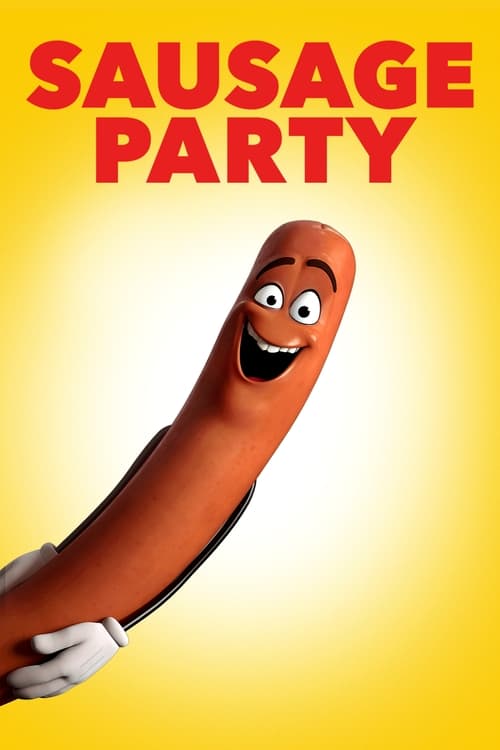
Sausage Party (2016)
Directed by Greg Tiernan
No · Based
How we score movies →Consciousness Markers
The film critiques consumer capitalism and the supermarket system as a mechanism of exploitation, with the 'Great Beyond' representing false consumer promises and ideological delusion.
The film has preachy undertones in its critique of religious delusion and consumer false consciousness, though these themes are delivered through crude comedy rather than earnest messaging.
The supermarket setting includes products from various cultural traditions and racially diverse voice casting, but this diversity functions as backdrop rather than conscious thematic exploration of race.
The film features a diverse voice cast including Seth Rogen, Kristen Wiig, Jonah Hill, and others, but the diversity is incidental rather than thematically central given the anthropomorphic food premise.
Female characters exist in the ensemble, but the film's approach to gender is primarily crude and comedic rather than advancing a coherent feminist framework.
While the film contains crude sexual humor and some gender-bending comedy, there is minimal substantive LGBTQ+ representation or thematic exploration of queer identity.
The film's approach to bodies is primarily transgressive and comedic rather than advancing body positivity messaging or acceptance.
No environmental themes or climate consciousness are present in the film's narrative or thematic structure.
No representation of or thematic engagement with neurodivergent characters or conditions.
The film contains no historical content and therefore does not engage in historical revision or reinterpretation.


Synopsis
Hot dog Frank leads a group of supermarket products on a quest to discover the truth about their existence and what really happens when they become chosen to leave the grocery store.
Why it received this score
Sausage Party presents itself as a transgressive satire of consumer culture and religious belief, though it operates primarily through crude humor rather than coherent ideological framework. The film's central conceit, wherein anthropomorphic supermarket products discover the horrifying truth about their consumption, contains anti-capitalist elements that might superficially register as progressive social critique. The supermarket itself functions as a dystopian apparatus of false consciousness, and the film takes genuine pleasure in puncturing the illusions of its food-item protagonists. Yet the delivery mechanism remains juvenile and scatological, which undermines any earnest message about systemic exploitation.
The ensemble cast provides a baseline of demographic diversity, but this diversity serves the comedy rather than any thematic purpose. We have a black character, a female character, characters coded as various ethnicities, but none of this diversity speaks to contemporary progressive sensibilities about representation or systemic inequality. The film's sexual content and crude humor, while designed to provoke, occupy a pre-2015 sensibility of transgression for its own sake. This is not the careful calibration of modern progressive filmmaking, nor is it the conscious avoidance of stereotype that characterizes contemporary social consciousness. It is simply shock value deployed with equal abandon toward all available targets.
The film's most coherent ideological thrust remains its anti-capitalist critique of the supermarket system and its parallel attack on religious institutions as mechanisms of social control. This dual critique has genuine satirical bite, particularly in the film's final act. However, without the additional markers of contemporary progressive culture, these elements alone do not constitute the specific form of cultural consciousness that dominates modern cinema. Sausage Party remains a pre-woke artifact, transgressive in a manner that predates the current cultural moment.
Analysis generated by our Consciousness Algorithm
Critic Reviews
“Sausage Party is ballsy and dumb and brilliant all in one bite.”
“You will come for the kind of humor promised in the title and the well-earned R rating, but stay for the nuanced meditations on theology and faith.”
“By making this look like the sort of film that studios think of when they think of animation, but subverting the very nature of those movies, Sausage Party is more than funny. It’s downright revolutionary.”
“I hated this movie; I wish I could unsee it and will it out of existence. But that’s not the same as thinking it’s worthless or corrupt or entirely inept. It’s more like a massively self-indulgent prank, inflicted on the world by some reasonably intelligent young men, which makes it the most bro-tastic project of all time. Mo’ bro than this, no es posible, amigos.”