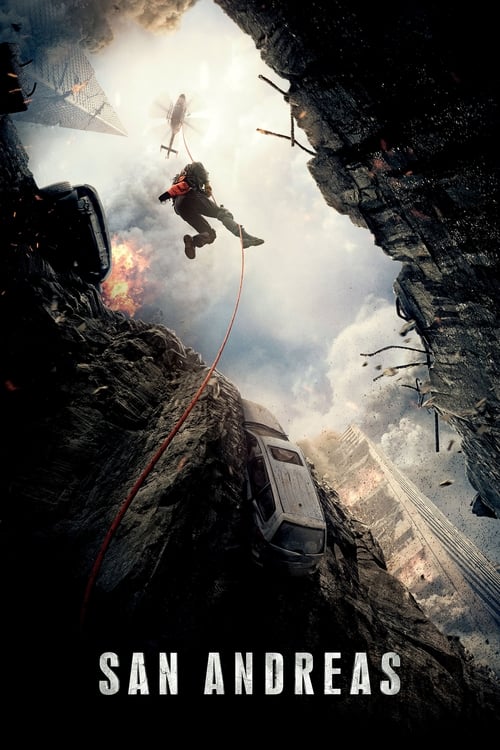
San Andreas (2015)
Directed by Brad Peyton
No · Ultra Based
How we score movies →Consciousness Markers
The cast includes people of color in supporting roles (Archie Panjabi, Will Yun Lee), but these characters serve functional plot purposes without particular emphasis on their backgrounds or perspectives.
Female characters exist in the narrative but primarily as objects of rescue rather than agents of their own stories, reflecting conventional action cinema rather than feminist consciousness.
The film contains minimal expository dialogue about its themes, though some technical exposition about earthquakes occurs naturally within the narrative.
No LGBTQ themes, characters, or representation are present in the film.
The film contains no engagement with racial themes, systemic racism, or racial consciousness of any kind.
Despite being a disaster film, the movie treats the earthquake as a natural event without any climate-related commentary or environmental advocacy.
No anti-capitalist themes or critique of wealth inequality appear in the film.
The film contains no body positivity messaging or commentary on body representation.
No neurodivergent characters or themes related to neurodiversity are present.
The film is not based on historical events and contains no revisionist historical narrative.


Synopsis
In the aftermath of a massive earthquake in California, a rescue-chopper pilot makes a dangerous journey across the state in order to rescue his estranged daughter.
Why it received this score
San Andreas presents itself as a straightforward disaster film with minimal interest in the social consciousness markers that would come to define contemporary cinema. The narrative concerns itself with familial reunification rather than systemic critique, a choice that both defines and limits its cultural significance. Ray Gaines emerges as a divorced helicopter pilot seeking redemption through heroic action, a character type that predates modern progressive sensibilities by several decades. The film treats his ex-wife Carla and daughter Blake as people to be rescued rather than as protagonists of their own narratives, a structural choice that reflects 2015 action cinema conventions rather than any deliberate engagement with representation.
The supporting cast provides the film's only modest gestures toward diversity, though these remain incidental to the plot rather than central to its thematic concerns. Archie Panjabi appears as a seismologist, Will Yun Lee as a geologist, and Paul Giamatti as an ineffectual government scientist, roles that simply exist without commentary or emphasis. The film contains no discernible LGBTQ content, no climate advocacy, no anti-capitalist sentiment, and no particular attention to body representation or neurodivergence. What one might charitably call the film's progressive elements amount to the simple fact that women and people of color appear on screen alongside the white male protagonist, a baseline that hardly constitutes a cultural statement.
The overwhelming focus remains on spectacle and personal stakes: buildings collapse, people die in aggregate, and our hero must navigate the rubble to find his family. This is not inherently problematic, but it is apolitical. San Andreas asks us to invest in individual survival rather than collective systems, in natural catastrophe rather than human responsibility. It operates in the register of entertainment divorced from interrogation, a film that simply happened to be made in 2015 rather than one that engages meaningfully with the cultural conversations occurring at that moment.
Analysis generated by our Consciousness Algorithm
Critic Reviews
“There are really no surprises here. But the action is bracing, Johnson’s performance is solid and, within its extremely narrow parameters, entirely convincing, and Gugino and Daddario are both gritty and attractive. The result is a pretty exemplary popcorn movie.”
“Starting with a mountainside rescue setting up Ray's bravery, through cities ruined and a tsunami leveling San Francisco, San Andreas is gnaw-your-knuckle fun. Which is the roller coaster conflict that comes with the disaster movie genre, the closeness to horrific reality that attracts millions yet repels a sensitive few.”
“By turns frightening, exciting and ridiculous, San Andreas is, in the end, more impressive than anything else.”
“San Andreas is a disaster — literally. That’s not to take a piece out of Dwayne (The Rock) Johnson. His charm and family-man-style fearlessness as the movie’s star is the only saving grace in this thuddingly repetitive, badly written crash-a-thon.”