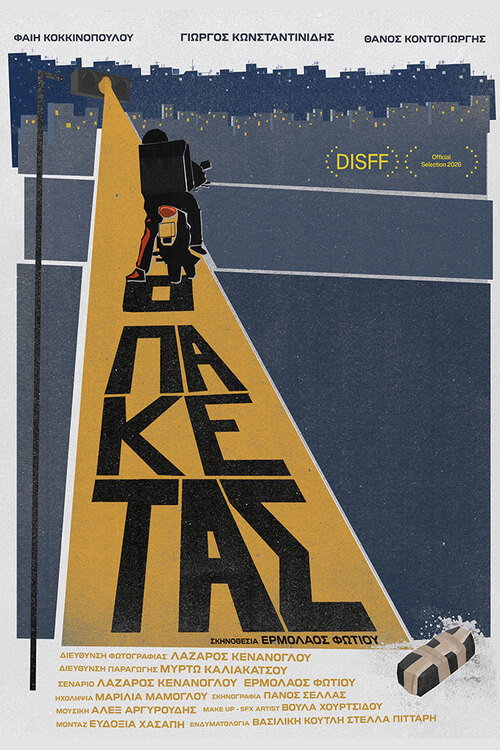
Runner (2026)
Directed by Ermolaos Fotiou · $6.0M domestic
No · Ultra Based
How we score movies →Consciousness Markers
The film's portrait of a young man trapped in a dangerous drug-running economy carries a faint undercurrent of socioeconomic desperation, though the film does not editorialize about systemic inequality.
No evidence of casting decisions motivated by representation mandates. The Greek student film draws from a local cast in a genre context with no documented diversity agenda.
No LGBTQ+ themes, characters, or subtext are present in this crime drama. The narrative concerns drugs, bad decisions, and urban pressure, full stop.
No feminist framing is evident. The story centers on a young male protagonist making increasingly dangerous choices, and no feminist critique is layered onto the material.
No racial consciousness framing exists in the film. Set in Greece with a Greek cast, the narrative operates entirely within a genre register without commentary on race.
Climate themes are entirely absent. This is a 29-minute crime short about a drug courier, not a meditation on ecological collapse.
No body positivity themes are present. The film has no apparent interest in this area whatsoever.
No neurodivergent characters or themes are introduced. The protagonist's escalating poor decisions are framed as situational desperation, not a neurodivergence narrative.
This is an original contemporary crime story with no historical setting or revisionist impulse of any kind.
Critics and press unanimously describe the film through a genre lens. There is no sermonizing, no moral thesis delivered to the audience, and no documentary-style address to camera.
Synopsis
A young runner's life quickly slips out of control after an accident in which he loses a large quantity of drugs. As he struggles to replace the missing package under intense time pressure, his decisions become increasingly dangerous.
Why it received this score
*Runner*, the 29-minute thesis film from director Ermolaos Fotiou and the Film School of the Aristotle University of Thessaloniki, arrives on the Greek short film festival circuit carrying something increasingly rare in contemporary cinema: a complete absence of cultural agenda. It is a crime drama about a young man who loses some drugs and then has a very bad time trying to fix that. The film appears to have no interest in anything else. We note this with the quiet solemnity of a naturalist documenting a species presumed extinct.
The narrative engine is pure genre mechanics, urgency, bad choices, worse choices, and the blunt arithmetic of consequences in an urban underworld. Greek critics have described it as a grounded, suspenseful crime story, which is precisely what it is. Fotiou does not pause the action to deliver observations about systemic inequality, does not populate his supporting cast according to a demographic checklist, and does not, at any point, appear to believe that his audience requires moral instruction. The socioeconomic texture of a young man enmeshed in drug running carries the faintest whiff of class precarity, but the film treats this as setting, not sermon.
Scored against our ten markers of contemporary social consciousness, *Runner* registers as something close to a flat line. It is, in the taxonomy of this exercise, a film about a person in trouble, made by filmmakers who wished to make a film about a person in trouble. Whether this constitutes artistic restraint or a simple indifference to the current cultural conversation is a question the film declines to answer. It is too busy running.
Analysis generated by our Consciousness Algorithm
Critic Reviews
“Movies like this like to give their leading man a sympathetic foible like a lost daughter, a divorce, a substance-recovery journey or an unusual hobby. Runner deals out all four. ”
“Runner may be a mid-range, modest action-comedy but most big budget blockbuster blow-‘em-ups aren’t this entertaining.”
“This is about as generic an action-comedy hybrid as you can possibly get; while it won’t exactly make anyone forget the classics of that particular cinematic sub-genre, it has a certain weirdo charm that makes it far more watchable than it has any right to be.”
“Ritchson has instant credibility as a man of violence who swears “I don’t hurt people any more,” and doesn’t embarass himself as an ex-husband/grieving dad, either.”