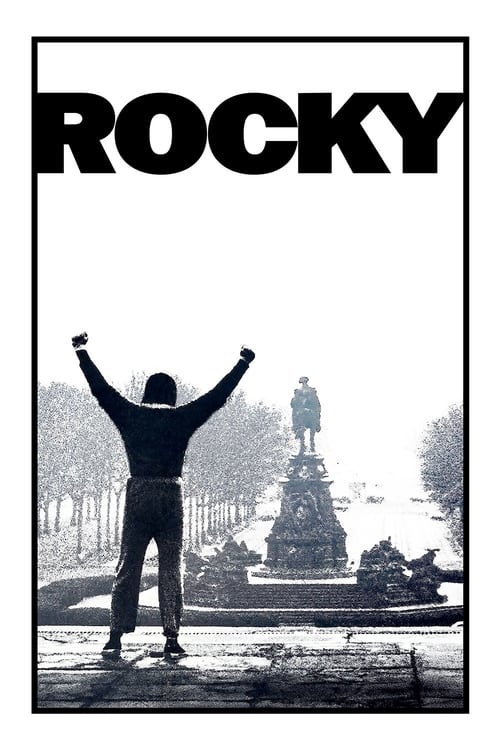
Rocky (1976)
Directed by John G. Avildsen
No · Ultra Based
How we score movies →Consciousness Markers
The film sympathizes with working-class struggle and the economically dispossessed, but this is humanist rather than ideologically anti-capitalist. No critique of corporate systems.
Carl Weathers appears as Apollo Creed, but the film treats his presence as straightforward casting rather than meaningful representation. No acknowledgment of racial dynamics or deliberate diversity.
The film features an interracial boxing match but makes no attempt to examine or comment on racial themes. Apollo Creed is simply a character, not a statement.
Adrian is portrayed as timid and passive, existing primarily as a romantic prize. Her agency is minimal and her role reinforces traditional gender expectations.
The film celebrates athletic conditioning and muscularity as ideals. Rocky's training montage is essentially the opposite of body positivity messaging.
The film trusts its audience to draw conclusions from the narrative rather than explicitly stating themes. Minimal preachy messaging, though some moments verge on sentimentality.
No LGBTQ+ themes, characters, or representation whatsoever. The film is entirely heteronormative in its romantic framework.
No environmental themes or climate consciousness present in the narrative.
No representation of neurodivergent characters or themes. The film contains no discussion of mental health or cognitive difference.
The film makes no attempt to reinterpret historical events or challenge established historical narratives.


Synopsis
Rocky Balboa is a Philadelphia club fighter who seems to be going nowhere. But when a stroke of fate puts him in the ring with a world heavyweight champion, Rocky knows that it's his one shot at the big time — a once-in-a-lifetime opportunity to go the distance and come out a winner.
Why it received this score
Rocky is a 1976 artifact of a simpler time, when a film could be about class struggle without feeling obligated to deconstruct every available social category simultaneously. The narrative concerns itself with a working-class Italian-American boxer who gets a shot at the heavyweight championship, and the film treats this premise with the solemnity of someone describing a military campaign. One must appreciate the film's complete lack of self-consciousness about what it is: a sports movie about a man who wants to prove something to himself.
The representation landscape here is instructive primarily for what it does not attempt. Carl Weathers appears as Apollo Creed, the champion, and the film does not bend over backward to make this meaningful in any contemporary sense. He is simply the antagonist, formidable and charismatic. Talia Shire plays Adrian, Rocky's love interest, and she is portrayed as shy and gentle, which is to say she is portrayed in a manner that would horrify modern sensibilities. The film's view of gender roles is decidedly traditional. There is no suggestion that Adrian should be training or competing herself, nor is there any ironic commentary on this arrangement.
What emerges as genuinely progressive, if one squints, is the film's sympathy for the economically dispossessed. Rocky is not a criminal or a cautionary tale, but a fully realized human being deserving of dignity and opportunity. Yet this is not progressive consciousness as we understand it now. It is simply humanism, which was less controversial in 1976. The film has no interest in examining systemic racism, gender dynamics, environmental concerns, or corporate villainy. It is content to be a boxing movie. This restraint, in retrospect, feels almost quaint.
Analysis generated by our Consciousness Algorithm
Critic Reviews
“On paper, neither character may seem terribly appealing, but on the screen they steal your heart away, but completely...Not only did that last reel include some of the most wildly exciting fight footage ever put on the screen, but it also provided an emotionally gratifying capstone to a picture that is truly an ode to the human spirit. ”
“By now, everyone knows who wins, but the scenes before the fight set us up for it so completely, so emotionally, that when it's over we've had it. We're drained.”
“The basic storyline has been done to death over the years; this is still one of the most effective and successful applications of the formula. ”
“The problem, I think, comes back to Mr. Stallone. Throughout the movie we are asked to believe that his Rocky is compassionate, interesting, even heroic, though the character we see is simply an unconvincing actor imitating a lug.”