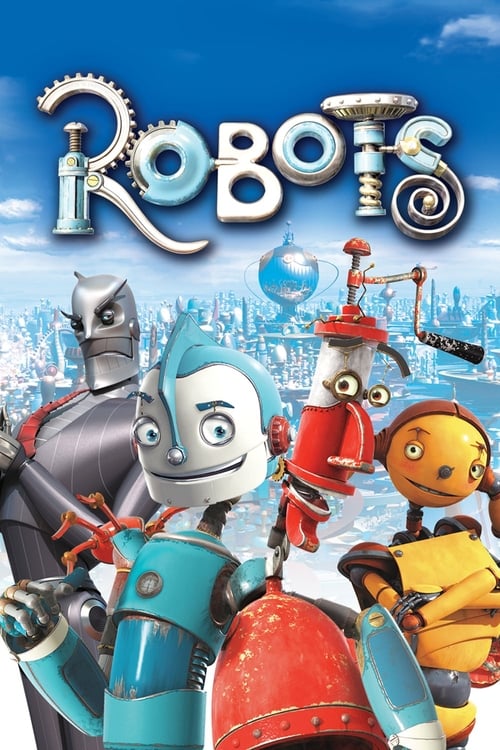
Robots (2005)
Directed by Chris Wedge
No · Based
How we score movies →Consciousness Markers
The central conflict directly critiques corporate greed, conformity, and class exploitation. Ratchet represents capitalist villainy, and the narrative argues for individual resistance to systemic dehumanization.
Features Halle Berry and diverse voice talent in the ensemble, but this reflects standard casting practice rather than conscious progressive representation efforts. No evidence of deliberate diversity statement.
While the film clearly communicates its message about individuality versus conformity, it does so through straightforward narrative and character action rather than preachy exposition or contemporary progressive sermon-like tone.
Halle Berry voices a significant character, but the film contains no feminist agenda, commentary on gender, or exploration of feminist themes.
No LGBTQ+ characters, themes, or references are present in the film.
The film contains no racial themes, commentary, or consciousness regarding race or ethnicity.
No climate change themes, environmental consciousness, or ecological concerns are present in the narrative.
No body positivity themes or commentary about body image are present in the film.
The film contains no representation of or themes related to neurodivergence.
Not applicable to a fictional robot world. The film does not engage with historical revision or reinterpretation of real events.


Synopsis
Rodney Copperbottom is a young robot inventor who dreams of making the world a better place, until the evil Ratchet takes over Bigweld Industries. Now, Rodney's dreams – and those of his friends – are in danger of becoming obsolete.
Why it received this score
Robots presents a curious case of a film that engages seriously with anti-capitalist themes, corporate malfeasance, and the dehumanization of industrial conformity, yet lacks the specific cultural markers that would classify it as a product of modern progressive consciousness. The narrative functions as a straightforward morality play about a corporate dystopia where an ambitious inventor confronts a system designed to render individuality obsolete. Ratchet's villainy is not metaphorical or coded; he is simply a capitalist antagonist who profits from making parts of society disposable.
The film's engagement with these themes is genuine, if delivered through the familiar machinery of family animation. There is no pretense here, no attempt to retrofit contemporary social awareness onto a pre-existing narrative structure. The cast includes Halle Berry and other performers of color, though this appears to reflect straightforward voice acting choices rather than any deliberate statement about representation. The humor is broad and physical, the message clear and unambiguous: conformity is bad, individuality is good, corporate greed destroys lives.
What remains striking about Robots, nearly two decades later, is how little it attempts to apologize for its critique. It does not interrogate its own systems or invite self-reflection from the audience. It simply tells its story about a young robot who refuses to accept the world as constructed and works to change it. This directness, combined with its pre-2010s sensibility, places it firmly outside the constellation of contemporary progressive cultural markers, despite containing what one might call genuinely leftist themes.
Analysis generated by our Consciousness Algorithm
Critic Reviews
“24-karat stuff, even if it has a soul of tin. With the voices of Ewan McGregor, Robin Williams and Mel Brooks, Robots is a giddy erector-set update of "Toy Story" with a splash of "The Wizard of Oz."”
“Full of wit, charm and wonder. It's so hilarious, you might blow a gasket.”
“Like "Finding Nemo," this is a movie that is a joy to behold entirely apart from what it is about. It looks happy, and, more to the point, it looks harmonious.”
“The video-game sequences are impressive, but you know that a 'toon is in big trouble when its most powerful theme is planned obsolescence.”