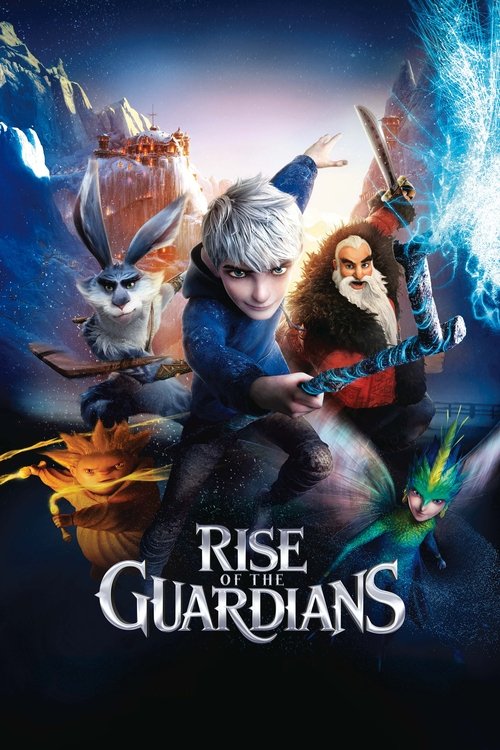
Rise of the Guardians (2012)
Directed by Peter Ramsey
No · Ultra Based
How we score movies →Consciousness Markers
The film carries a mild preachy tone about the importance of belief and imagination, delivering messages about childhood wonder rather than explicit social or political instruction.
The film features an ensemble cast with diverse voice actors, but the characters themselves are mythological figures with minimal racial or ethnic specificity, so representation remains largely abstract and uncommitted.
Tooth, the sole female guardian, functions primarily as a supporting character whose characterization relies on hyperactivity and maternal instinct rather than agency or complexity. No meaningful feminist critique or gender consciousness is present.
The film features a diverse voice cast but demonstrates no engagement with racial themes, systemic racism, or racial identity. Characters are intentionally divorced from specific cultural or ethnic contexts.
North is portrayed as a weapons manufacturer and industrialist, but the film presents this as charming rather than critiquing capitalism or wealth accumulation. No anti-capitalist sentiment is present.
No evidence of LGBTQ themes or representation. The film contains no LGBTQ characters, relationships, or thematic engagement with sexual orientation or gender identity.
No evidence of climate activism or environmental consciousness. The film contains no references to climate change, environmental protection, or ecological awareness.
No evidence of body positivity themes. The film presents conventionally attractive animated characters without any engagement with body diversity or disability representation.
No evidence of neurodivergence representation or themes. The film contains no characters portrayed as neurodivergent or any thematic exploration of neurodiversity.
No evidence of revisionist history. The film operates in a fantasy realm divorced from historical events or contexts that might be reinterpreted.


Synopsis
When an evil spirit known as Pitch lays down the gauntlet to take over the world, the immortal Guardians must join forces for the first time to protect the hopes, beliefs and imagination of children all over the world.
Why it received this score
Rise of the Guardians presents itself as a children's fantasy film concerned with protecting belief and imagination, which is commendable in its thematic simplicity. However, beneath the cheerful veneer of anthropomorphic holiday figures and a ragtag team of immortal protectors lies a profoundly unremarkable approach to representation and social consciousness. The film assembles a cast of voice actors whose racial and ethnic backgrounds bear little relationship to the characters they portray, operating under the logic that animation permits unlimited creative freedom from demographic specificity. The central conflict pits these guardians against Pitch, an evil spirit whose malevolence stems from childhood trauma rather than any systemic critique or structural inequality worth examining. The narrative remains steadfastly focused on personal redemption arcs and the abstract power of belief, never once pausing to interrogate the mechanisms by which hope and imagination are distributed unequally across different communities.
The film's approach to its ensemble cast reveals its fundamental conservatism. Bunnymund speaks in an Australian accent, Sandman communicates through sand-sculpted imagery, and North operates as a weapons-manufacturing industrialist played by Alec Baldwin. None of these character choices emerge from any meaningful engagement with diversity or representation. The sole human child protagonist, Jamie, exists primarily as a passive recipient of the guardians' protection rather than as an active agent in his own liberation. Female representation arrives in the form of Tooth, a tooth fairy rendered as a hyperactive avian creature whose characterization borders on infantilizing. The film demonstrates no awareness of systemic oppression, climate crisis, economic inequality, or any progressive social concern that might complicate its fantasy premise.
What remains is a competently animated but ideologically inert piece of children's entertainment, released in 2012 without a single marker of contemporary social consciousness. The film believes itself to be about the universal values of hope and imagination, unaware that such universalism functions precisely to obscure the particular and material conditions under which different children experience the world. It is neither good nor bad in any conventional sense, merely untouched by the cultural forces reshaping cinema in the decade to follow.
Analysis generated by our Consciousness Algorithm
Critic Reviews
“The shaggy, whimsical characters have a primal familiarity, as though they were developed by a tag team of Maurice Sendak and Walt Disney. ”
“One of the best kid's films of the year, full of delight and action and charm and comedy.”
“It's a grand, colorful adventure, an escapist romp draped in tinsel. And, who knows -- if you're all good little boys and girls this year, perhaps it will also be the first installment in a new DreamWorks holiday tradition.”
“I can't remember ever seeing such a spectacular implosion of a squad of all-stars as Rise of the Guardians. Well, not since Yankee Stadium in October.”