Is Reporting Live (2026) Woke?
Reporting Live · 2026 · Directed by Dhruv Tripathi
Woke Score
CriticCritic Score
Woke-Adjacent
Critics rated this 7 points above its woke score. Among Woke-Adjacent films, this critic score ranks #153 of 170.
Answer: Partly
Woke Score 42/100 · Verdict: Woke-Adjacent
Strongest markers: Eat the Rich (55) · Feminist Agenda (42) · Representation Casting (38)
Representation Casting
Score: 38/100
The film centers a young woman as the lead investigative journalist driving the story forward against the resistance of older male colleagues and an entirely male power structure. This is a deliberate narrative choice, though it operates more as classic capable-heroine filmmaking than a programmatic diversity mandate.
LGBTQ+ Themes
Score: 0/100
No LGBTQ+ characters, themes, or references are present in the film.
Feminist Agenda
Score: 42/100
Sandhya Yadav is explicitly positioned as the moral and investigative engine of the story, with her male partner cast as reluctant and pragmatic. The film frames her tenacity against institutional male resistance, which carries a discernible feminist throughline, though it stops short of overt manifesto energy.
Racial Consciousness
Score: 0/100
The film operates entirely within an Indian social context where caste and class are the operative fault lines, not racial identity politics in the Western progressive sense. No racial consciousness framing is present.
Climate Crusade
Score: 22/100
Illegal sand mining's destruction of riverbeds, rural infrastructure, and fishing communities functions as the film's inciting ecological crime. The environmental damage is real and consequential to the plot, but the film treats it as a corruption story rather than a climate consciousness sermon.
Eat the Rich
Score: 55/100
The film's most substantive progressive signal: corporate media ownership actively suppresses investigative journalism to protect business and political interests, while a criminal syndicate exploits natural resources for profit at the expense of rural communities. The critique of capital corrupting both press and infrastructure is explicit.
Body Positivity
Score: 0/100
No body positivity themes or messaging are present in the film.
Neurodivergence
Score: 0/100
No neurodivergent characters or related themes are present in the film.
Revisionist History
Score: 0/100
The film is set in a contemporary fictional present and makes no attempt to reframe or reinterpret historical events.
Lecture Energy
Score: 35/100
Critics noted the film wears its socio-political intentions openly, and the somber whistleblower-martyrdom ending delivers a pointed moral about the cost of speaking truth to power. The messaging is present and deliberate without reaching full sermon mode.


Synopsis
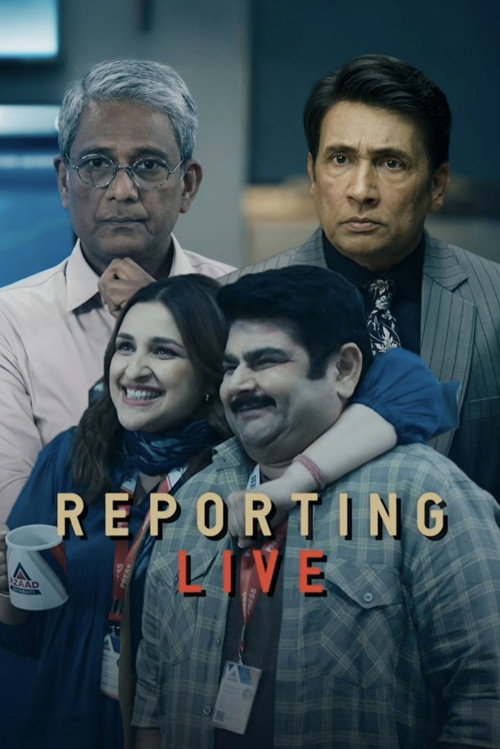
A young reporter and her reluctant cameraman chase a story, only to get entangled in an illegal sand-mining racket run by a ruthless syndicate.
Why it received this score
*Reporting Live* arrives on Netflix with the solemn bearing of a film that has something to say and intends to say it clearly, at length, and with supporting documentation. Director Dhruv Tripathi has constructed an investigative thriller around illegal sand mining, a subject that, in lesser hands, might have produced a geology documentary. Here it produces a crime film in which the actual criminals are, predictably, the people in suits rather than the people in the riverbed. The corporate media owner who kills stories, the politician who enables the syndicate, the displaced fishermen who pay the real price: the casting of heroes and villains follows a template so well-worn it has its own groove.
Parineeti Chopra's Sandhya Yadav is the film's moral compass, its engine, and its most insistent argument. Her male partner, Vinod, is pragmatic and reluctant, which is the screenplay's way of encoding his gender as a form of institutional inertia she must overcome. This is a functional dramatic device. It is also the feminist argument the film is making, delivered through character dynamics rather than dialogue, which is the more dignified method, even if the geometry is transparent. The anti-capitalist critique is somewhat less subtle: corporate ownership of the press is not a background condition here but an active villain, which places the film squarely in a tradition of media self-examination that Indian streaming has been quietly building for several years.
Where the film loses altitude is in its lecture energy. The ending, which reviewers have described as somber and pointed, opts for moral instruction over ambiguity. The dangerous cost of whistleblowing is a real and serious subject. Treating it as a conclusion rather than a complication is the film's main formal limitation. It knows what it wants us to feel, and it makes sure we feel it, in the manner of a professor who repeats the thesis statement at the end of every paragraph. The sand mining is an ecological crime, the press is compromised, and the powerful are protected. These are true things. *Reporting Live* is most alive in the moments when it trusts us to have already understood them.
Analysis generated by our Consciousness Algorithm
Critic Reviews
“The thriller is tightly plotted and efficiently narrated despite treading familiar ground, with solid performances from Chopra and Bhojani.”
“The exposure of illegal sand mining is urgent and Bhojani's performance is praiseworthy, though the twists are predictable.”
“REPORTING LIVE is a hard-hitting investigative drama that tackles the issue of illegal sand mining with sincerity and conviction, despite a few shortcomings in the narrative.”
“An infantile 'journalism-for-dummies' template with Chopra's miscasting and the film's constant hand-holding undermining any potential impact.”
Related rankings
Consciousness Markers
The film centers a young woman as the lead investigative journalist driving the story forward against the resistance of older male colleagues and an entirely male power structure. This is a deliberate narrative choice, though it operates more as classic capable-heroine filmmaking than a programmatic diversity mandate.
No LGBTQ+ characters, themes, or references are present in the film.
Sandhya Yadav is explicitly positioned as the moral and investigative engine of the story, with her male partner cast as reluctant and pragmatic. The film frames her tenacity against institutional male resistance, which carries a discernible feminist throughline, though it stops short of overt manifesto energy.
The film operates entirely within an Indian social context where caste and class are the operative fault lines, not racial identity politics in the Western progressive sense. No racial consciousness framing is present.
Illegal sand mining's destruction of riverbeds, rural infrastructure, and fishing communities functions as the film's inciting ecological crime. The environmental damage is real and consequential to the plot, but the film treats it as a corruption story rather than a climate consciousness sermon.
The film's most substantive progressive signal: corporate media ownership actively suppresses investigative journalism to protect business and political interests, while a criminal syndicate exploits natural resources for profit at the expense of rural communities. The critique of capital corrupting both press and infrastructure is explicit.
No body positivity themes or messaging are present in the film.
No neurodivergent characters or related themes are present in the film.
The film is set in a contemporary fictional present and makes no attempt to reframe or reinterpret historical events.
Critics noted the film wears its socio-political intentions openly, and the somber whistleblower-martyrdom ending delivers a pointed moral about the cost of speaking truth to power. The messaging is present and deliberate without reaching full sermon mode.