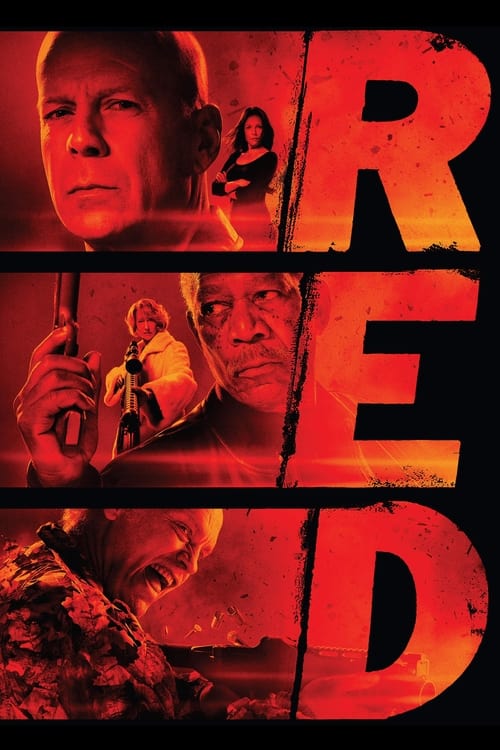
RED (2010)
Directed by Robert Schwentke
No · Ultra Based
How we score movies →Consciousness Markers
The cast includes Morgan Freeman and Helen Mirren, but their selection appears driven by star power and comedic value rather than any explicit commitment to inclusive casting practices.
John Malkovich's character Marvin exhibits erratic behavior played for comedy, though this amounts to stereotype rather than genuine representation of neurodivergence.
No LGBTQ+ themes, characters, or representation are present in the film.
The film contains no feminist messaging or examination of gender dynamics.
While the cast includes actors of color, the film makes no commentary on race or racial experience.
Climate change is not addressed in any capacity.
The film contains no anti-capitalist themes or critique of economic systems.
Body positivity is not a concern of this action-comedy narrative.
The film does not engage with or revise historical narratives.
The film contains no preachy messaging or attempts to educate the audience on social issues.


Synopsis
After surviving an assault from a squad of hit men, retired CIA black ops agent Frank Moses reassembles his old team for an all-out war. Frank reunites with old Joe, crazy Marvin and wily Victoria to uncover a massive conspiracy that threatens their lives. Only their expert training will allow them to survive a near-impossible mission -- breaking into CIA headquarters.
Why it received this score
RED stands as a curious artifact of pre-woke action cinema, a film so thoroughly committed to its genre obligations that it remains almost entirely untouched by the cultural preoccupations that would later dominate mainstream filmmaking. The ensemble cast features Morgan Freeman and Helen Mirren alongside Bruce Willis and John Malkovich, though their inclusion appears motivated by star power and comedic chemistry rather than any deliberate statement about representation. The film treats its older protagonists as action-capable heroes, which might be read as a modest rejection of ageism, but this seems incidental to the plot's primary concerns: CIA conspiracies, elaborate set pieces, and the comedic friction between retired operatives.
The narrative presents no engagement with contemporary social consciousness. There is no LGBTQ+ content, no feminist perspective, no examination of racial dynamics, no climate advocacy, no critique of capitalism or the military-industrial complex. The film simply does not concern itself with these registers. Marvin's mental illness, played for comedy by Malkovich, might suggest neurodivergence representation, but the portrayal amounts to a stereotype played for laughs rather than any genuine exploration of psychological complexity.
This is fundamentally a 2010 product untouched by the sensibilities that would reshape Hollywood in the 2020s. It asks only that we enjoy watching accomplished character actors in an action-comedy framework. Whether one finds this refreshing or limiting depends largely on one's appetite for films that prioritize plot and entertainment over cultural commentary.
Analysis generated by our Consciousness Algorithm
Critic Reviews
“Even the more cartoonish performances, like John Malkovich's acid-damaged paranoiac, fit the movie's vision of the vanished, wild-and-woolly heyday of spycraft.”
“Red isn't a great movie, but it's great fun, and if that sounds like damning with faint praise, you take things too seriously. ”
“It's a lot of fun and, because of the high quality of the cast, there's no need to feel guilty about praising such an inherently silly motion picture. ”
“The movie doesn’t have a funny bone in its body, clomping from one unoriginal set piece to the next with a head-scratching lack of urgency.”